




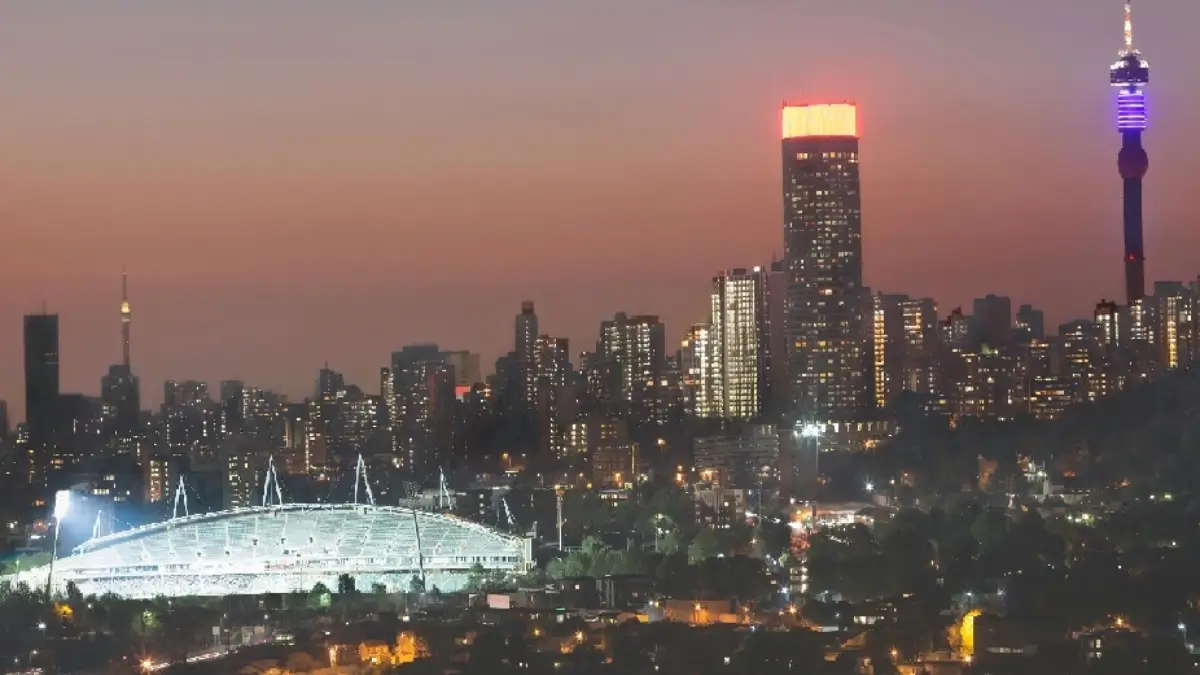
Johannesburg is heading into a rare double-event long weekend, with Ultra South Africa at the Expo Centre on Saturday 25 April and the Soweto Derby between Kaizer Chiefs and Orlando Pirates at FNB Stadium on Sunday 26 April. The timing affects Gauteng residents, commuters, businesses and visitors because both events sit in the same southern corridor and are expected to draw heavy crowds over the Freedom Day weekend. It matters beyond logistics because the derby is rooted in Soweto’s football history, while the festival adds a global music audience to the same urban story.
The result is a Johannesburg weekend that is less about a single match or a single party than about how the city presents itself: through football, music, memory and movement. The derby remains one of African football’s most significant fixtures, while the festival has become a cornerstone of the local electronic music calendar. Put together, they turn the city’s southern edge into one of the busiest cultural zones in the country this week.
ALSO READ: Flu Vaccines Widely Available Across Gauteng as Early 2026 Flu Season Begins
Johannesburg Heads into a Double-event Weekend
The immediate story is simple. Ultra’s Johannesburg leg starts at 14:00 on Saturday and runs through to 02:00 on Sunday at the Nasrec Exhibition Centre, with organisers saying gates open at 14:00 and peak traffic is expected between 17:00 and 20:00. Less than a day later, the second league Soweto Derby of the season kicks off at 15:00 on Sunday at FNB Stadium, with Kaizer Chiefs telling supporters that gates will open at 10:00 and that tickets are already sold out.
That puts two different crowds into one wider precinct over the same long weekend. South African Tourism describes FNB Stadium as a 94,736-seat venue in Nasrec near Soweto and the largest stadium in the country, which helps explain why the derby continues to land there when the fixture needs scale. Ultra, by contrast, uses the adjacent exhibition grounds and a late-night festival format, but the geography is effectively shared.
Why The Rivalry Still Carries Historic Weight
The derby’s cultural pull begins with the histories of the two clubs. Pirates were formed in 1937, with the club saying James Sofasonke Mpanza was instrumental in their formation. Chiefs were formally founded on 7 January 1970, and the club’s official history says Kaizer Motaung returned from the North American Soccer League, broke from turmoil at Pirates and established the new club at 8414 Sentsho Street in Phefeni, Orlando West.
That origin story is one reason the fixture has always carried more than football meaning. ESPN recently described the Soweto Derby as South African, and even African, football’s most anticipated fixture, while CAF has called it one of the continent’s fiercest derbies and dated the rivalry back to 24 January 1970. ESPN also notes that South Africa’s first multiracial football league began in 1978, years before the country’s first democratic election, underscoring why the game still carries political and social memory as well as sporting rivalry.
The current football context only sharpens that history. Chiefs say Sunday’s match will be the 185th official meeting between the sides. Pirates arrive with the recent edge after winning 3-0 in the previous league derby on 28 February, and Kaizer Chiefs’ match centre shows Pirates on 58 points and Chiefs on 46 ahead of this weekend’s meeting. The history may be long, but the present story is about whether Chiefs can break Pirates’ recent hold over the fixture.
The City Around The Stadium Tells The Deeper Story
What makes this weekend different in Johannesburg is that the derby is surrounded by places that explain why Soweto carries such weight in the national imagination. South African Tourism describes Soweto today as a vast urban area with more than one million residents, around 355,000 households and a history shaped by removals, resistance and rapid growth. That means the match is not staged in a vacuum. It sits inside a place where football, politics and everyday life have overlapped for generations.
That history is visible just beyond the stadium district. Vilakazi Street is described by South African Tourism as the only street in the world to have housed two Nobel laureates, Nelson Mandela and Desmond Tutu. Nearby, the Hector Pieterson Museum recalls the 16 June 1976 uprising, while Constitution Hill links central Johannesburg to the prison history that preceded democracy. Even FNB Stadium itself is layered with memory: South African Tourism notes that it hosted Mandela’s first major Johannesburg speech after his release and later his memorial service.
The Crowd Is Part of The Spectacle
The derby’s reach has always come from supporters as much as players. South African Tourism describes the fixture as one that attracts huge crowds and retains a sense of camaraderie between fans despite the rivalry, while Orlando Pirates’ February match report called Chiefs and Pirates the two most followed clubs in South Africa and noted the “usual full house” atmosphere. Chiefs now say Sunday’s rematch is sold out again, which means the event will extend beyond the stadium into homes, bars and public viewing spaces across Gauteng.
The supporter culture is also broader than chanting and scorelines. Derby day has become a visual event in its own right, with lifestyle coverage treating matchday clothing as part of the experience and not just an afterthought. That may sound secondary, but it helps explain why the Soweto Derby travels so far beyond the 90 minutes: people do not only watch it, they stage themselves inside it.
Ultra Brings a Second Audience to The Same Precinct
If the derby is built on history, Ultra arrives as a different kind of city marker. 5FM’s event coverage says the 2026 edition brings international main-stage headliners to Johannesburg while also expanding local stages including RESISTANCE, The Groove Room and the UMF Radio Stage. The Groove Room is specific to Johannesburg and is positioned as a platform for African electronic music culture, which gives the event a more local identity than the global branding alone might suggest.
The official Ultra site adds the immediate operational detail. Tickets for Johannesburg remain on sale across general admission, VIP and VVIP tiers, the event is cashless, and organisers are managing access around a defined safety zone and peak traffic window. 5FM says the festival has been running since 2014 and now draws tens of thousands of fans each year, which is why its presence alongside the derby matters for Gauteng’s cultural calendar rather than only for the dance music scene.
Who Will Shape The Weekend on The Pitch and The Decks
On the football side, Relebohile Mofokeng enters the weekend as Pirates’ outstanding form player. The club says he won its March Player of the Month award after scoring four goals and creating 20 chances in the month, and he was central to the February derby performance that set up Pirates’ 3-0 win. Alongside him, Oswin Appollis is the most recent derby scorer Chiefs still have to contain after netting in that February meeting.
Chiefs’ sharper recent threat has included Glody Lilepo, whose goal sealed the recent 2-0 win over TS Galaxy, and a wider attacking structure that has looked more productive in recent weeks even after the 0-0 draw with Polokwane City. On the festival side, the significance lies less in a single performer than in the mix: Ultra’s Johannesburg programme pairs international electronic brands with local South African talent and locally specific stages, which is why the event fits this story about Johannesburg rather than floating above it.
What This Means for Gauteng Residents
For Gauteng residents, the weekend is not only about entertainment. It translates into a concentrated test of transport systems, crowd management and the visitor economy in the south of Johannesburg.
- Movement in the Nasrec-FNB corridor will intensify over two days. Ultra expects peak traffic from 17:00 to 20:00 on Saturday, while Chiefs have set Sunday gate opening for 10:00 ahead of a sold-out 15:00 kick-off.
- Food, tourism and hospitality businesses are likely to benefit. eNCA reported economist Duma Gqubule saying derby events typically lift spending on transport, food, tourism and gate revenue.
- Johannesburg gets a national showcase that is both cultural and commercial. The derby remains one of African football’s headline fixtures, while Ultra continues to position the city as a major stop on the local music calendar.
FAQ
When is the Soweto Derby this weekend?
It is scheduled for Sunday, 26 April 2026 at 15:00 at FNB Stadium.
What happened in the last meeting between Chiefs and Pirates?
Pirates won 3-0 on 28 February 2026 in the Betway Premiership at FNB Stadium.
What is happening at Ultra in Johannesburg?
Ultra’s Johannesburg leg takes place on Saturday, 25 April, from 14:00 until 02:00 at the Nasrec Exhibition Centre, with official traffic management in place and tickets still on sale on the organiser’s site.
Why does Vilakazi Street matter to a derby weekend story?
Because it places the football weekend inside a wider Soweto history: it housed Nelson Mandela and Desmond Tutu, and it sits close to the Hector Pieterson Museum and the 1976 uprising memorial landscape.
By Monday, Johannesburg will have staged a compressed version of what makes it distinctive: a football rivalry shaped by Soweto history, a stadium district linked to national memory, and a major music festival drawing a different crowd into the same part of the city. The next 72 hours will show whether organisers, clubs and city systems can absorb that pressure smoothly.
