




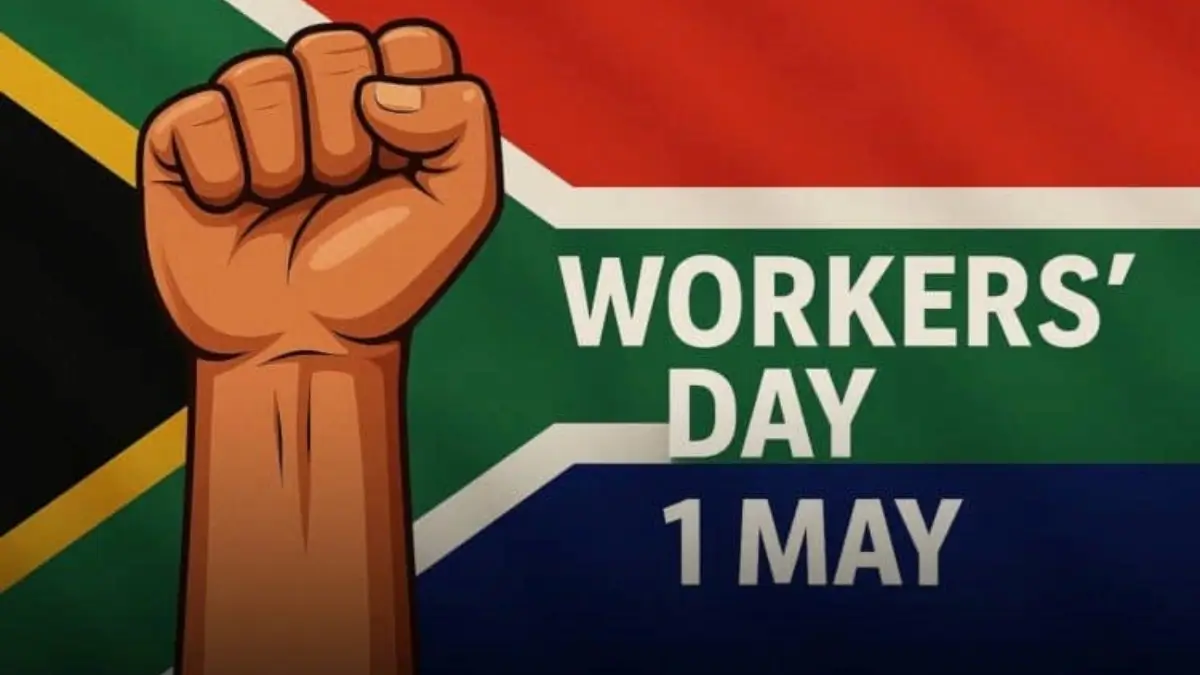
Workers’ Day is being marked across South Africa on Thursday, 1 May 2026, with events, marches and commemorations highlighting the role of workers and the ongoing fight for labour rights. The public holiday affects millions of workers across Gauteng, from formal employment sectors to informal and essential services.
The day reflects both global labour movements and South Africa’s own history, where trade unions played a key role in the struggle against apartheid. Authorities and labour organisations say the occasion remains relevant as economic pressures, unemployment and workplace conditions continue to shape the lives of workers across the province.
ALSO READ: Gauteng Load Reduction Schedule 27–30 April 2026: Full Timetable By Area and Block
What Workers’ Day Commemorates
Workers’ Day, also known as May Day, is an international public holiday observed in many countries.
It originated in the late 19th century, driven by labour movements advocating for:
- Fair working conditions
- The eight-hour workday
- Improved wages and worker protections
Globally, the day has been commemorated since 1891 and continues to serve as a platform for labour rights advocacy.
Why Workers’ Day Matters in South Africa
In South Africa, Workers’ Day has a distinct historical and political significance.
Since 1994, it has been recognised as an official public holiday, reflecting the contribution of organised labour to the country’s democratic transition.
Trade unions and labour organisations played a central role in:
- Mobilising resistance during apartheid
- Advocating for fair labour laws
- Supporting broader social justice movements
According to the Department of Employment and Labour, the day remains a reminder of “the historical struggles of workers and their trade unions for solidarity and fair employment standards”.
The Gauteng Context: Workers at The Centre of Economic Activity
Gauteng, as South Africa’s economic hub, is home to a diverse workforce spanning industries such as:
- Manufacturing
- Retail and services
- Transport and logistics
- Public sector employment
The province also has a large informal sector, where workers often operate without formal protections or benefits.
Workers’ Day therefore reflects the realities of:
- High unemployment levels
- Economic inequality
- Ongoing labour disputes
- Pressure on wages and working conditions
Role of Trade Unions and Labour Movements
Trade unions continue to play a visible role in Workers’ Day activities across Gauteng.
Historically, organisations such as COSATU mobilised large-scale demonstrations calling for:
- Recognition of Workers’ Day as a public holiday
- Improved working conditions
- Political reform
Today, unions use the day to:
- Address wage negotiations
- Raise concerns about job security
- Advocate for safer workplaces
Large gatherings, rallies, and marches are expected in parts of Gauteng as part of the commemoration.
Faith Sector and Social Justice Messaging
Workers’ Day observances also extend beyond labour organisations.
Faith-based institutions across Gauteng often mark the day by highlighting:
- The dignity of work
- Social justice principles
- Support for vulnerable workers
Community leaders use the occasion to call for:
- Greater accountability in workplaces
- Improved support systems for employees
- Stronger protections against exploitation and abuse
Workplace Challenges Still Shaping The Conversation
Despite progress since 1994, several workplace challenges remain prominent.
These include:
- Gender inequality and workplace harassment
- Limited access to support systems for vulnerable workers
- Mental health and wellbeing concerns
- Informal sector vulnerability
Recognition of Essential Workers
Workers’ Day also highlights the contribution of essential workers who continue to operate during public holidays.
These include:
- Healthcare professionals
- Security personnel
- Retail and service workers
- Emergency and public safety staff
The Department of Employment and Labour has acknowledged these groups as critical to maintaining daily operations and public services.
Events and Observances Across Gauteng
Workers’ Day is typically marked by:
- Labour union rallies and marches
- Public addresses by government officials
- Community gatherings and discussions
- Cultural and commemorative events
While participation varies, the day remains one of the most visible public holidays tied to social and economic issues.
What This Means for Gauteng Residents
Workers’ Day affects both workers and the broader public across Gauteng.
For residents, this means:
- A public holiday with limited business operations in some sectors
- Increased visibility of labour-related issues
- Possible road closures or disruptions linked to marches and events
- Continued focus on employment conditions and worker rights
The day also provides a moment for reflection on how labour conditions impact households and communities.
FAQ: Workers’ Day in South Africa
What is Workers’ Day?
Workers’ Day is a public holiday observed on 1 May to honour workers and promote labour rights.
Why is it important in South Africa?
It recognises the role of labour movements in the fight against apartheid and the development of worker protections.
Is Workers’ Day a public holiday?
Yes, it is a national public holiday observed across all provinces.
Who works on Workers’ Day?
Essential workers such as healthcare staff, security personnel and emergency services continue to operate.
How is Workers’ Day celebrated?
Through rallies, marches, public events and community gatherings organised by labour groups and institutions.
What Happens Next
Workers’ Day forms part of a broader month of labour-focused discussions and activities across South Africa. Government, labour organisations and civil society groups are expected to continue engagements on employment, workplace conditions and economic challenges facing workers.
