




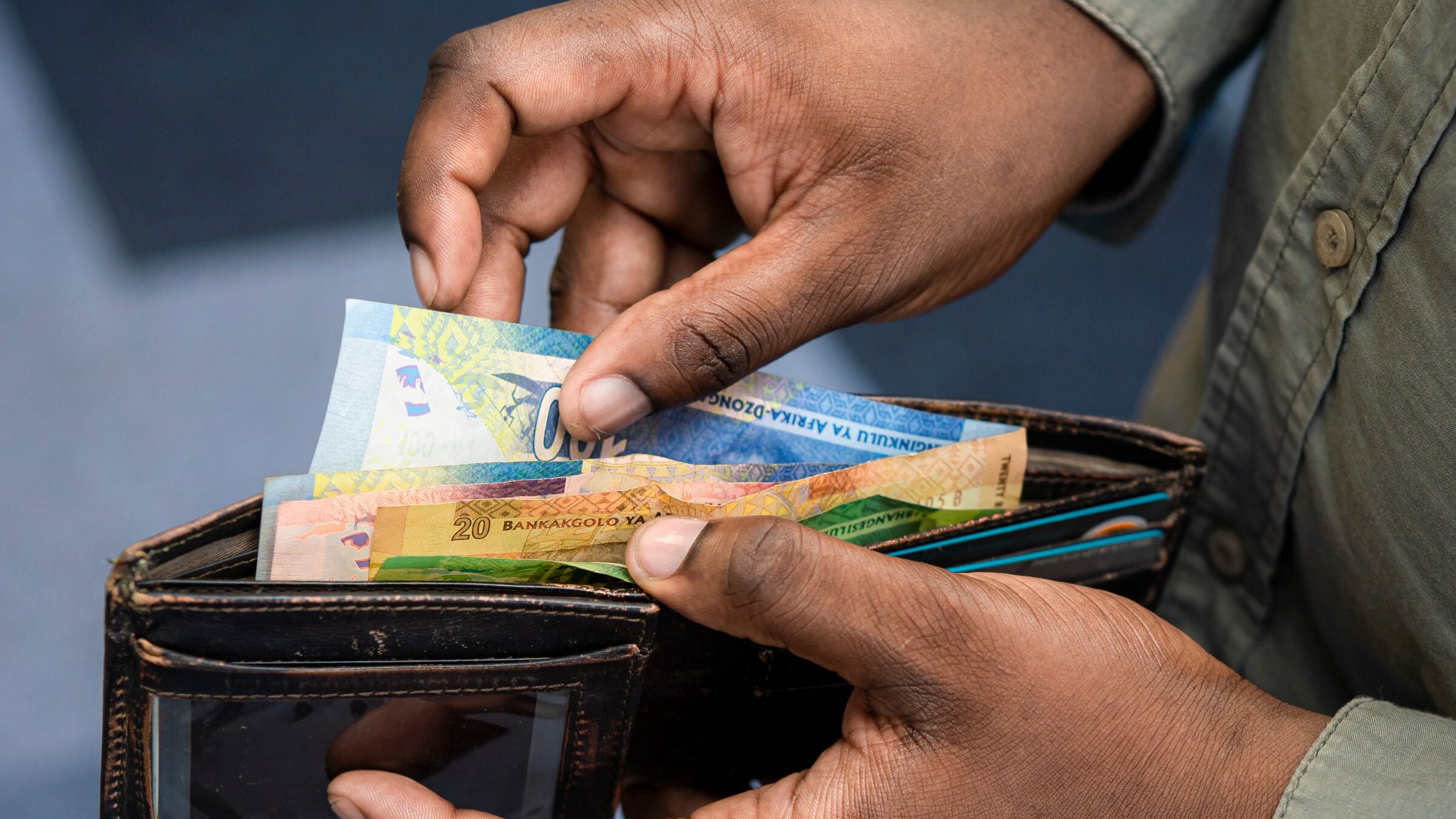
Sorting out money before you land makes the first day in Gauteng a lot easier. Here is how South Africa’s currency works, how to pay, and who you are expected to tip.
The rand
South Africa’s currency is the rand (symbol R, code ZAR), divided into 100 cents. It takes its name from the Witwatersrand, the gold-bearing ridge on which Johannesburg was built.
- Banknotes: R10, R20, R50, R100 and R200
- Coins: 10c, 20c, 50c, R1, R2 and R5
The South African Reserve Bank released an upgraded series of notes and coins from May 2023. You may be handed both the old and the new designs. Both are legal tender and are accepted side by side, so there is no need to swap one for the other.
For today’s rate against the dollar, euro and pound, see our rand exchange rate page.
Paying by card
Cards are widely accepted in Gauteng’s shops, malls, restaurants and hotels. Visa and Mastercard are the safest choice. American Express and Diners Club are accepted in some places but not everywhere, so carry a backup card. Smaller vendors at markets and roadside stalls may only take cash.
Getting cash
ATMs are easy to find in malls, at petrol stations and outside banks, and most accept foreign cards. You can also exchange money at banks and bureaux de change, including at the airports. Bank opening hours vary by bank and branch, so check before you go.
It is wiser to rely mainly on cards and keep only a modest amount of cash on you. If you plan to bring large sums of cash into or out of the country, check the customs declaration rules of the South African Revenue Service before you travel. For safe use of ATMs, see our tips on staying safe in Gauteng.
Tipping
Tipping is part of everyday life in South Africa, and many service workers rely on it.
- Restaurants: a service charge is not usually added to the bill. A tip of about 10% is standard, with more for great service. Check the bill first in case service has already been included.
- Petrol attendants: petrol stations are full-service, and a small tip is customary, especially if the attendant checks your oil, tyres or windscreen.
- Porters and taxi drivers: tipping is common but not compulsory.
- Car guards: at many malls and on-street parking, informal car guards keep an eye on parked cars, and a few rand when you leave is the norm.
