




Gauteng wouldn’t exist as we know it without transport. When gold was discovered on the Witwatersrand in 1886, the first roads were literally laid with stones dropped from ox wagons. Within a few years, railways had raced to reach the new mining town. Today, more than a century later, the province is South Africa’s busiest transport hub, with rapid rail, bus rapid transit, Africa’s busiest air route, global car factories and tourist tuk-tuks all moving people through it.
As South Africa marks October Transport Month under the theme “Building a safe, sustainable, reliable and affordable transport system”, here’s a look at Gauteng transport history and how getting around has changed, from ox wagons and steam trains to the Gautrain and electric cars. We’ve also included where families can see transport history up close, and safety tips for every way you travel.
Gauteng Transport History At A Glance
| Year | Milestone |
|---|---|
| 1886 | Gold is discovered on the Witwatersrand, and Johannesburg is founded |
| 1889 | Johannesburg’s first road is built along what is now Commissioner Street, laid with stones dropped from an ox wagon |
| 1890 | The Rand Tram opens between Johannesburg and Boksburg on 17 March. It’s the first railway in the old Transvaal. |
| 1892 | The first through train from Cape Town reaches Park Station on 15 September |
| 1895 | The Delagoa Bay railway opens on 1 January, linking Pretoria to the port at today’s Maputo |
| 1897 | A Benz Voiturette, the first car seen in Johannesburg, is shown at the Wanderers grounds |
| 1906 | Electric trams start running in Johannesburg. They run until 1961. |
| 1931 | Rand Airport in Germiston opens on 21 December |
| 1946 | The luxury Johannesburg to Cape Town express formally becomes the Blue Train |
| 1952–53 | Jan Smuts International Airport, today’s OR Tambo, is built near Kempton Park |
| 1973 | BMW opens Plant Rosslyn in Tshwane, its first factory outside Germany |
| 1987–88 | Transport deregulation opens the door to the minibus taxi industry |
| 2006 | Johannesburg International Airport is renamed OR Tambo International Airport |
| 2009 | Rea Vaya, Johannesburg’s bus rapid transit system, launches on 30 August |
| 2010 | The Gautrain’s airport line opens on 8 June, just before the FIFA World Cup |
| 2014 | Tshwane’s A Re Yeng bus rapid transit launches in November |
| 2026 | A new 15-year Gautrain operator is appointed, the Mabopane rail corridor is revived and a new City to City bus fleet is launched |
The Early Days: Ox Wagons, Railways And Trams
Before the gold rush, travel across the Highveld meant horseback, ox wagons and coaches on rough tracks. The discovery of gold changed that almost overnight. Mining needed heavy machinery, coal and thousands of workers, and ox wagons couldn’t keep up.
The Race To The Rand
What followed was a “race to the Rand”, as rival railway companies built lines from Cape Town, Durban and Delagoa Bay to reach the goldfields first.
- The Rand Tram opened in March 1890 between Johannesburg and Boksburg, mainly to carry coal to the mines. It was the first railway in the Transvaal.
- The Cape line reached Park Station in September 1892, connecting Johannesburg to Cape Town by rail for the first time.
- The Delagoa Bay line opened to traffic on 1 January 1895, giving Pretoria a direct rail link to the Indian Ocean.
Trams And The First Cars
Inside the growing city, electric trams started running in Johannesburg in 1906. The first route went to Siemert Road in Doornfontein. Trams and, later, trolleybuses carried residents for decades, until the last trams were withdrawn in 1961.
The car arrived early too. In January 1897, a Benz Voiturette was put on show at the Wanderers grounds, the first car seen in Johannesburg. Within a few generations, the motor car would reshape how the whole province was built.
Road Transport: From Minibus Taxis To Car Factories
The Minibus Taxi Revolution
No form of transport has shaped daily life in Gauteng more than the minibus taxi. Informal taxis go back to the 1930s, when operators used five-seater sedans. The industry grew rapidly after transport policy was deregulated with the 1987 White Paper on Transport Policy and the Transport Deregulation Act of 1988. That made taxi permits much easier to get.
Today, minibus taxis are the backbone of public transport in Gauteng. The Gauteng Household Travel Survey (2019/20) found that minibus taxis accounted for 23% of peak-period trips, slightly more than private cars at 22%. Buses and trains together made up just 5%, and more than 29% of trips were made entirely on foot.
Buses And Bus Rapid Transit
Gauteng’s bus history includes municipal fleets such as Johannesburg’s Metrobus and Tshwane Bus Services, as well as long-established commuter companies. The biggest change in recent years has been bus rapid transit (BRT):
- Rea Vaya (“we are going”) launched in Johannesburg on 30 August 2009, ahead of the 2010 FIFA World Cup. It was one of the first BRT systems in Africa, running on dedicated lanes between Soweto, the CBD and surrounding areas. Since 2025 it has also connected the CBD with Alexandra and Sandton.
- A Re Yeng (“let’s go”) launched in Tshwane in November 2014. Its first route ran between the city centre and Hatfield, and buses are partly driven by former taxi drivers who were trained for the system.
Built In Gauteng: The Province’s Car Plants
Gauteng doesn’t just move vehicles, it builds them. Tshwane is the heart of the country’s automotive manufacturing:
- BMW Plant Rosslyn, north of Pretoria, opened in 1973 as the BMW Group’s first factory outside Germany. It built more than 1,19 million 3 Series sedans between 1983 and 2018. Today it’s the only plant in the world building the BMW X3 plug-in hybrid for international markets.
- Ford’s Silverton plant builds the Ford Ranger, including the plug-in hybrid version exported to Europe, Australia and New Zealand. It anchors the Tshwane Automotive Special Economic Zone, which brings component suppliers close to the assembly line.
- Chery has taken over the former Nissan plant in Rosslyn, with production expected to start in mid-2027.
These plants support thousands of jobs in Gauteng, from the factory floor to the suppliers and logistics companies around them.
Rail Transport: From Steam To Speed
PRASA And Metrorail
The Passenger Rail Agency of South Africa (PRASA) runs Metrorail commuter trains in Gauteng. After years of vandalism, cable theft and shutdowns, parts of the network are coming back. On the Pretoria to Mabopane corridor:
- trips grew from 613 in 2020/21 to 11 144 in 2025/26
- passengers on the combined Mabopane routes rose from about 5,2 million to 7,1 million in a year
- a single ticket from Mabopane to Pretoria costs just R7.
Over three years, government has invested about R50 billion in the Gauteng PRASA network, including new signalling and a single control centre for northern Gauteng.
Shosholoza Meyl And City To City Buses
PRASA’s long-distance service, Shosholoza Meyl, once linked Johannesburg with Cape Town, Durban, East London and Musina. Services have largely been suspended since late 2024 because of unreliable locomotives. PRASA plans a limited return in 2027 on routes to Cape Town, Durban, Komani (Queenstown) and Musina.
For long-distance travel by road, PRASA’s City to City buses, run by Autopax, launched a new fleet in Pretoria on 15 October 2026. The buses serve routes to the Eastern Cape and Limpopo and have reclining seats, Wi-Fi, charging ports and onboard toilets.
The Gautrain
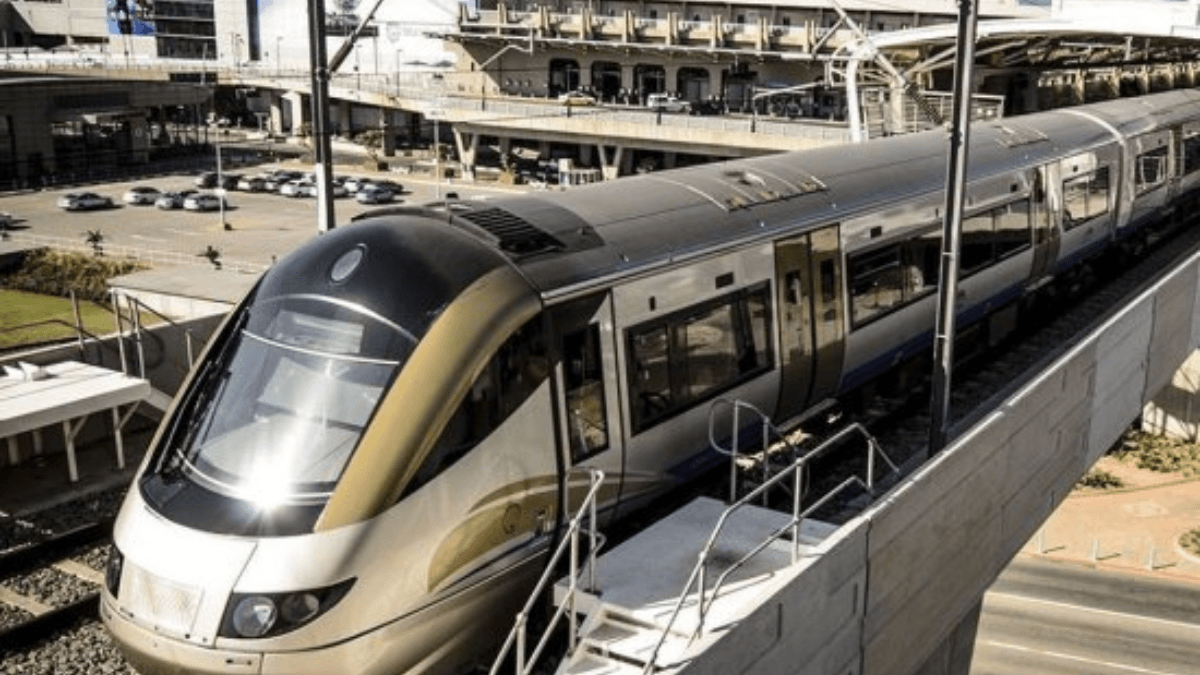
The Gautrain opened its airport line on 8 June 2010 and its full Johannesburg to Pretoria line by 2012. It changed how Gauteng residents think about public transport. The 80 km network links 10 stations, from Park Station to Hatfield and from Sandton to OR Tambo, at speeds of up to 160 km/h. On 30 September 2026, the province appointed the Sihamba Sonke Mobility consortium to run the Gautrain for the next 15 years, with plans for more trains and longer hours.
The Blue Train And Rovos Rail
At the luxury end of rail travel, Pretoria is home to two of the world’s best-known luxury trains:
- The Blue Train, whose roots go back to the Union Express of 1923, formally took the Blue Train name in 1946. It runs about 1 600 km between Pretoria and Cape Town and calls itself a “moving five-star hotel”. Its past passengers include Nelson Mandela.
- Rovos Rail begins its journeys at its own station in Capital Park, Pretoria.
Air Access: From Rand Airport To OR Tambo
Rand Airport: Where It All Began
Gauteng’s aviation story started at Rand Airport in Germiston, which opened on 21 December 1931. It was Johannesburg’s main airport, and South African Airways moved its head office there in 1935. By 1948 the city had outgrown it, and flights moved to Palmietfontein.
OR Tambo And Lanseria Today
In 1952, construction began on Jan Smuts International Airport near Kempton Park. It was renamed Johannesburg International in 1994 and OR Tambo International Airport in 2006. Today it’s South Africa’s busiest airport, handling more than 21 million passengers a year. The route between OR Tambo and Cape Town is Africa’s busiest air route.
Lanseria International, South Africa’s only privately owned international airport, is growing too. Airlink starts new routes to Harare and Cape Town this summer.
Tourism Transport: Seeing Gauteng Differently
Transport isn’t only about getting to work. Some of the best ways to explore Gauteng are tours built around how you travel.
City Sightseeing Red Bus
Joburg’s open-top, hop-on hop-off bus leaves from Rosebank and loops through the northern suburbs, the inner city and the Mining District. It has more than 16 stops, including Constitution Hill, the Apartheid Museum, Gold Reef City and the James Hall Museum of Transport.
- One-day ticket: R375 for adults and R225 for children
- One-day bus and Soweto tour combo: R875 for adults and R475 for children
Tuk-Tuk Tours In Soweto
Local operators run guided tuk-tuk tours around Orlando West and Vilakazi Street. It’s a fun, open-air way to see the Mandela House and the Hector Pieterson Memorial.
Bicycle And Quad Bike Tours
Lebo’s Soweto Bicycle Tours, based in Orlando West, offers two-hour, half-day and full-day rides through the township. For something faster, Soweto Outdoor Adventures runs guided quad bike tours through Soweto’s streets.
Luxury Rail Journeys
For a once-in-a-lifetime trip, the Blue Train and Rovos Rail both depart from Pretoria.
Where To See Transport History: The James Hall Museum Of Transport
For families, the best place to explore all of this history is the James Hall Museum of Transport in Pioneers’ Park, La Rochelle, in the south of Johannesburg. It was founded in February 1964 by Jimmie Hall together with the City of Johannesburg, and it’s the largest land transport museum in South Africa.
What You’ll See
- animal-drawn vehicles, ox wagons and carts from the 1870s
- bicycles, including penny-farthings, and motorcycles
- fire engines from 1877 to 1960
- cars from 1900 to 1980, from the Model T Ford onwards
- steam-driven vehicles, trams and trolleybuses.
Visitor Information
- Hours: Tuesday to Sunday, 09:00 to 16:30. On weekends it closes from 12:00 to 13:00. It’s closed on Mondays, Good Friday, Christmas Day, Boxing Day and New Year’s Day.
- Entry: free, but donations are welcome
- Address: Pioneers’ Park, Rosettenville Road, La Rochelle, Johannesburg
- Phone: 011 435 9718
- Time needed: about an hour
Family Tip
The museum is a stop on the City Sightseeing red bus route. You can also pair your visit with the South African Airways Museum at Rand Airport in Germiston, which has retired Boeing 747s and other historic aircraft on display.
How Transport Is Changing Gauteng’s Future
Gauteng’s transport story is still being written. Here’s what to watch:
- More rail capacity: the new Gautrain operator plans to grow the fleet from 24 to 32 trains. The proposed Gauteng Rapid Rail Integrated Network includes possible new stations from Soweto to Lanseria.
- Metrorail recovery: PRASA plans to almost double trains on the Mabopane line to one every 10 minutes.
- Greener vehicles: plug-in hybrids are already rolling off the lines in Rosslyn and Silverton, and new energy vehicle supply chains are a key focus of national policy.
- Better integration: expanded Gautrain bus routes, BRT extensions and safer taxi ranks aim to make it easier to combine different types of transport in one trip.
- Air growth: OR Tambo’s R14,5 billion upgrade, Lanseria’s expansion and long-term plans for a Vaal International Airport.
Transport Safety Tips For Every Journey
On The Road
- Always wear a seatbelt, in the front and back seats.
- Children under 3 must ride in an appropriate car seat by law, and older children should use a booster seat until the adult belt fits properly.
- Never drink and drive. Plan a designated driver or use e-hailing.
- Take a break every two hours, or every 200 km, on long trips, especially in the festive season.
- Put your phone away while driving.
Taxis, Buses And E-Hailing
- Use registered taxis from recognised ranks, and know your route and fare before you board.
- Keep your phone and valuables out of sight.
- For e-hailing, check that the registration plate and driver match what’s in the app, and share your trip with someone.
Trains And Stations
- Stand behind the yellow line on platforms, and let passengers off before you board.
- Never ride on the outside of a train, cross the tracks or walk along railway lines.
- Watch children closely on platforms and escalators.
- On the Gautrain, tag in and out with the same card, and remember there’s no eating or drinking.
Walking, Cycling And Guided Tours
- Use pedestrian crossings and bridges, and make eye contact with drivers before you cross.
- Wear bright or reflective clothing at night.
- Cyclists should always wear a helmet and use lights after dark.
- On guided bicycle or tuk-tuk tours, book with reputable operators and follow your guide’s instructions.
Emergency Numbers
- Police: 10111
- Ambulance and fire: 10177
- From any cellphone: 112
Frequently Asked Questions
What Was The First Railway In Gauteng?
The Rand Tram, which opened between Johannesburg and Boksburg on 17 March 1890, was the first railway in the Transvaal. It was built mainly to carry coal to the gold mines.
When Did The Gautrain Open?
The Gautrain’s airport line, linking Sandton and OR Tambo, opened on 8 June 2010. The full Johannesburg to Pretoria line followed by 2012.
When Did Rea Vaya Start?
Rea Vaya, Johannesburg’s bus rapid transit system, launched on 30 August 2009.
Is The James Hall Museum Of Transport Free?
Yes. Entry is free, and donations are welcome. The museum is open Tuesday to Sunday from 09:00 to 16:30.
Which Car Factories Are In Gauteng?
Gauteng’s car plants include BMW Plant Rosslyn and Ford’s Silverton plant in Tshwane. Chery is preparing to start production at the former Nissan plant in Rosslyn in 2027.
Is Shosholoza Meyl Running?
Not at the moment. Shosholoza Meyl services have largely been suspended since late 2024. PRASA plans a limited service in 2027 on routes including Johannesburg to Cape Town and Durban.
What Is The Theme Of Transport Month 2026?
The national theme is “Building a safe, sustainable, reliable and affordable transport system”. Gauteng’s provincial theme is “Moving Gauteng Forward: Safer Roads, Smarter Mobility, Greener Transport”.
Sources
- Department of Transport: October Transport Month 2026
- The Heritage Portal: Joburg’s Firsts
- The Heritage Portal: Race To The Rand
- The Conversation: Fixing South Africa’s Minibus Taxi Industry, Tracing Its History
- Engineering News: Gauteng Travel Survey Shows Buses And Trains Shunned In Favour Of Cars And Taxis
- Rea Vaya, Wikipedia
- SAnews: State-Of-The-Art Buses Launched In Tshwane (A Re Yeng)
- BMW Group Plant Rosslyn: History
- TimesLIVE: Creecy Unveils R50bn PRASA Upgrades, New Bus Fleet
- SAnews: PRASA Restores Gauteng Passenger Rail Services
- GroundUp: Shosholoza Meyl Faces Uncertain Future
- Gautrain, Wikipedia
- Blue Train (South Africa), Wikipedia
- Luxury Trains: The Blue Train, Cape Town To Pretoria
- Rovos Rail: The Pride Of Africa
- Rand Airport, Wikipedia
- O. R. Tambo International Airport, Wikipedia
- City Sightseeing: Open-Top Bus Tours Joburg
- City Sightseeing: James Hall Museum Of Transport (Stop 12)
- James Hall Museum Of Transport: Opening Times
- AutoMuseums: James Hall Museum Of Transport
- In Your Pocket: Lebo’s Soweto Bicycle Tours
- What’s On G: Transport Month 2026, Minister Creecy
