




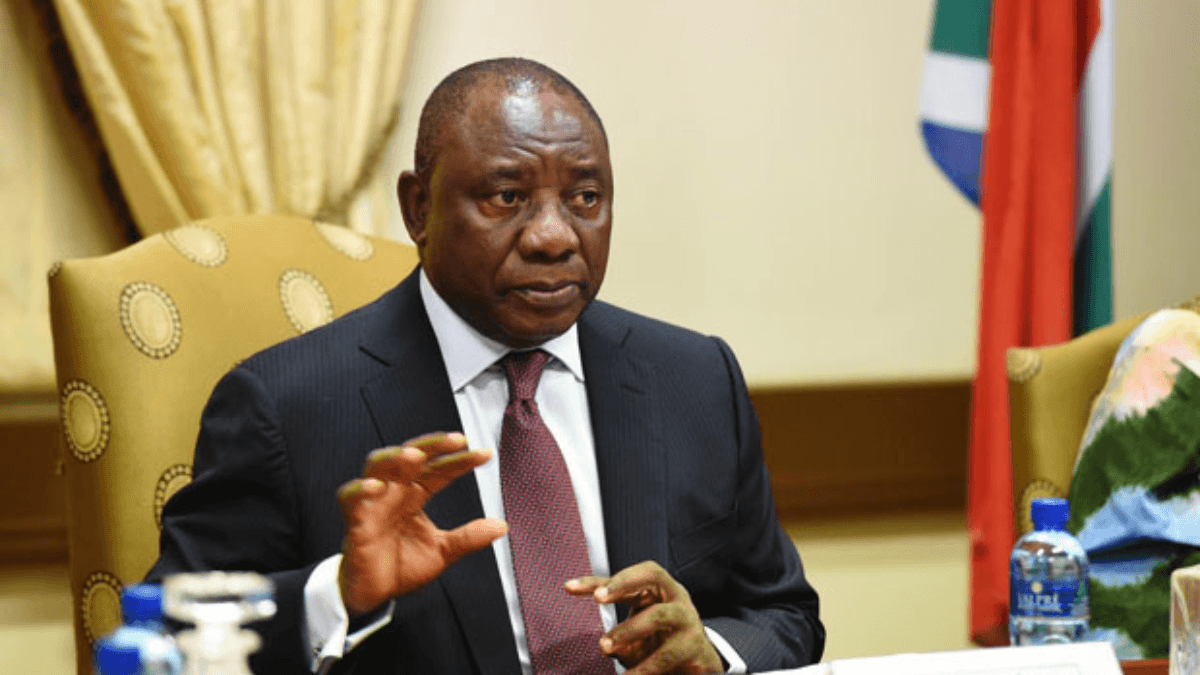
President Cyril Ramaphosa will unveil the revised White Paper on Local Government at the Birchwood Hotel and OR Tambo Conference Centre in Boksburg, Ekurhuleni, today, Thursday, 22 October 2026.
The policy sets out how government plans to fix South Africa’s struggling municipalities. It focuses on governance, financial management, accountability and service delivery. Government says it plans to start implementing it within the next three months.
Before the launch, Cooperative Governance and Traditional Affairs (CoGTA) Minister Velenkosini Hlabisa will meet Cabinet members and key local government stakeholders to discuss the policy. The announcement comes less than two weeks before the local government elections on 4 November.
What Is The White Paper On Local Government?
A White Paper is a government policy document that sets out the direction for a sector. The current local government system is based on the 1998 White Paper on Local Government, which shaped how municipalities were set up after apartheid.
More than 25 years later, government says that system needs updating. The review started with a discussion document in April 2025. A draft revised White Paper was published for public comment in May 2026, and Cabinet has since approved the final version.
The launch theme is “Every Municipality Must Work: From Policy to Collective Action”.
What Will Be Launched Today?
According to government, the launch will introduce:
- the revised White Paper on Local Government, approved by Cabinet
- an Implementation Plan to turn the policy into action
- a Transition Management Body, a temporary body to drive the move from policy to implementation
- a Research Compendium with the research behind the review.
Leaders from all 257 municipalities are expected to attend, along with national and provincial government, Parliament, oversight bodies, organised local government, traditional and Khoi-San leaders, labour, business, civil society and academics.
ALSO READ: Local Elections 4 November 2026: A Voter’s Guide To Your Ward, Ballots, ID And Public Holiday Pay
Why Municipalities Need Fixing
The latest audit results show the scale of the problem. According to the Auditor-General’s 2024/25 local government report, released in June 2026:
- only 39 of 257 municipalities (15%) got clean audits, down from 41
- none of the eight metros received a clean audit
- all three Gauteng metros, Johannesburg, Tshwane and Ekurhuleni, regressed in their audit outcomes
- metros accounted for 58% of irregular expenditure in 2024/25
- the City of Johannesburg was described as technically insolvent, owing Eskom R5,3 billion, with an infrastructure backlog of more than R200 billion.
Auditor-General Tsakani Maluleke said mayors and councils had “made limited progress” over the past four years, and that “the audit outcomes and performance of the eight metros continue to decline”.
Hlabisa has said that unauthorised, irregular, fruitless and wasteful expenditure across municipalities totals R268,13 billion.
What The Revised White Paper Aims To Change
The full final document will be released at today’s launch. Based on the draft and on statements from government, the reforms are expected to focus on the following areas.
A Differentiated Approach
Not all municipalities are the same. The policy recognises that metros, secondary cities, rural municipalities and small towns have very different capacities and needs. Instead of a one-size-fits-all system, it proposes support and rules suited to each type.
Fixing The District And Local Model
In his address to the National Council of Provinces in May, Ramaphosa said the split between district and local municipalities has led to duplication, extra costs and overlapping functions. “The structures developed in the past may not serve us anymore,” he said.
Professional, Merit-Based Appointments
Hlabisa has been outspoken about hiring in municipalities. “Cadre deployment, the employment of friends, family members, your cronies” has driven municipal failures, he told 702 earlier this month. Government plans to check senior municipal job adverts for compliance and make sure qualified people fill key posts. It has also discussed minimum qualifications for councillors.
Accountability And Consequence Management
The reforms aim to make roles and lines of accountability clear, and to make officials and politicians face consequences for corruption and poor performance. “The days of those with political ambition colluding with corrupt business people to loot municipalities are over,” Ramaphosa said in May.
Financial Sustainability
Government wants to overhaul municipal billing and revenue collection, tighten oversight of how money is spent, and look at how municipalities are funded.
Citizen Participation And Traditional Leadership
The draft also covered how communities take part in local government, intergovernmental coordination and the role of traditional leaders. Its 65 recommendations covered seven broad areas.
When Will The Reforms Take Effect?
Government intends to implement the policy within the next three months. A 90-day transition plan will manage the sequencing and monitoring of the first reforms. Hlabisa has said the main rollout will follow the 4 November local government elections, so the new councils will be the first to work under the reformed system.
Some changes may also need amendments to existing laws, which will take longer.
What This Means For Gauteng Residents
Gauteng’s three metros manage huge budgets and serve millions of households. Residents deal every day with water outages, billing problems, potholes and power cuts linked to municipal debt. If the reforms are implemented properly, they could improve financial management, put qualified people in key jobs and make it easier to hold officials accountable.
But policy alone won’t fix municipalities. Implementation will be the real test, and the councils elected on 4 November will have a central role.
Frequently Asked Questions
When Is The White Paper On Local Government Being Launched?
President Ramaphosa launches the revised White Paper on Local Government today, Thursday, 22 October 2026, at the Birchwood Hotel and OR Tambo Conference Centre in Boksburg, Ekurhuleni.
What Is The Revised White Paper On Local Government?
It’s a new policy framework that updates the 1998 White Paper on Local Government. It aims to improve how municipalities are governed, managed and held accountable, and how they deliver services.
When Will The White Paper Be Implemented?
Government plans to start implementing it within three months, through a 90-day transition plan. Most reforms will be rolled out after the 4 November local government elections.
Why Is The White Paper Being Reviewed Now?
The local government system has faced persistent problems, including poor audit outcomes, financial distress, corruption and weak service delivery. Only 15% of municipalities got clean audits in 2024/25.
Will The White Paper Change How Municipal Officials Are Appointed?
Yes. Government has said the reforms will ensure suitably qualified people fill senior municipal posts, and that recruitment will be checked for compliance.
