




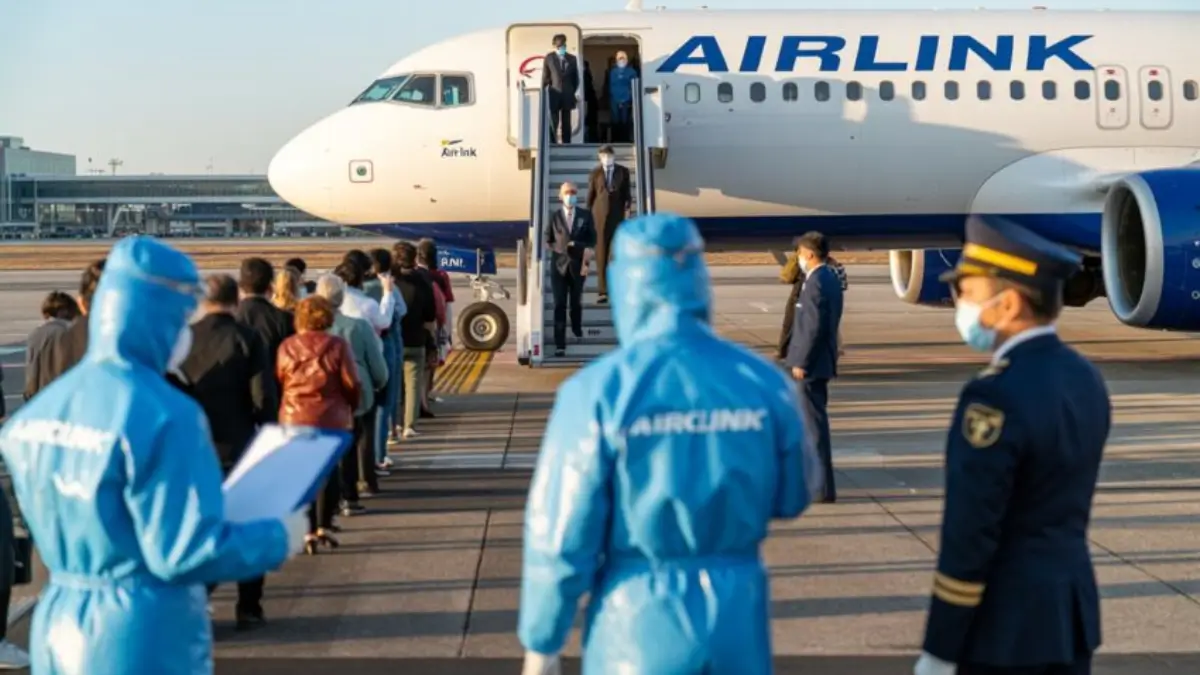
Health authorities and airline officials are working to trace passengers and crew linked to a flight that carried a tourist infected with the Andes strain of hantavirus pulmonary syndrome (HPS) to Johannesburg. The tracing process began eight days after the passenger arrived in South Africa, raising concerns among medical experts about delayed outbreak response measures.
The case centres on a 69 year old Dutch tourist who became critically ill after travelling from St Helena to Johannesburg before collapsing at OR Tambo International Airport on 25 April. She later died in hospital.
The incident has placed renewed attention on infectious disease monitoring, airport health protocols and emergency response systems in Gauteng, particularly at one of Africa’s busiest travel hubs.
Airlink Begins Passenger and Crew Tracing Process
According to airline officials, an Airlink flight arriving from St Helena carried the infected passenger before she attempted to board a KLM flight to Amsterdam at OR Tambo International Airport.
The woman reportedly collapsed shortly before departure and was removed from the aircraft before being taken to hospital.
Airlink chief executive de Villiers Engelbrecht said the airline was only informed of the potential hantavirus exposure risk several days later.
The delay meant contact tracing procedures only began eight days after the original flight landed in Johannesburg.
Officials confirmed there were:
- 82 passengers onboard
- Six crew members on the Airlink flight
- Additional airline personnel potentially exposed
Airlink said several crew members, engineers and operational staff have since been placed under medical observation after coming into direct contact with the infected traveller.
Dutch Flight Attendant Hospitalised in Amsterdam
The incident has also triggered international monitoring efforts.
According to Dutch health officials, a KLM flight attendant who reportedly assisted the passenger after she became ill was hospitalised in Amsterdam after developing mild symptoms linked to possible exposure.
The crew member was admitted to a specialised hospital ward for diagnostic testing and observation.
International health authorities are continuing to monitor the situation while tracing additional contacts linked to the passenger’s travel movements.
Medical Experts Raise Concerns Over Eight Day Delay
Medical experts say the eight day delay in notifying airlines and tracing passengers is concerning given the severity of hantavirus pulmonary syndrome.
General practitioner Juandre van den Berg said the timeline may complicate tracing efforts because aircraft frequently operate multiple routes over short periods.
“Eight days is a bit long,” Van den Berg said in comments reported on Thursday.
He explained that airlines often rotate aircraft rapidly between destinations, increasing the challenge of identifying all potentially exposed individuals if delays occur.
Experts say the early symptoms of hantavirus can resemble influenza, making initial detection difficult.
These symptoms may include:
- Fever
- Fatigue
- Muscle aches
- Headaches
- Chills
- Nausea
- Body pain
Medical experts say respiratory complications can then escalate rapidly.
What Is Hantavirus Pulmonary Syndrome?
According to the National Institute for Communicable Diseases, hantavirus pulmonary syndrome is a severe respiratory disease caused by hantaviruses.
The illness is most commonly linked to exposure to infected rodent urine, saliva or droppings.
The NICD said most infections occur through environmental exposure rather than direct human transmission.
Medical experts stressed that the Andes strain linked to the current case differs slightly because limited human-to-human transmission has been documented internationally.
However, experts say transmission typically requires close personal contact and exposure to bodily fluids.
“It is not as contagious as Covid,” Van den Berg said.
Respiratory Symptoms Can Escalate Quickly
Doctors say hantavirus infections can worsen suddenly after several days of flu-like symptoms.
According to the NICD, patients may develop:
- Severe coughing
- Shortness of breath
- Fluid build-up in the lungs
- Acute respiratory distress
Van den Berg said the disease may deteriorate rapidly within hours once lung complications begin.
Health experts estimate mortality rates linked to the Andes strain have reached between 30% and 50% in some outbreaks in South America.
Currently, there is no specific antiviral treatment available for hantavirus pulmonary syndrome.
Treatment typically includes:
- Oxygen therapy
- Intensive care support
- Mechanical ventilation
- Hospital monitoring
Gauteng’s Position as a Travel Hub Raises Additional Concerns
The incident has drawn attention because Gauteng remains South Africa’s primary international travel gateway.
OR Tambo International Airport processes thousands of international passengers daily, increasing the importance of rapid disease monitoring and communication systems.
Medical experts say delays in notifying airlines and airport authorities may complicate efforts to identify possible exposure chains.
The case also highlights the continued importance of:
- Airport health screening systems
- International health communication
- Passenger tracing procedures
- Emergency response coordination
Public health officials have not announced any broader outbreak within Gauteng at this stage.
What This Means for Gauteng Residents
For Gauteng residents, the incident highlights how quickly international health events can affect major transport and travel hubs within the province.
While experts stress that hantavirus is not spread as easily as Covid 19, the delayed tracing process has renewed focus on how health authorities respond to potentially serious infectious diseases linked to air travel.
Medical experts continue to urge calm, noting that most hantavirus infections are linked to rodent exposure rather than routine public interaction.
However, residents experiencing severe flu-like symptoms accompanied by breathing difficulties are encouraged by health professionals to seek medical attention promptly.
FAQ: Hantavirus and the Johannesburg Flight Case
What is hantavirus pulmonary syndrome?
It is a rare but severe respiratory illness caused by hantaviruses.
How is hantavirus usually spread?
Most infections are linked to exposure to infected rodent urine or droppings.
Can hantavirus spread between people?
Human to human transmission is considered very uncommon, although limited cases involving the Andes strain have been documented.
What are the early symptoms?
Symptoms often resemble flu and may include fever, fatigue, muscle aches and headaches.
Is hantavirus as contagious as Covid 19?
No. Medical experts say hantavirus is significantly less contagious and generally requires close contact for human transmission.
What Happens Next
Airlink and health authorities are expected to continue tracing passengers and crew linked to the Johannesburg flight while monitoring individuals who may have had close contact with the infected traveller.
International health agencies are also continuing investigations linked to the cruise ship and connected flights.
Medical experts say the case may prompt further review of communication timelines and infectious disease response procedures involving airlines, airports and public health authorities in South Africa.
