



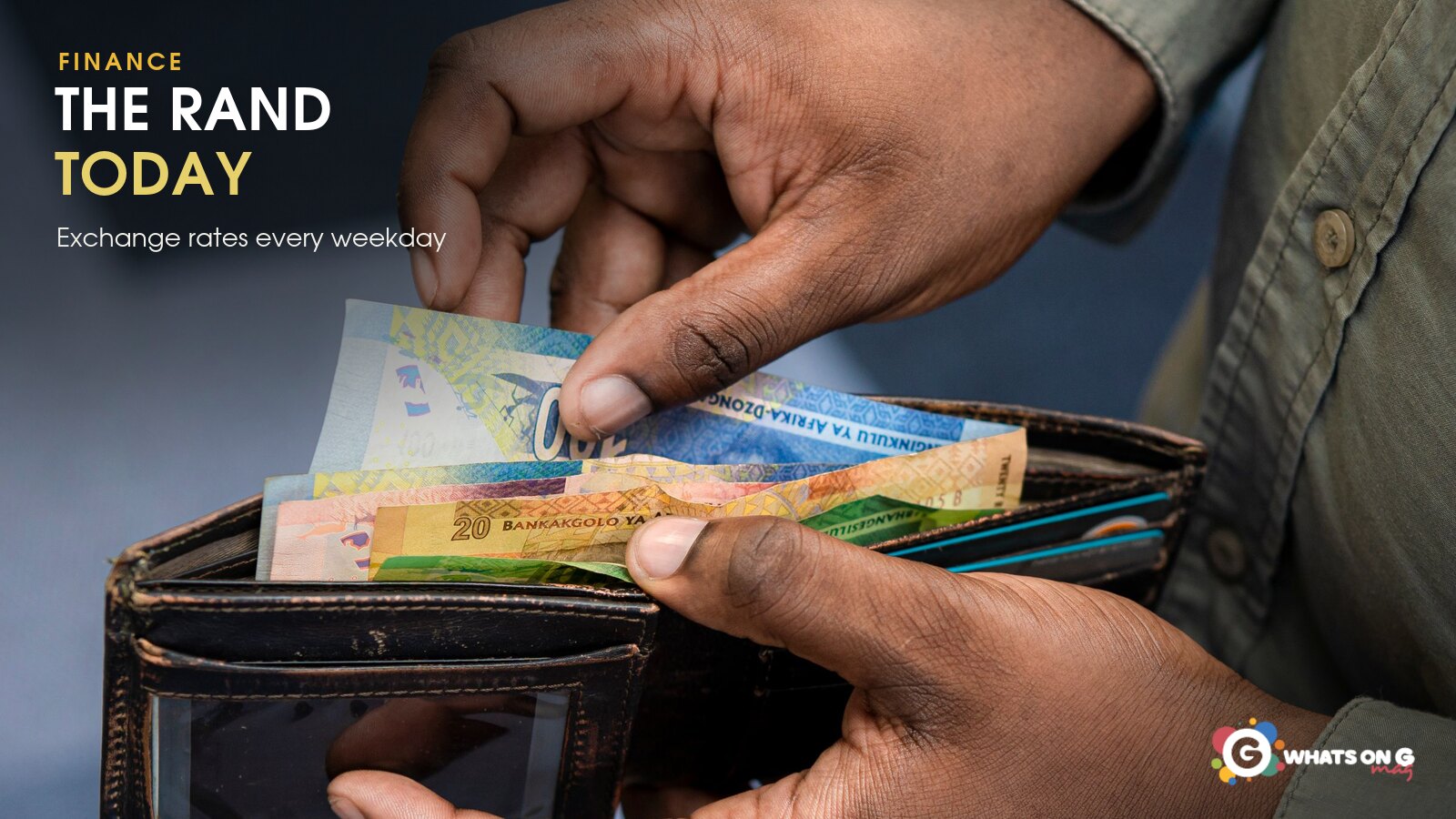
Rand exchange rates today
| Currency | Rand | Since 21 October | Past month |
|---|---|---|---|
| US dollar | R16.52 | up R0.14 | R16.24 to R16.73 |
| Euro | R18.51 | up R0.11 | R18.39 to R18.78 |
| Pound | R22.09 | up R0.15 | R21.59 to R22.09 |
| Yuan | R2.47 | up R0.02 | R2.42 to R2.50 |
| Aussie dollar | R11.58 | up R0.06 | R11.42 to R11.61 |
| 100 Yen | R10.52 | up R0.15 | R10.33 to R10.61 |
The rand’s performance against the dollar, pound and euro sets the tone for petrol prices, food inflation and interest rates in South Africa. This page tracks how the rand is trading, what’s moving it, and what that means for your pocket in Gauteng.
Latest rand & economy coverage
Weekly rand wrap-ups and major currency moves are published as they happen – browse the Finance section for the most recent coverage.
What moves the rand
- US interest rates and the dollar: when US rates rise or global investors get nervous, money flows out of emerging-market currencies and the rand weakens.
- SARB’s repo rate decisions: the Reserve Bank’s Monetary Policy Committee meets roughly every two months; rate surprises move the currency the same day.
- Commodity prices: gold, platinum and coal exports back the rand – strong commodity runs usually mean a firmer currency.
- Load-shedding, logistics and politics: Eskom stability, Transnet performance, elections and budget announcements all show up in the exchange rate within hours.
Why the exchange rate hits your pocket
- Petrol and diesel: fuel is priced in dollars, so a weaker rand feeds directly into the monthly adjustment – track it on our fuel price page.
- Food and imports: wheat, rice, electronics and vehicle parts are imported – a 5% weaker rand works through to shelf prices within months.
- Interest rates: a sliding rand pushes inflation up, which pressures the SARB to keep the repo rate – and your bond repayment – higher for longer.
Common questions
Where can I check the live rate? Your bank’s app gives the retail rate you’d actually pay; financial sites quote the interbank rate, which is better than any rate offered to consumers.
What’s a “good” rate to buy dollars? There’s no timing trick that beats planning ahead – spread big purchases (travel money, imports) over weeks rather than converting everything on one day.