




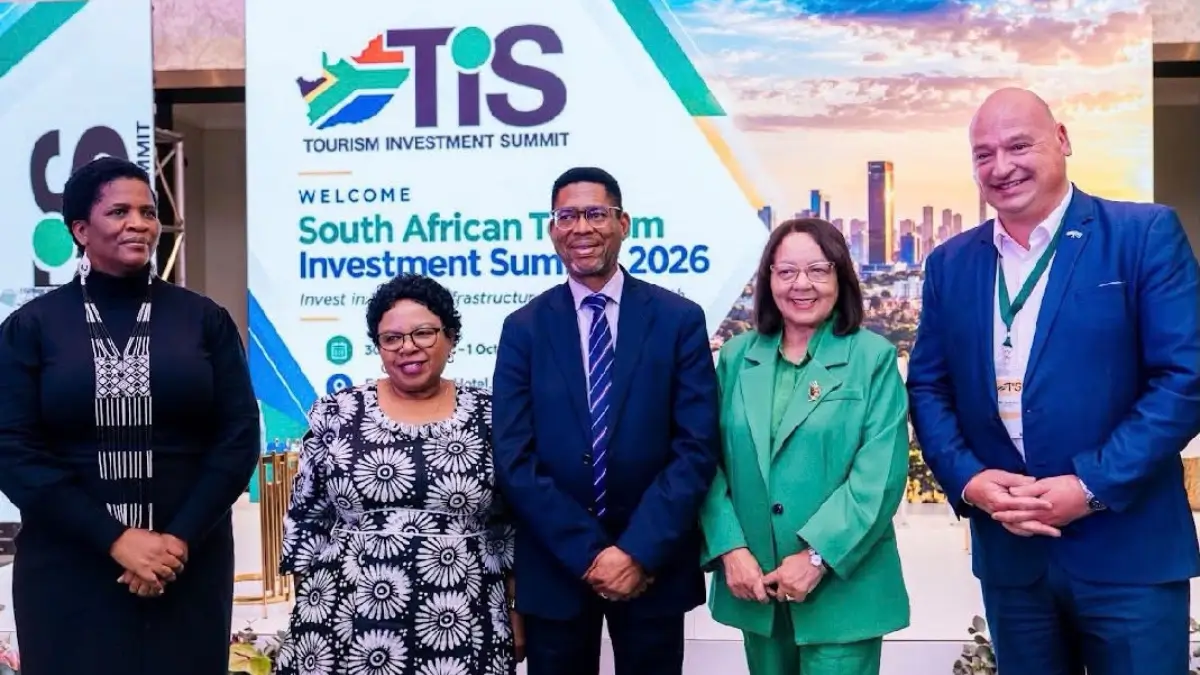
South Africa has expanded its tourism infrastructure investment pipeline to 15 projects worth R3.5 billion, as government moves to attract more private capital into accommodation, attractions, heritage spaces, entertainment facilities and tourism infrastructure.
The investment opportunities were presented at the South African Tourism Infrastructure Investment Summit, SATIS 2026, held in Johannesburg, Gauteng. Tourism Minister Patricia de Lille said three of the 15 projects have already secured funding commitments, marking progress from the eight bankable projects worth about R1 billion presented through the initiative in 2025.
The Department of Tourism’s latest SATIS media statement, published on 2 October, follows the summit and the minister’s keynote address on 1 October. The investment drive comes as government seeks to convert South Africa’s growing visitor numbers into new tourism products, infrastructure, businesses and employment.
SATIS 2026 puts R3.5 billion project pipeline before investors
SATIS brings together government, tourism project owners, investors and financiers with the aim of connecting investment ready tourism projects with capital and accelerating their implementation.
The 2026 summit was convened under the theme, “Invest in Tourism Infrastructure. Invest in Growth.”
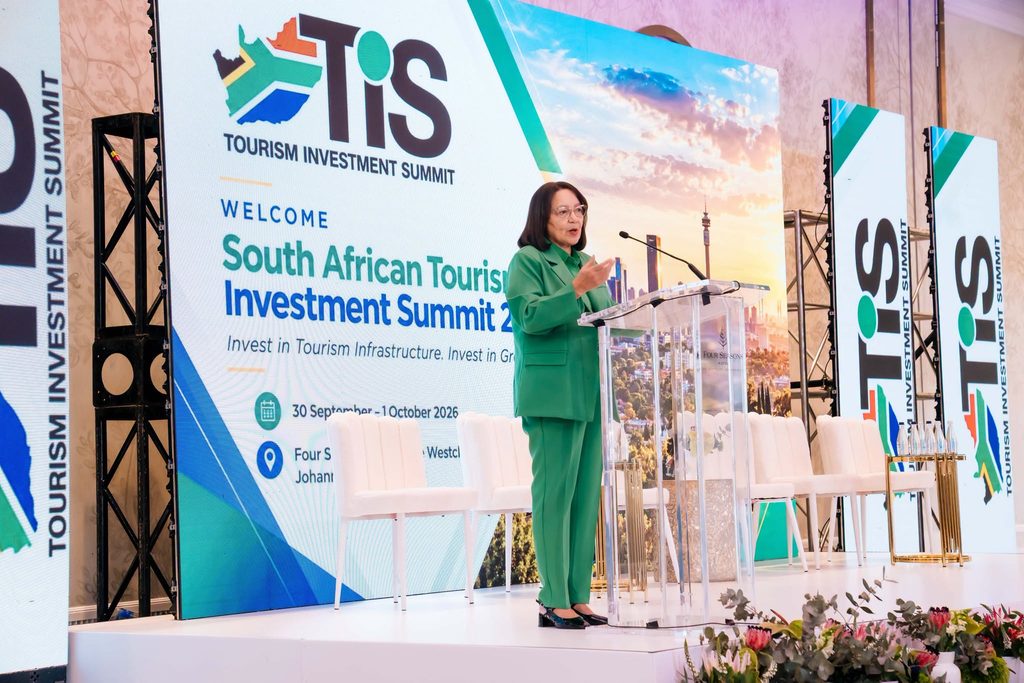
Speaking at the summit, De Lille said the investment pipeline had expanded considerably since the initiative began.
“We started with 8 bankable projects valued at R1 billion and the pipeline has now grown to 15 projects valued at R3,5 billion, 3 projects already secured funding commitments,” the minister said.
The projects come from both the public and private sectors and cover accommodation, tourist attractions, heritage spaces, entertainment facilities and infrastructure.
The R3.5 billion represents the potential value of the current pipeline and should not be interpreted as R3.5 billion in completed or committed investment. The Department has confirmed that three projects have secured funding commitments.
Investment pipeline triples from SATIS 2025
The latest pipeline represents a significant increase from the inaugural SATIS initiative.
In 2025, eight bankable tourism projects with potential investment approaching R1 billion were presented. Those opportunities covered areas including ecotourism, hospitality infrastructure, cultural heritage tourism and green innovation.
Ahead of this year’s summit, De Lille said the second edition would present 15 tourism infrastructure investment opportunities with a potential value of R3.5 billion.
The summit’s focus is not simply on identifying possible developments, but on placing commercially viable projects before investors and financiers.
The minister said the aim was to connect South Africa’s tourism growth with the capital and infrastructure needed to support it.
Tourism directly supports more than 950,000 jobs
Government’s investment drive comes as tourism occupies a growing position in South Africa’s economic strategy.
According to figures cited by De Lille, tourism directly employed 953,981 people in 2024, representing 5.7% of total employment.
Tourism’s direct contribution to gross domestic product reached 4.9% in 2024.
The minister argued during her keynote address that tourism should be viewed as an economic sector capable of attracting investment and creating jobs at scale.
The sector also has links to accommodation, transport, food, retail, technology, experiences and local enterprises, meaning tourism infrastructure investment can generate economic activity beyond individual tourism establishments.
Visitor numbers strengthen investment case
The investment push comes alongside continued growth in tourism demand.
South Africa recorded 44.7 million domestic overnight trips in 2025, generating expenditure of R111.6 billion. International arrivals reached a record 10.5 million during the year, with expenditure of R102.2 billion, according to figures presented by the minister.
Between January and August 2026, the country recorded more than 7.5 million international arrivals, an increase of 11.7% compared with the corresponding period in 2025.
More than one million international tourists arrived in South Africa during August alone.
According to the Department of Tourism, UN Tourism data showed that South Africa was the strongest performing African destination during the first half of 2026, recording approximately 12% growth in international tourist arrivals compared with the same period in 2025.
The Department said the increase in demand strengthens the case for expanding and diversifying the country’s tourism offering, with SATIS intended to help translate demand into new and expanded tourism products, experiences and infrastructure.
Gauteng benefits from growing international connectivity
Hosting SATIS in Johannesburg placed Gauteng at the centre of discussions about the next phase of South Africa’s tourism infrastructure development.
The province is also positioned to benefit from expanding international air connectivity.
Air Europa launched a direct Madrid to Johannesburg service in June, operating three flights a week.
Turkish Airlines is increasing its direct South African services from 14 to 20 flights per week from October, split between 10 Johannesburg and 10 Cape Town services.
Air China has also announced plans to increase its Beijing, Shenzhen and Johannesburg routing from three weekly flights to five.
Greater international connectivity can support Gauteng’s accommodation, attractions, restaurants, transport providers, events industry and business tourism sector by providing additional access to international source markets.
Government establishes unit to help investors
The Department of Tourism has established a Tourism Infrastructure Facilitation Unit specifically to address barriers experienced by investors and assist priority tourism projects towards implementation.
The Department has strengthened this work through a three year Memorandum of Agreement with Infrastructure South Africa and access to financing institutions including the Industrial Development Corporation.
Government is also implementing a Tourism Route Development Marketing Plan aimed at improving coordination between national government, provinces and the private sector.
The Department has invested R6.5 million in the plan as work continues towards establishing a special purpose vehicle to support coordinated route development marketing.
Major tourism investments already under way
De Lille also pointed to several major developments as evidence of existing investor activity in South Africa’s visitor economy.
The recently opened Club Med Beach and Safari Resort in KwaZulu Natal represents an investment exceeding R2 billion.
Construction of the R1.5 billion Oceans Umhlanga North Tower is at an advanced stage.
In the Western Cape, the V&A Waterfront is investing R24 billion in the expansion of Granger Bay, while the Cape Winelands Airport development represents an investment of R8 billion.
These investments are examples cited by the minister and are separate from the R3.5 billion pipeline of 15 projects presented through SATIS.
De Lille said the objective was to develop a much deeper pipeline of tourism investments across South Africa.
Investment opportunities extend beyond traditional tourism hubs
Government also wants future tourism investment to extend beyond South Africa’s established destinations.
Potential opportunities exist in towns, villages and rural landscapes, including areas such as the Wild Coast, Karoo and Drakensberg.
The investment strategy also identifies opportunities in wellness, adventure and agritourism, which could help diversify the country’s tourism offering and give visitors additional reasons to travel and stay longer.
Technology and sustainability are another part of the investment case.
Energy and water efficiency, climate resilience, smart mobility, digital platforms and technology enabled visitor experiences are expected to play a larger role in the tourism economy.
What this means for Gauteng residents
For Gauteng, SATIS 2026 is significant because Johannesburg hosted investors, government representatives, financiers and tourism project owners at a time when South Africa is seeking to accelerate infrastructure investment in the visitor economy.
The economic impact of tourism investment can extend beyond hotels and major attractions.
New tourism infrastructure can create opportunities across construction, transport, food and hospitality, retail, technology, events and local supply chains.
Gauteng’s role as an international gateway also means increased air connectivity through Johannesburg can bring additional visitors into the province while providing connections to destinations elsewhere in South Africa.
The R3.5 billion SATIS pipeline nevertheless remains a pipeline of potential investments. Its longer term economic impact will depend on how many projects secure financing and proceed to implementation.
Three projects have already secured funding commitments, according to the minister.
For government and the tourism industry, the next measure of progress will be turning more of the 15 opportunities presented to investors into financed projects, completed infrastructure and jobs.
Frequently asked questions
What is SATIS 2026?
The South African Tourism Infrastructure Investment Summit brings together government, investors, financiers, tourism stakeholders and project owners to mobilise capital for tourism infrastructure projects and accelerate implementation.
Where was SATIS 2026 held?
SATIS 2026 was hosted in Johannesburg, Gauteng. The main summit took place on 1 October 2026 at the Four Seasons Hotel The Westcliff.
How much is the SATIS 2026 investment pipeline worth?
The pipeline consists of 15 tourism infrastructure opportunities with a potential combined value of R3.5 billion. Three projects have secured funding commitments.
How does SATIS 2026 compare with 2025?
The inaugural initiative presented eight bankable projects representing nearly R1 billion in potential investment. The 2026 pipeline has expanded to 15 projects worth a potential R3.5 billion.
Why does tourism investment matter to Gauteng?
Gauteng is home to Johannesburg, one of South Africa’s major international gateways. Tourism investment and increased air connectivity can support accommodation, transport, attractions, restaurants, events, retail and other businesses within the province’s visitor economy.
