




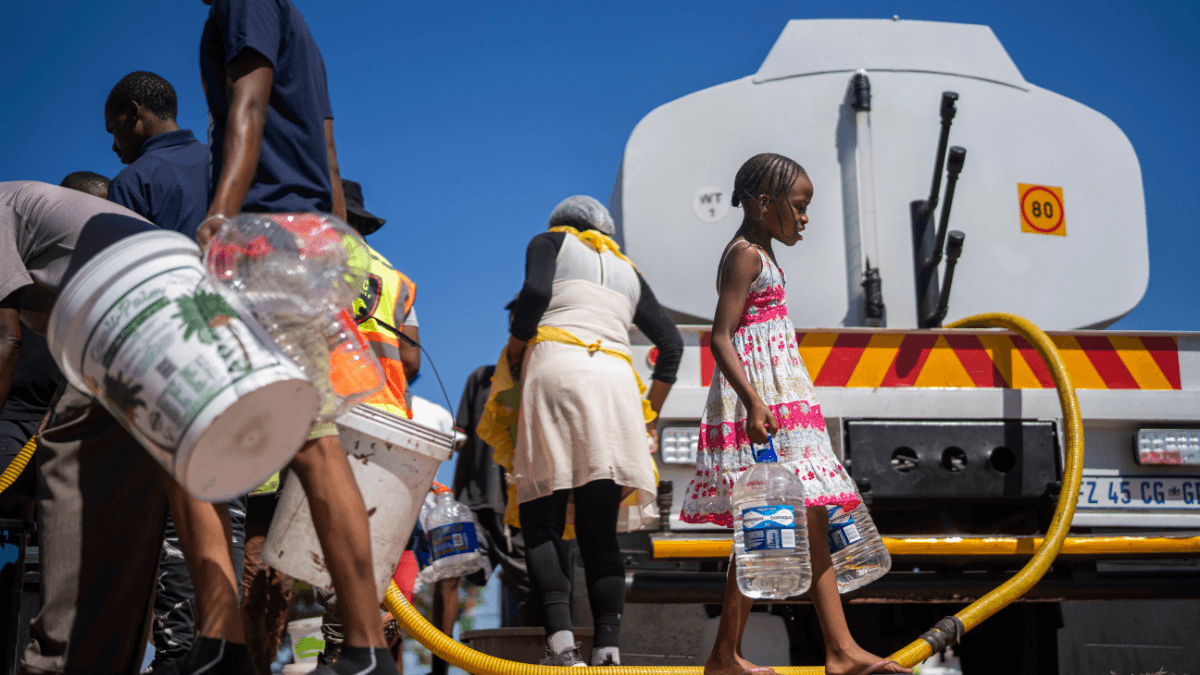
Rand Water has warned that several Gauteng municipalities are using far more water than they’re allowed. It says it’s already pumping at maximum capacity, but demand keeps rising and consumption has hit record levels.
In a statement on Tuesday, 20 October 2026, the bulk water utility named the City of Johannesburg, the City of Tshwane and Emfuleni as the biggest over-users. It warned that it may cut supply to municipalities that don’t bring their consumption down.
“Sustained overconsumption is making it increasingly difficult to balance supply across the network,” Rand Water said, adding that this “heightens the risk of disruptions”.
Which Areas Are Using Too Much Water?
Rand Water gives each municipality an allocation, which is the volume of water it’s allowed to draw each day. Some also have a temporary, higher limit. Here’s how Gauteng’s main municipalities compare, in megalitres a day (Ml/day). One megalitre is one million litres.
| Municipality | Daily use | Licensed allocation | Temporary limit | Immediate cut needed | Total cut needed |
|---|---|---|---|---|---|
| City of Johannesburg | 1 801 | 1 356 | 1 528 | 273 | 445 |
| City of Tshwane | 794 | 667 | 752 | 42 | 127 |
| Emfuleni | 315 | 239 | 269 | 46 | 76 |
| City of Ekurhuleni | 1 005 | 1 022 | 1 152 | Within allocation | Within allocation |
- Johannesburg is the biggest over-user. It draws about 445 Ml a day, or about 33%, more than its licensed allocation.
- Tshwane uses about 127 Ml a day, or about 19%, more than its allocation.
- Emfuleni, in the Vaal, is about 32% over its allocation.
- Ekurhuleni is just within its allocation, but it’s being monitored.
Rand Water wants over-users to cut back to their temporary limits immediately, then gradually reduce use to their licensed allocations.
Other Municipalities Over Their Allocation
According to Rand Water’s figures, as reported by IOL, these municipalities are also over their allocations:
- Mogale City: 107 Ml/day against 93 Ml/day
- Midvaal: 39 Ml/day against 28 Ml/day
- Lesedi: 25 Ml/day against 23 Ml/day
- Outside Gauteng: Madibeng, Rustenburg, Royal Bafokeng and Ngwathe.
Merafong, Rand West and Ekurhuleni are within their allocations but are being watched because demand remains high.
ALSO READ: El Niño 2026: South Africa Warned Of Hotter Weather, Drought And Severe Storms
What Rand Water Says
Rand Water says it has repeatedly warned municipalities about high consumption, and that talks on ways to reduce demand are ongoing. So far, those efforts haven’t brought use down enough.
“Immediate compliance is essential to avert the risk of system failure and protect continuity of supply,” the utility said.
It warned that it “will take appropriate steps to protect the system and curtail supply water to over consuming customers”.
Rand Water spokesperson Makenosi Maroo urged everyone to play their part: “Municipalities, residents and businesses are urged to use water responsibly.” She described saving water as “a shared responsibility”.
Why Is Demand So High?
Several factors are pushing up demand:
- Hot weather: Gauteng has had hot days recently, and the South African Weather Service expects above-normal temperatures this summer as a very strong El Niño develops. People use more water in the heat for drinking, bathing, gardens and pools.
- Leaks and losses: municipalities lose large amounts of water through ageing pipes, burst mains and leaks before it reaches customers.
- Illegal connections and waste: water that’s stolen or wasted still has to be supplied by Rand Water.
- A system at its limit: Rand Water supplies about 5 000 megalitres a day, with about 77% going to Johannesburg, Tshwane and Ekurhuleni. Earlier this year, it said it was already “overstretching its assets” to keep up.
How Johannesburg Is Responding
Johannesburg Water says its systems are under “significant strain” because of high consumption, which it links to recent high temperatures. The extra demand is making it harder for reservoirs and water towers to stay full.
“Johannesburg Water is experiencing significant strain on its water supply systems due to high consumption,” said spokesperson Nombusi Shabalala.
The utility says it will:
- disconnect unauthorised (illegal) water connections
- limit supply to areas with high leakage, heavy wastage or poor payment rates
- introduce conservation and demand-control measures.
What This Means For Gauteng Residents
If municipalities don’t cut their use, Rand Water could reduce the bulk supply it sends them. For residents, that could mean:
- low water pressure, especially in higher-lying areas
- night-time throttling, where supply is reduced overnight to let reservoirs refill
- outages, if reservoirs and towers run low
- water restrictions, such as limits on garden watering and filling pools.
How You Can Save Water
- Water gardens only early in the morning or in the evening, and follow your municipality’s restrictions.
- Don’t use a hosepipe to wash cars or hose down paving. Use a bucket and a broom instead.
- Fix leaks. A dripping tap or running toilet can waste thousands of litres a month.
- Take shorter showers instead of baths.
- Run washing machines and dishwashers only when they’re full.
- Cover your pool to cut down on evaporation.
- Report burst pipes and leaks to your municipality right away.
- Keep some drinking water stored in case of outages, especially if you live in an area that often has low pressure.
Frequently Asked Questions
Which Municipalities Are Using Too Much Water?
Rand Water says Johannesburg, Tshwane and Emfuleni are using the most water above their allocations. Mogale City, Midvaal, Lesedi and several municipalities outside Gauteng are also over their limits.
How Much Water Is Johannesburg Using?
Johannesburg uses about 1 801 megalitres a day, against a licensed allocation of 1 356 megalitres a day. That’s about 445 megalitres a day too much.
Will Rand Water Cut Water Supply?
Rand Water has warned that it may curtail supply to municipalities that keep using more than their allocations. No dates or specific cuts have been announced.
Is Ekurhuleni Over Its Allocation?
No. Ekurhuleni uses about 1 005 megalitres a day, just within its allocation of 1 022 megalitres a day, but it’s being monitored.
Why Is Gauteng Using So Much Water?
Hot weather, leaks, ageing infrastructure, illegal connections and wastage are all pushing up demand at a time when Rand Water is already pumping at full capacity.
How Can I Help Save Water?
Water gardens only in the cooler parts of the day, fix leaks, take shorter showers, avoid using hosepipes and report burst pipes to your municipality.
