




The Gauteng Department of Roads and Transport has improved CCTV coverage at selected intersections to combat traffic light vandalism and infrastructure theft across the province. Announced in November 2026, the intervention forms part of efforts to protect public infrastructure, strengthen road safety and improve the monitoring of criminal activity. It comes as the Gauteng Provincial Government reports deploying 960 CCTV cameras and 38 drones under its broader e-policing programme to strengthen crime prevention and public safety.
Gauteng Steps Up Monitoring of Traffic Light Vandalism
Traffic light vandalism and theft remain among the infrastructure challenges facing Gauteng, affecting the province’s ability to maintain a safe and functional road network.
The Gauteng Department of Roads and Transport has responded by strengthening CCTV monitoring at selected intersections.
According to the department, the improved surveillance will help authorities identify and record incidents involving traffic signals and other public infrastructure.
Gauteng MEC for Roads and Transport Kedibone Diale-Tlabela said the protection of infrastructure requires cooperation between government, law enforcement agencies and residents.
“We cannot allow the vandalism and theft of public infrastructure to undermine the services we provide to our people,” Diale-Tlabela said.
She emphasised that traffic signals play an essential role in road safety and the efficient movement of vehicles.
The department has not disclosed how many intersections have received improved CCTV coverage or identified their locations.
Gauteng Deploys 960 CCTV Cameras and 38 Drones to Fight Crime
The traffic signal monitoring initiative comes alongside Gauteng’s broader efforts to use technology to strengthen crime prevention and public safety.
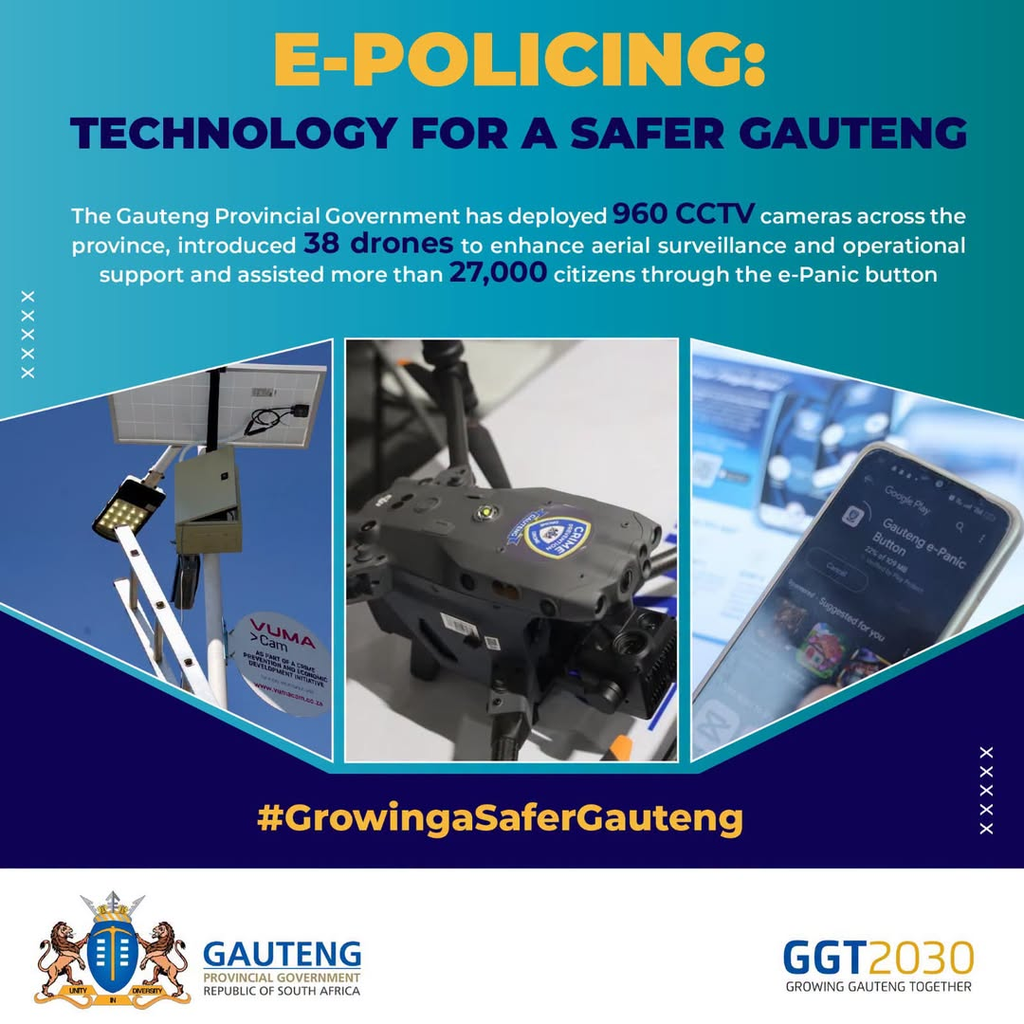
According to information released by the Gauteng Provincial Government under its e-policing programme, the province has deployed 960 CCTV cameras.
The government has also introduced 38 drones to enhance aerial surveillance and provide operational support.
These measures form part of the province’s approach to improving monitoring capabilities and supporting efforts to combat crime.
The provincial government has also reported assisting more than 27,000 citizens through its e-Panic Button initiative.
The figures highlight the role technology is playing in Gauteng’s public safety interventions, alongside the department’s efforts to protect traffic signals and other road infrastructure.
However, the 960 cameras reported under the broader e-policing programme should not be confused with the CCTV coverage introduced at selected traffic intersections.
The provincial government has not specified how many of the 960 cameras, if any, are dedicated to monitoring traffic light vandalism.
How CCTV Surveillance Could Help Protect Public Infrastructure
The Department of Roads and Transport says improved monitoring at intersections is intended to strengthen the detection and investigation of vandalism and theft.
Department spokesperson Lesiba Mpya confirmed that the surveillance measures would assist authorities in monitoring incidents affecting traffic signals and other infrastructure.
The department is introducing the technology as part of its efforts to safeguard public assets.
Diale-Tlabela said technological interventions must be supported by law enforcement and community cooperation.
“We are introducing technological interventions to strengthen monitoring, but we also need the support of law enforcement and communities to protect these assets and ensure that those responsible are held accountable,” she said.
The department has not yet released figures showing how many incidents have been detected through the improved CCTV coverage or whether the intervention has resulted in arrests.
Gauteng Completes Road Maintenance on Priority Routes
Alongside the surveillance measures, the Gauteng Department of Roads and Transport has completed maintenance interventions on several priority roads.
The department says these roads were selected because of significant deterioration and concerns raised by motorists and affected communities.
The completed maintenance interventions cover the following roads:
- Mogogelo Road
- Graham Road
- Makapan Road
- R548
- R28
- R553
- D1132
- R103
- K46
- Cedar Road
- Winnie Mandela Drive
According to Mpya, the department intends to extend maintenance operations to additional sections of the provincial road network.
Roads experiencing significant deterioration will remain a priority as the department works to address outstanding maintenance requirements.
Diale-Tlabela acknowledged the progress while noting that further work is necessary.
“The completion of these priority sections is encouraging, but we recognise that more work remains to be done,” she said.
New Road Maintenance Contractors Expected in December 2026
The department is also preparing to expand its maintenance capacity through the appointment of contractors.
The first phase of procurement for a panel of contractors covering a three-year period has been completed.
Quotation processes are being finalised, with implementation anticipated to begin in early December 2026.
According to the department, the arrangement is expected to improve its ability to respond to road maintenance requirements across Gauteng.
Other priority infrastructure projects are also being monitored to address implementation challenges and ensure that commitments are met.
Among these projects is the Sebokeng Driver Licence Testing Centre, which is expected to be completed in March 2027.
Illegal Dumping and Infrastructure Damage Remain Concerns
The department has identified several additional challenges affecting road reserves and the condition of Gauteng’s road network.
These include illegal dumping, overgrown vegetation, settlement encroachment and vandalism.
Diale-Tlabela has urged residents to assist government by avoiding illegal dumping and reporting damage to public infrastructure.
“We appeal to communities to refrain from illegal dumping, report vandalism, and work with government to safeguard our road reserves,” she said.
The MEC stressed that protecting public infrastructure requires a shared commitment.
The department also intends to strengthen cooperation with municipalities, government departments and law enforcement agencies to address infrastructure challenges.
What This Means for Gauteng Residents
For Gauteng motorists, improved CCTV coverage at selected intersections is intended to strengthen the monitoring of traffic light vandalism and theft.
The intervention forms part of efforts to protect infrastructure that supports road safety and daily travel.
The province’s wider e-policing programme also provides additional context for its use of surveillance technology, with 960 CCTV cameras, 38 drones and more than 27,000 citizens assisted through the e-Panic Button.
However, the government has not provided evidence linking these broader e-policing figures directly to a reduction in traffic light theft.
Residents may also benefit from completed maintenance on priority roads, while further repairs are expected as the department expands its maintenance programme.
The department continues to encourage communities to report vandalism and help protect road infrastructure.
Frequently Asked Questions
Why Is Gauteng Installing CCTV at Traffic Lights?
The Gauteng Department of Roads and Transport is strengthening CCTV monitoring at selected intersections to help identify and record incidents of traffic signal vandalism and infrastructure theft.
How Many CCTV Cameras Has Gauteng Deployed?
The Gauteng Provincial Government reports deploying 960 CCTV cameras under its broader e-policing programme. It has not confirmed how many are specifically allocated to traffic intersections.
How Many Drones Are Being Used in Gauteng’s E-Policing Programme?
The provincial government reports introducing 38 drones to enhance aerial surveillance and operational support.
What Is Gauteng’s E-Panic Button?
The e-Panic Button forms part of the provincial government’s e-policing initiatives. According to the government, more than 27,000 citizens have received assistance through the initiative.
When Will Gauteng Expand Its Road Maintenance Programme?
The Department of Roads and Transport anticipates implementation of its new contractor arrangement in early December 2026, following the finalisation of quotation processes.
What Happens Next for Gauteng’s Road Safety Programme?
The Department of Roads and Transport is expected to continue monitoring selected intersections while preparing to expand road maintenance operations.
The finalisation of contractor appointments in December 2026 will be an important development in the department’s plans to strengthen maintenance capacity.
Further information is still needed on the intersections receiving CCTV coverage, the number of cameras dedicated to traffic infrastructure and the results of the monitoring intervention.
For Gauteng residents, the focus remains on whether these measures translate into better protection of public infrastructure, more reliable traffic signals and improved road conditions.
