




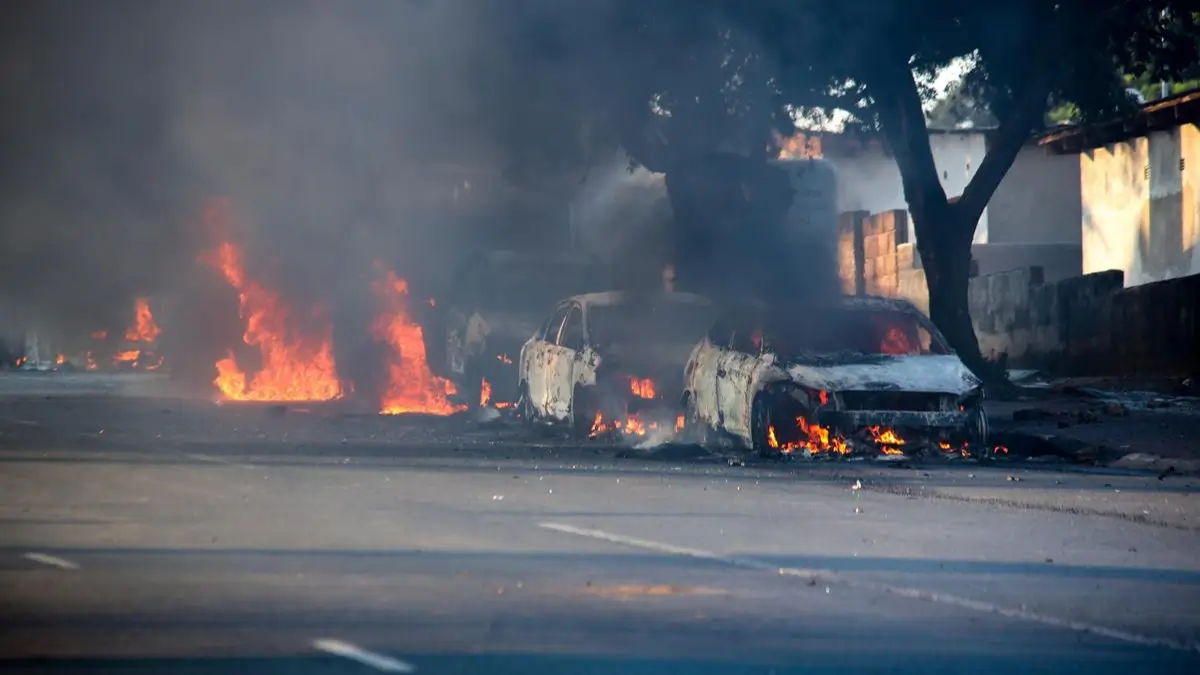
The Department of Home Affairs has withdrawn an operational directive on asylum applications after violence in Soweto and Durban left at least 24 vehicles torched and businesses affected on Thursday, 8 October 2026. The directive had been issued to Refugee Reception Offices on 28 September following a Constitutional Court judgment on access to the asylum process. Home Affairs said on Friday, 9 October, that its immediate attempt to implement the judgment overwhelmed reception offices, placed officials at risk and led to serious public safety concerns.
The department will now begin a new process to determine how to comply with the Constitutional Court order while managing the operational impact on Refugee Reception Offices.
Police have meanwhile increased deployments in Gauteng and KwaZulu Natal following the unrest.
What Happened In Soweto And Durban?
Violence broke out in Soweto and Durban on Thursday during protests linked to immigration and the processing of asylum applications.
Police said 10 vehicles were torched in Soweto, while another 14 vehicles were set alight in Durban.
In Orlando West, Soweto, residents had gathered amid demands for foreign operated spaza shops to close. Johannesburg Metropolitan Police Department spokesperson Superintendent Xolani Fihla said clashes occurred between South African residents and foreign nationals.
Police were also investigating allegations that gunshots had been fired during the confrontation.
No injuries had been reported at the time of the police update.
Shops were also attacked during the unrest, while police deployed additional officers to contain the situation.
Durban Protest Turns Violent
In Durban, police said a group that had participated in a march against Gender Based Violence later moved towards another gathering at the Home Affairs offices.
KwaZulu Natal police spokesperson Colonel Robert Netshiunda said preliminary information indicated that one person was allegedly assaulted by a foreign national and suffered a broken leg.
Police said it was not yet clear what caused the alleged assault.
The incident was followed by violence in the city, with 14 vehicles torched.
Three foreign nationals were arrested in connection with the alleged assault.
Police also reported that a lodge building and a warehouse were partially burnt before the fires were extinguished. Shops were looted and other property was damaged during the unrest.
Public Order Police, other SAPS units and Durban Metro Police were deployed to monitor the situation.
Police Increase Presence In Gauteng
Acting National Police Commissioner Lieutenant General Puleng Dimpane moved to assess the security situation following the violence.
SAPS spokesperson Brigadier Athlenda Mathe said police deployments were being assessed in Gauteng, KwaZulu Natal and other areas identified as potential hotspots.
Police said the operational response was aimed at maintaining public order, protecting communities and responding to emerging security threats.
Authorities also said those responsible for the destruction of property would be pursued.
The Soweto unrest is particularly significant for Gauteng because it occurred in Orlando West, placing the province at the centre of the developing police response.
Why Home Affairs Issued The Asylum Directive
The Home Affairs directive was issued on 28 September as an operational response to a Constitutional Court judgment delivered in July.
The court ruling dealt with provisions of the Refugees Act affecting access to the asylum application process.
The judgment required people seeking asylum to be given an opportunity to access the application process despite irregular entry into South Africa or delays in applying.
Home Affairs said the directive was issued to Refugee Reception Offices as an attempt to implement the court order.
According to the department, the directive was operational and was issued without reference to or knowledge of the Minister of Home Affairs or another political office bearer.
The department also rejected claims that the directive was politically motivated.
Home Affairs Withdraws The Asylum Directive
On Friday morning, Home Affairs confirmed that its Director General had withdrawn the directive issued on 28 September.
The department said its attempt to immediately implement the Constitutional Court judgment had produced consequences that it said could not have been foreseen in the court order.
Home Affairs said Refugee Reception Office operations became overwhelmed within days of the directive being issued.
It also said officials were placed at risk and serious threats to public safety and order had emerged.
The withdrawal does not remove the Constitutional Court judgment.
Instead, Home Affairs said it would begin a fresh process to determine an operational approach that allows it to comply with the court order.
The department reaffirmed its commitment to the judiciary and the rule of law while saying it needed an operationally sustainable method of implementing the judgment.
What The Constitutional Court Ruling Does Not Mean
The Constitutional Court judgment has become a central issue in the public debate surrounding the protests.
Government spokesperson William Baloyi said false claims about the judgment had created the impression that undocumented migrants would automatically receive legal status.
That is not what the ruling provides.
The judgment concerns access to the asylum determination process. It does not automatically grant refugee status or permanent permission to remain in South Africa.
Applications must still be assessed individually and applicants remain subject to immigration processes.
What This Means For Gauteng Residents
For Gauteng residents, the immediate concern is the security situation following the violence in Soweto.
Police have increased their presence as authorities work to prevent further destruction of property and confrontations.
Residents should also distinguish between the Constitutional Court judgment and the Home Affairs directive that has now been withdrawn.
The withdrawal of the directive does not overturn the court judgment. Home Affairs remains required to determine how it will comply with the Constitutional Court order.
The next step is therefore an operational one, with the department expected to develop a new approach to processing affected asylum applications.
Frequently Asked Questions
Why Did Home Affairs Withdraw The Asylum Directive?
Home Affairs said Refugee Reception Offices became overwhelmed, officials were placed at risk and serious public safety and order concerns emerged after the directive was implemented.
How Many Vehicles Were Torched In Soweto And Durban?
Police reported that 10 vehicles were torched in Soweto and 14 in Durban, bringing the reported total to 24.
Were There Any Arrests During The Durban Violence?
Police said three foreign nationals were arrested in connection with the alleged assault of a protester in Durban.
Does The Constitutional Court Ruling Automatically Give Asylum Seekers Legal Status?
No. The ruling allows affected asylum seekers access to the application process. Their individual applications must still be assessed.
Has The Constitutional Court Judgment Been Withdrawn?
No. Home Affairs withdrew its operational directive, not the Constitutional Court judgment. The department said it will develop another operational approach to comply with the court order.
What Happens Next?
Home Affairs will now reconsider how Refugee Reception Offices should implement the Constitutional Court judgment following the problems reported after the September directive.
At the same time, police deployments remain important in areas affected by Thursday’s unrest, including Soweto.
The department has said it remains committed to complying with the Constitutional Court order but will seek an approach it considers operationally appropriate and sustainable.
For Gauteng, attention will remain on the security response in Soweto and the next steps announced by Home Affairs for implementing the asylum application judgment.
