




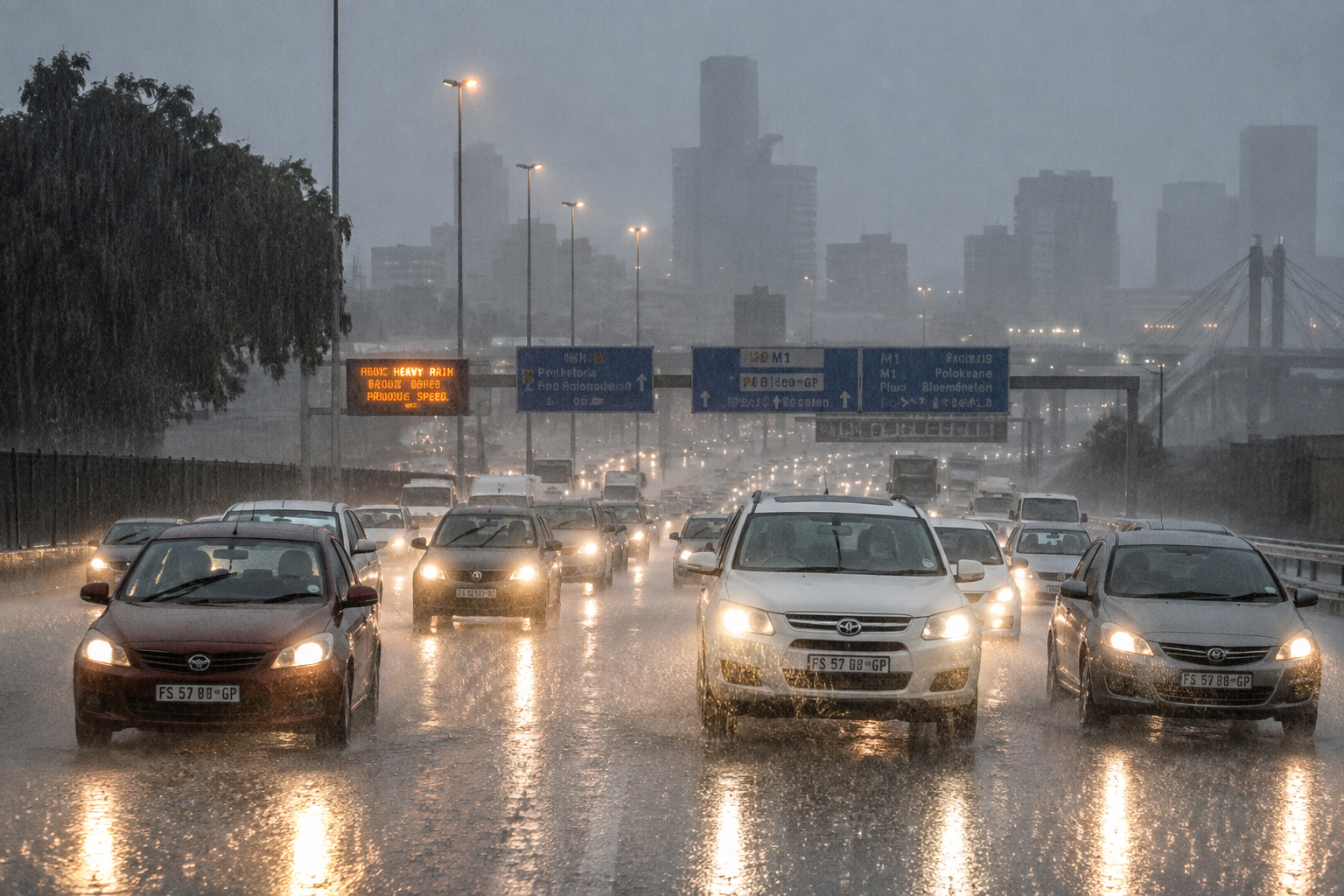
Gauteng is in the grip of a severe cold front, and the impact goes well beyond a chilly morning. Since the weekend, a powerful cold front and upper-air trough have pushed cold, wet and windy conditions across the province, and Tuesday, 11 August, has brought the worst of it: bitterly cold temperatures, heavy morning showers, icy winds and even the possibility of light snowfall in the south of the province.
This isn’t just a “wear a jacket” kind of cold snap. Roads are wet and hazardous, visibility is dropping in some areas, and emergency services in Johannesburg, Tshwane and Ekurhuleni have all been placed on high alert. The Gauteng provincial government has urged residents to put safety first, particularly when it comes to travel and how they keep warm at home.
Conditions like these can change quickly, so treat this guide as a starting point and keep checking official weather, traffic and emergency-service updates as the day goes on. Here’s exactly what you need to know before you leave home, while you’re on the road, and who to call if things go wrong.
What is Happening in Gauteng Right Now
Gauteng is currently cloudy and cold to very cold, with scattered showers and thundershowers moving through the province. Johannesburg’s forecast for Tuesday has been a top of just 4-6°C and an overnight low of around 1-3°C, with heavy showers in the morning easing into cloudy, colder conditions through the afternoon. Some parts of the province could see temperatures drop to as low as 3-4°C.
According to Gauteng Weather, Tuesday is expected to be the worst day of this cold snap, with maximum temperatures sitting at multi-year lows for parts of the province. Light snowfall is possible in the south of Gauteng in the evening, but it’s important to be clear about scale here: this is not a province-wide snow event, and any snow that does fall is expected to be limited to isolated pockets rather than settling broadly. The bigger and more widespread risk across Gauteng today is rain combined with very cold, windy conditions, not snow.
This cold front forms part of a much larger system moving across South Africa. The South African Weather Service (SAWS) has confirmed that wet, very cold and windy conditions are affecting the southern parts of the Free State, Northern Cape, Gauteng and Mpumalanga, along with the interior of the Eastern Cape and KwaZulu-Natal, where snowfall is possible over mountainous areas. Disruptive snow warnings have been issued for parts of the Eastern Cape, KwaZulu-Natal and Free State – these are more significant snow events than anything currently forecast for Gauteng.
Forecasts for this kind of system can shift quickly, so don’t rely on a single update from earlier in the week. Check South African Weather Service directly for the latest warnings before you travel.For ongoing Gauteng weather updates, forecasts and alerts, keep an eye on our Gauteng Weather Forecast and Alerts Hub
Before You leave Home – Check These Things First
Before you get in the car or head out the door, run through this quick checklist:
- Check the latest SAWS warning for your specific area of Gauteng
- Check current road and traffic conditions, not conditions from earlier in the day
- Confirm your destination is accessible – don’t assume roads that were open this morning are still open now
- Check for closures on your route, including any mountain passes if you’re travelling further afield
- Fill up your fuel tank in case of unexpected delays or detours
- Charge your phone fully before you leave
- Plan your route and have a backup route in mind
- Pack warm clothing, even for a short trip – a breakdown in freezing rain is far worse without a jacket or blanket in the car
- Let someone know your route and expected arrival time
- Ask yourself if the trip is genuinely necessary right now, or if it can wait
A word of caution: don’t rely solely on Google Maps or social media posts for road conditions during fast-changing weather. Maps apps don’t always reflect real-time closures, and old posts about flooding or road closures can circulate long after conditions have changed. Go to official sources first.
Driving in Gauteng During the Cold Front
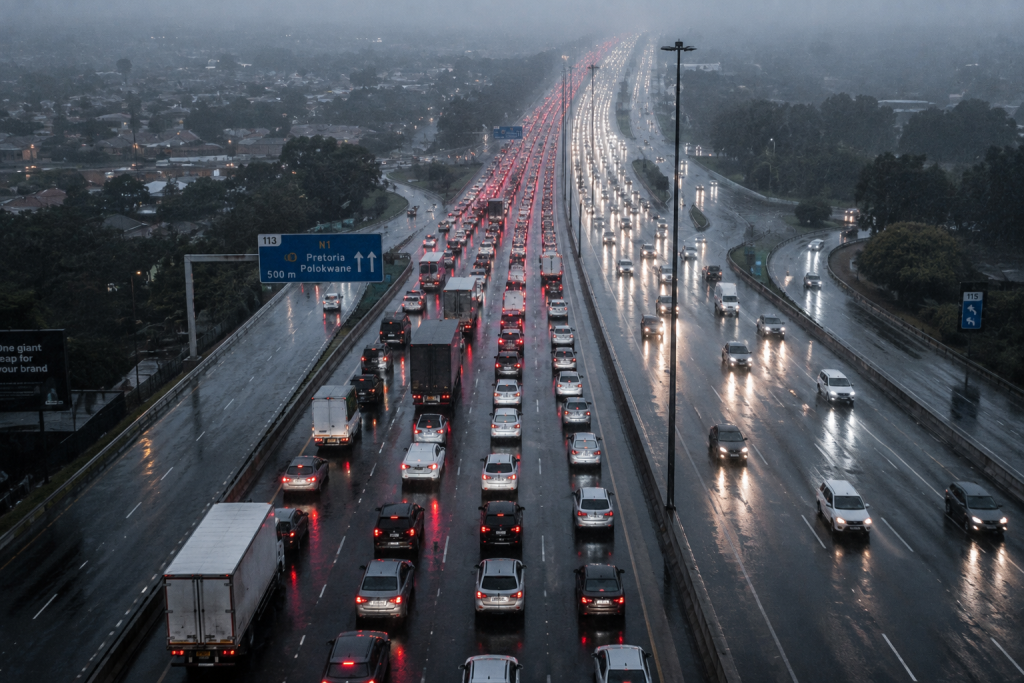
If you do need to be on the road today, here’s how to handle the conditions safely.
Wet roads. Stopping distances increase significantly on wet tar. Slow down and give yourself more space and time to react.
Poor visibility. Switch your headlights on in rain, mist or heavy cloud cover, even during the day. It helps other drivers see you as much as it helps you see the road.
Slippery surfaces. If you feel your car losing grip, ease off the accelerator gently, avoid harsh braking or sudden steering movements, and let the vehicle stabilise before continuing.
Snow, sleet or ice. In any area where these conditions appear, avoid unnecessary travel. If you must drive, go slowly and be prepared for sudden changes in road surface, particularly on bridges and elevated sections of highway.
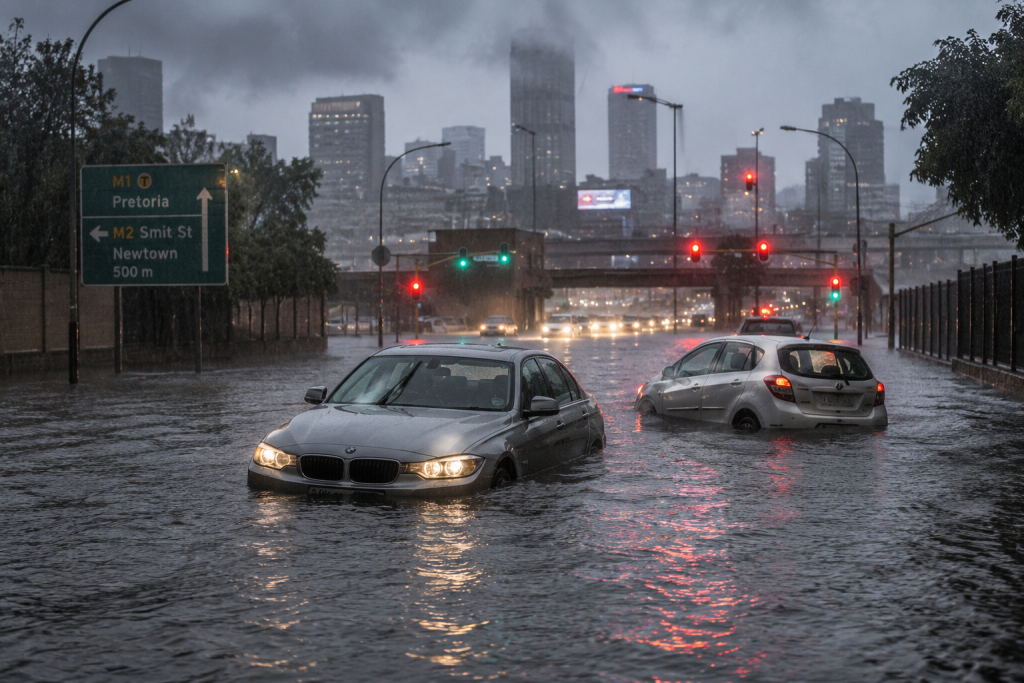
Flooded roads – never attempt to cross. This is worth repeating: never drive through a flooded road, low-water bridge or fast-flowing water. It’s extremely difficult to judge water depth from inside a vehicle, and even a small amount of moving water can cause a car to lose traction or be swept off the road entirely. If you reach a flooded section, turn around and find another route.
Following distance. Increase the gap between you and the vehicle in front. Wet, cold conditions mean everyone on the road needs more room to react.
If you break down. Move your vehicle to the safest possible position, ideally off the road surface. Switch on your hazard lights. Stay inside the vehicle with your seatbelt on if you’re in a dangerous position, such as a highway shoulder, and wait for help rather than standing in the road. Keep warm using blankets or extra clothing. Call for roadside assistance or emergency services and make sure they know your exact location, including the nearest landmark or off-ramp.
Road Closures – What to Do If Your Route Is Closed
At the time of writing, no specific weather-related road closures in Gauteng have been confirmed through official channels for 11 August. This can change quickly, so treat any closure information you see on social media with caution unless it’s confirmed by SANRAL, i-Traffic or your local metro police service.
If you do encounter a closure or a diversion:
- Never drive around a road-closure barrier, no matter how minor the obstruction looks
- Follow instructions from traffic officials on the scene
- Use official alternative-route information rather than “shortcuts” shared on WhatsApp or social media
- Check live updates from I-Traffic or your municipality before committing to a detour
- Build in significantly more time for your journey
- If conditions are genuinely dangerous, postpone travel that isn’t essential
There’s a difference between a road that’s closed, a road that’s simply congested, and a road where drivers are just being told to exercise caution. Don’t assume the worst from a single unclear post – check an official source to confirm which applies to your route.
What If You Get Caught in Severe Weather?
Sometimes conditions deteriorate after you’ve already left home. Here’s how to handle it:
Visibility suddenly drops. Slow down, switch on your headlights, and if it becomes genuinely dangerous to continue, find a safe place to pull over rather than pushing on.
Your vehicle breaks down. Follow the breakdown advice above – hazards on, stay safe, call for help, keep warm.
A road closes ahead of you. Don’t try to push through or find your own way around. Turn back or wait for direction from officials.
You’re stranded away from home. Stay where you are if it’s safe to do so, contact someone to let them know your situation, and wait for conditions to improve or for assistance to arrive.
Public transport is disrupted. Build in extra time, keep warm while you wait, and stay updated via your transport provider’s official channels.
You’re caught outside in freezing temperatures. Get indoors or into a vehicle as soon as possible. Prolonged exposure to cold, wet conditions increases the risk of hypothermia, even in Gauteng’s relatively mild winters.
The golden rule in all of these situations: arriving late is always better than taking a risk in dangerous conditions.
How to Stay Warm Safely
Cold snaps like this one bring a real risk that has nothing to do with the weather itself – unsafe heating. Johannesburg Emergency Management Services and other authorities have repeatedly warned that this is one of the most dangerous parts of any severe cold spell, and the Gauteng provincial government has echoed that warning again this week.
Be especially careful with:
- Indoor braais or braziers – these should never be used inside a home, no matter how cold it is
- Charcoal and open flames indoors
- Candles, especially left unattended or near bedding and curtains
- Paraffin appliances that aren’t well maintained or properly ventilated
- Gas appliances used in poorly ventilated rooms
- Heaters left unattended, particularly overnight
- Sleeping with a heater or open flame still running
These practices can cause house fires and carbon monoxide poisoning, which is invisible, odourless and can be fatal. If you’re using any kind of heater, make sure the room has some ventilation, never leave it running while you sleep, and keep it away from curtains, bedding and furniture.
Take extra care of children, elderly family members, people living alone and anyone otherwise vulnerable. Check in on elderly neighbours or relatives during this cold snap, and make sure anyone using a heater at home understands the basic safety rules above.
If There is Flooding
Heavy rain during a cold front can lead to localised flooding, particularly in low-lying areas. If this happens near you:
- Do not walk through fast-moving water, even if it looks shallow
- Do not drive through flooded roads
- Avoid low-lying areas and dips in the road
- Stay away from bridges where water is flowing over the surface
- Move to higher ground if flooding threatens your immediate area
- Follow instructions from emergency services if they’re directing people away from an area
- Do not touch electrical infrastructure that has been exposed to water
- Do not re-enter a flooded building until authorities confirm it’s safe to do so
Who to Call in an Emergency
Keep these numbers saved in your phone. Note that they’re specific to each metro, so use the one that applies to where you are.
National emergency numbers
- Police, ambulance and fire (from any phone): 10111
- General emergency (from any cellphone, even without airtime): 112
- Fire and ambulance toll-free: 10177
City of Johannesburg
- Emergency Connect (24-hour, all life-threatening emergencies): 011 375 5911
- Johannesburg Metro Police Department (JMPD): 011 758 9100
City of Tshwane
- Emergency Services (all emergencies): 012 358 2111
- Tshwane Emergency Services Call Centre: 012 358 9999
- Tshwane Metro Police (24-hour, all emergencies): 012 664 4445
- Disaster Management (to report incidents): 012 358 2225 / 2280 / 2255
City of Ekurhuleni
- Disaster & Emergency Management Services (life-threatening emergencies): 011 458 0911
- Gauteng Ambulance Services: 011 564 2210 / 2211
Where to Get Live Weather and Road Updates
Save these numbers under simple labels like “Emergency – Joburg” or “Emergency – Tshwane” so they’re easy to find in a hurry. If you’re unsure which service to call, dial 112 from your cellphone and the operator will direct you.
Don’t rely on a single update from earlier today. Conditions during a cold front can shift within hours, so check these official sources directly:
- South African Weather Service (SAWS) – for the latest official warnings and forecasts
- i-Traffic – for real-time incidents, road disruptions and national-road information across Gauteng
- Your local municipality (City of Johannesburg/ City of Ekurhuleni) – for local emergency updates and disaster management information
- Gauteng traffic authorities and metro police – for road-specific updates in your area
These are the sources that will actually reflect what’s happening right now, rather than what was reported earlier in the day.
A Quick Gauteng Cold-Front Checklist
Screenshot this and keep it handy.
Before you leave
☐ Check the weather warning
☐ Check your route
☐ Check for road closures
☐ Charge your phone
☐ Carry warm clothing
☐ Tell someone where you’re going
☐ Make sure you have enough fuel
☐ Keep an alternative route in mind
On the road
☐ Slow down
☐ Increase your following distance
☐ Use headlights when visibility is poor
☐ Never drive through floodwater
☐ Never bypass road barriers
☐ Follow traffic officials
☐ Stop somewhere safe if conditions become dangerous
Stay Safe Out There
Conditions during this Gauteng cold front can change quickly, and forecasts may be updated as the day goes on. Stay informed through official channels, plan ahead before you travel, don’t take unnecessary risks on the road, and follow instructions from emergency services and traffic officials at all times.
