




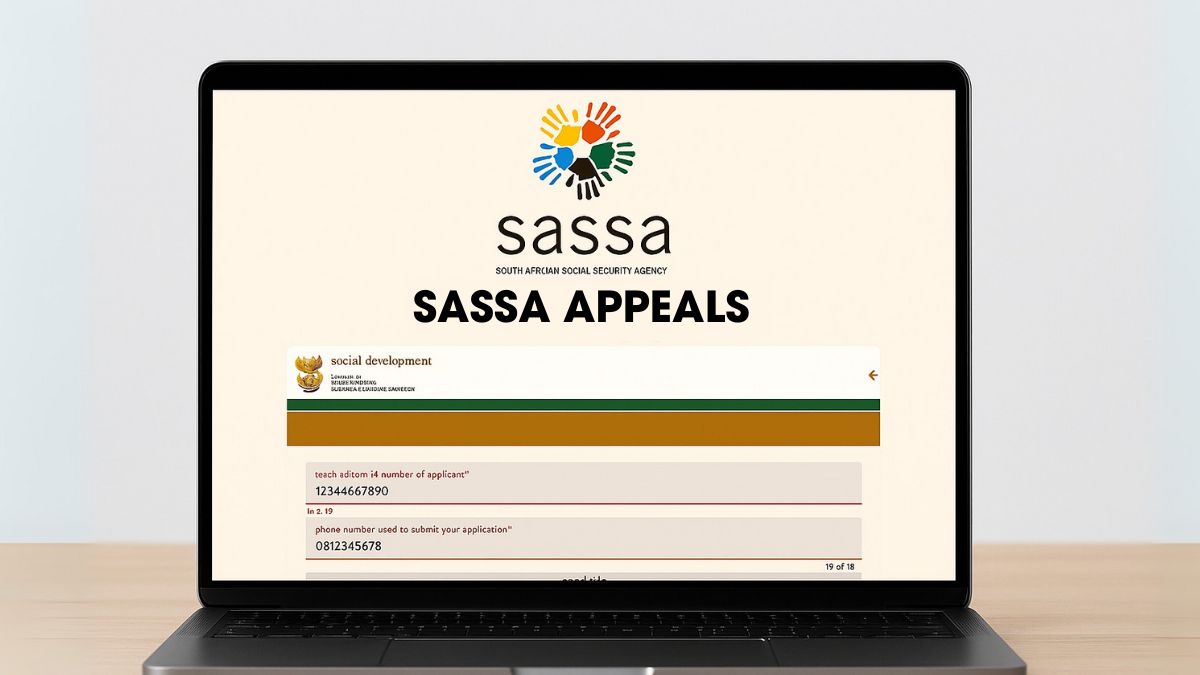
South Africans whose SASSA grant applications have been declined can challenge the decision through the Independent Tribunal for Social Assistance Appeals (ITSAA). In 2026 and 2027, applicants generally have up to 90 days to lodge a SASSA appeal, whether they are challenging a declined Social Relief of Distress (SRD) grant or a permanent social grant. SRD appeals are submitted online, while appeals involving grants such as the Older Persons, Disability and Child Support Grants follow a separate process.
The appeals process is free, and applicants do not need to pay an agent to submit a request.
However, the application process, supporting documents and deadlines differ depending on the grant.
Who Handles SASSA Appeals?
SASSA does not make the final decision on an appeal against its own grant decision.
That responsibility belongs to the Independent Tribunal for Social Assistance Appeals, established under the Social Assistance Act.
The tribunal considers whether SASSA’s decision should be upheld, changed or overturned.
Its powers and responsibilities are set out in the Social Assistance Appeals Regulations published on 31 May 2022.
Applicants can challenge decisions involving rejected applications, suspended grants, cancelled grants and other qualifying decisions.
SASSA Appeal Deadlines and Requirements for 2026/2027
| Requirement | SRD R370 Grant | Permanent Social Grants |
|---|---|---|
| Where to appeal | Online SRD appeals portal | SASSA office or directly to ITSAA |
| Recommended timeframe | Within 30 days | As soon as possible |
| Maximum ordinary appeal period | 90 days | 90 days |
| Appeal frequency | Each declined month separately | Relevant grant decision |
| Supporting documents | No initial document upload on the standard portal | Appeal form, ID, decision notice and relevant records |
| Decision-maker | ITSAA | ITSAA |
| Tribunal decision period | Generally within 90 days | Generally within 90 days, subject to permitted interruptions |
| Appeal cost | Free | Free |
The 90-day deadline is important. Applicants should not wait until the final days before submitting an appeal.
For SRD grants, the Department of Social Development encourages applicants to appeal within 30 days, but the prescribed appeal window extends to 90 days.
How to Appeal a Declined SASSA SRD R370 Grant Online
The SRD grant was previously R350 and later increased to R370. Applicants challenging decisions from earlier periods may still encounter references to the R350 grant.
SRD appeals are handled through the Department of Social Development’s online appeals system.
Step 1: Check Your SRD Application Status
Visit the official SASSA SRD website and check which months were declined.
Read the decline reason carefully before proceeding.
Step 2: Open the Official Appeals Portal
Go to the SASSA SRD Appeals Portal.
The platform is used to lodge appeals and check outcomes.
Step 3: Enter Your Personal Details
Provide your South African identity number and the cellphone number linked to your original SRD application.
Applicants using qualifying permit or asylum documentation should follow the identification options available on the official platform.
Step 4: Request Your One-Time PIN
Request the OTP and enter the code sent to your registered cellphone number.
If you no longer have access to that number, resolve the contact information problem through SASSA’s official channels.
Step 5: Select the Declined Month
Choose the month for which you want to challenge the decision.
SRD eligibility is assessed monthly, so a rejected month must be appealed separately.
If your application was declined for three months, you must submit three individual appeals.
Step 6: Submit Your Appeal
Follow the portal instructions, complete any required declarations and submit your appeal.
Save the confirmation or take a screenshot for your records.
Step 7: Check Your Appeal Status
Return to the appeals portal using your registered details to check the outcome.
The tribunal will communicate its decision electronically.
Common Reasons SASSA SRD Applications Are Declined
Applicants should check the exact reason displayed on their SRD status before appealing.
Common decline reasons include:
Alternative Income Source Identified
SASSA’s verification process may identify financial activity suggesting that the applicant exceeds the applicable income threshold.
Applicants who believe the information is incorrect can challenge the decision.
Identity Verification Failed
The applicant’s personal information may not match records held by the Department of Home Affairs.
Incorrect identity details should be corrected through the relevant official channels.
UIF Registered
Government records may indicate that the applicant receives or is associated with Unemployment Insurance Fund benefits.
Applicants should establish whether the information accurately reflects their circumstances during the declined month.
NSFAS Registered
Records may show that the applicant received student funding during the assessment period.
If the information is outdated or incorrect, applicants should seek clarification from NSFAS.
Government Payroll Registered
The applicant may appear on a government employment or payroll database.
Former employees should check whether their employment records have been updated.
Existing Social Grant
The system may identify another social grant associated with the applicant.
Applicants should establish which grant is recorded and whether it affects SRD eligibility.
Age Outside Range
The applicant may fall outside the age requirements for the SRD grant.
People aged 60 or older should check whether they qualify for the Older Persons Grant instead.
Can You Submit New Evidence With an SRD Appeal?
The standard SRD appeals platform relies on electronic verification and does not ordinarily require applicants to upload supporting documents.
However, the rules governing new information in SRD appeals have been the subject of litigation.
In January 2025, the Pretoria High Court ruled against restrictions affecting the consideration of new information in SRD appeals.
The government appealed the judgment, and the matter proceeded to the Supreme Court of Appeal in 2026.
Applicants should therefore not assume that the online system permits supporting documents to be uploaded.
Those who have information that could change the outcome should contact ITSAA to establish what can be considered under the rules applicable when their appeal is assessed.
How to Appeal a Declined Permanent SASSA Grant
The permanent grant appeals process applies to grants including:
- Older Persons Grant
- Disability Grant
- Child Support Grant
- Foster Child Grant
- Care Dependency Grant
- Grant-in-Aid
- War Veterans Grant
Unlike SRD appeals, these applications generally require a formal appeal form and supporting documents.
Step 1: Obtain the Rejection Notice
SASSA should provide the applicant with the reason for the decision and information about the right to appeal.
Keep a copy of the notice.
Step 2: Complete the Official Appeal Form
Applicants must complete Form 1, the prescribed form for lodging an appeal.
The form is included in the official Social Assistance Appeals Regulations.
Download Form 1 and the official Appeals Regulations.
Step 3: Gather Supporting Documents
The regulations require a copy of the applicant’s identity document and SASSA’s decision.
Other relevant records may include medical assessments, financial information or documents addressing the reason for rejection.
The evidence rules governing permanent grant appeals must also be considered, particularly restrictions relating to information not previously available to SASSA.
Step 4: Submit the Appeal
Applicants may approach a SASSA office for assistance or lodge the appeal directly with ITSAA.
Where an appeal is submitted through SASSA, the agency must forward the required documents to the tribunal within 15 days.
Step 5: Keep Proof of Submission
Request an acknowledgement or retain the submission confirmation.
This can help when following up on the outcome.
What Happens if You Miss the 90-Day Appeal Deadline?
Applicants who miss the deadline for a permanent grant appeal can request condonation.
Condonation means asking the tribunal to allow a late appeal because there is a valid reason for the delay.
Applicants must complete Form 2 and explain why they could not appeal within the prescribed period.
The tribunal considers the reason for the delay, whether granting condonation would serve the interests of justice and whether the appeal has reasonable prospects of success.
Download the official ITSAA Condonation Form.
Late SRD appeals require particular care because the online system operates on monthly appeal periods. Applicants should contact ITSAA for guidance rather than assume that a late appeal will automatically be accepted.
How Long Does a SASSA Appeal Take?
The Social Assistance Appeals Regulations establish several important timeframes.
| Process | Prescribed Period |
|---|---|
| Lodge an appeal | Within 90 days of the relevant decision |
| SASSA forwards an appeal to ITSAA | Within 15 days |
| Tribunal acknowledges receipt | Within 7 days |
| Respond to certain requests for additional information | Within 15 days |
| Tribunal finalises an appeal | Within 90 days, subject to permitted interruptions |
| SASSA implements a successful appeal | Within 30 days after receiving the tribunal’s decision |
The 90-day decision period may be interrupted when the tribunal requests further documents or an independent medical examination.
Applicants should respond promptly to requests for additional information.
What Happens if Your SASSA Appeal Is Approved?
If ITSAA overturns SASSA’s decision, SASSA must implement the tribunal’s outcome.
For SRD appeals, a successful appeal may result in payment for the specific month that was incorrectly declined, provided the applicable payment requirements are met.
Applicants should ensure that their banking and contact information is accurate.
Approval of an appeal for one SRD month does not automatically mean that every other declined month has been approved.
What to Do if Your SASSA Appeal Is Declined
A declined tribunal appeal does not necessarily mean that an applicant has no further legal options.
However, the next step is different from submitting an ordinary appeal.
Applicants who believe ITSAA made an unlawful decision may consider applying to the High Court for judicial review under the Promotion of Administrative Justice Act (PAJA).
A judicial review is generally subject to a 180-day period after internal remedies have been exhausted and must be brought without unreasonable delay.
This is a legal process rather than another SASSA application.
Applicants should obtain legal advice before proceeding.
Where an applicant’s financial, medical or personal circumstances have changed, they may also investigate whether they qualify to submit a new grant application.
Official SASSA Appeal Forms and Contact Details
Applicants should use official government platforms rather than websites or individuals requesting payment for appeals.
SRD Appeals Portal: srd.sassa.gov.za/appeals/appeal
Permanent Grant Appeal Form: Form 1 – Social Assistance Appeals Regulations
Late Appeal Form: Form 2 – ITSAA Condonation
ITSAA Email: [email protected]
Department of Social Development Enquiries: 012 312 7727
SASSA Toll-Free Number: 0800 60 10 11
Postal Address: Independent Tribunal for Social Assistance Appeals, Private Bag X901, Pretoria, 0001.
What This Means for Gauteng Residents
Gauteng residents whose SASSA applications have been declined have a formal process available to challenge decisions.
For SRD beneficiaries, understanding the monthly appeal system is particularly important because each declined month requires attention.
Permanent grant applicants should keep their rejection letters, medical records and other relevant documents so that they can respond within the prescribed deadlines.
The appeals process also provides an independent review of SASSA decisions, rather than leaving the original agency as the final decision-maker.
Applicants should use the official channels, avoid paying intermediaries and retain proof of their submissions.
Frequently Asked Questions
How Do I Appeal a Declined SASSA SRD R370 Grant?
Visit the official SRD appeals portal, enter your identity and registered cellphone details, verify your OTP and select the declined month you want to appeal.
Do I Need to Appeal Every Declined SRD Month?
Yes. SRD decisions are assessed monthly, and each declined month requires a separate appeal.
Is a SASSA Appeal Free?
Yes. Official appeals through ITSAA and the Department of Social Development are free.
How Long Do I Have to Appeal a SASSA Decision?
The ordinary appeal deadline is 90 days. SRD applicants are encouraged to appeal within 30 days of the declined decision.
How Long Does ITSAA Take to Decide?
The regulations generally provide a 90-day period, subject to specified interruptions when additional information or medical assessments are required.
Can I Appeal Again if ITSAA Declines My Appeal?
There is no ordinary second appeal through ITSAA. Applicants may seek legal advice about judicial review or consider a new application if their circumstances have changed.
Can I Submit a Late SASSA Appeal?
For permanent grants, applicants can request condonation using Form 2. Acceptance is not automatic.
Check Your SASSA Appeal Status and Follow Up
Applicants should regularly check their appeal status and respond to official requests for information.
Those challenging SRD decisions can use the online appeals platform, while permanent grant applicants can follow up through ITSAA.
Because appeal deadlines are legally prescribed, applicants should lodge their appeals as soon as possible after receiving a declined decision.
For more information, visit the official SRD Appeals Portal or contact the Independent Tribunal for Social Assistance Appeals.
