




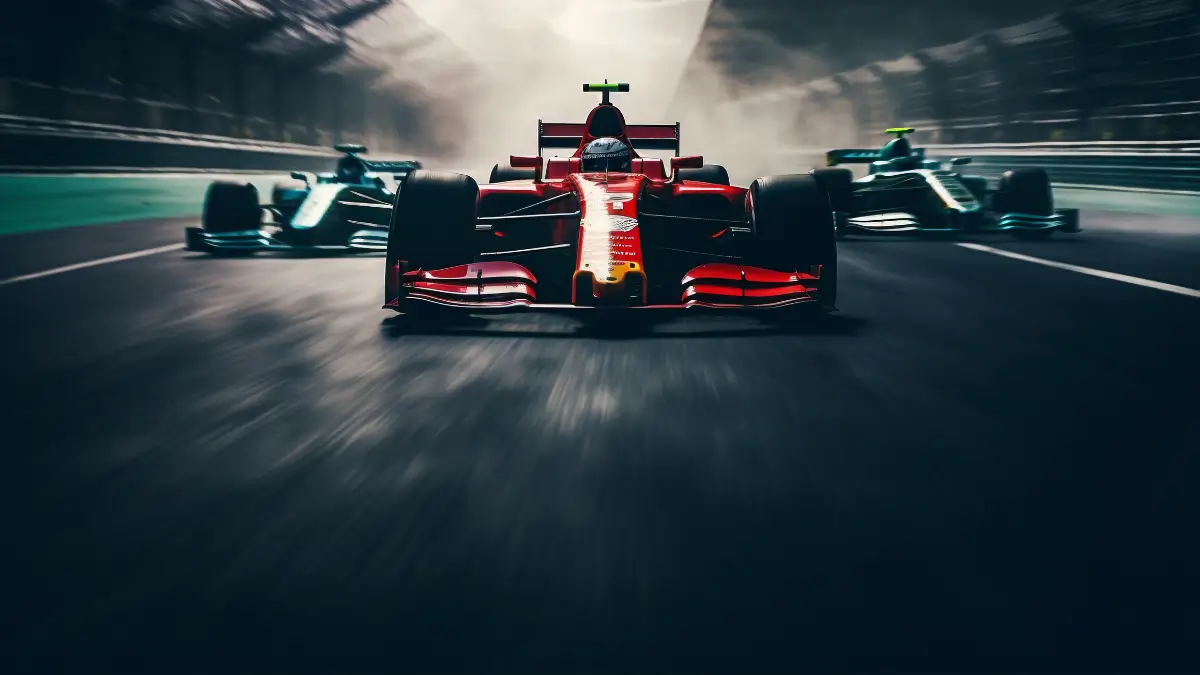
Formula 1 has entered a new era, with major regulation changes reshaping the cars, overtaking, and race strategy starting in the 2026 season. New fans following F1 in 2026 or preparing for 2027 don’t need to learn every technical rule at once. The current championship features 11 teams and 22 drivers, while the new regulations introduce lighter cars, more electrical power, Active Aero, and Overtake Mode.
This guide breaks Formula 1 down into the basics, from what happens during a Grand Prix weekend to qualifying, points, tyres, pit stops and the terminology you will hear while watching a race.
ALSO READ: Kyalami to Host South Africa’s First International 24 Hour Race in January 2027
What Is Formula 1?
Formula 1 is the highest class of international single seater motor racing.
The name itself helps explain the sport. The Formula refers to the set of rules covering areas such as car design, engines and components that every competitor must follow. The 1 represents the highest category within that system. Pasted text
F1 is both an individual and team competition.
Drivers compete for the Drivers’ Championship, while teams compete for the Teams’ Championship based on the points scored by their drivers.
Who Are The F1 Teams And Drivers?
The 2026 grid has 11 teams and 22 drivers, with every team entering 2 cars. Cadillac joined Formula 1 in 2026, expanding the grid.
The confirmed 2026 line up is:
• Mercedes: George Russell and Kimi Antonelli
• Ferrari: Charles Leclerc and Lewis Hamilton
• McLaren: Lando Norris and Oscar Piastri
• Red Bull Racing: Max Verstappen and Isack Hadjar
• Racing Bulls: Liam Lawson and Arvid Lindblad
• Alpine: Pierre Gasly and Franco Colapinto
• Haas F1 Team: Esteban Ocon and Oliver Bearman
• Audi: Nico Hulkenberg and Gabriel Bortoleto
• Williams: Carlos Sainz and Alexander Albon
• Aston Martin: Fernando Alonso and Lance Stroll
• Cadillac: Sergio Perez and Valtteri Bottas
The 2027 driver line up is not confirmed in the supplied material, so this guide does not assume that every 2026 pairing will remain unchanged.
What Happens During An F1 Weekend?
A standard Formula 1 weekend normally takes place across 3 days.
Friday traditionally features FP1 and FP2. These are practice sessions that allow drivers and teams to understand the circuit, work on car setup and prepare for the competitive sessions.
Saturday includes FP3 followed by qualifying.
Sunday is the Grand Prix, where drivers race for championship points and the victory. How Does F1 Qualifying Work?
Qualifying determines the starting order for the Grand Prix.
There are 3 sessions called Q1, Q2 and Q3.
With 22 cars on the 2026 grid, the slowest 6 are eliminated in Q1. Another 6 are eliminated during Q2.
That leaves the fastest 10 to compete in Q3.
The fastest driver in Q3 takes pole position, which normally means starting the Grand Prix from first place. Grid penalties can subsequently affect the final starting order.
How Do F1 Drivers Score Points?
The first 10 drivers in a Grand Prix score championship points.
First place earns 25 points, followed by 18 for second and 15 for third.
Fourth earns 12, fifth 10, sixth 8, seventh 6, eighth 4, ninth 2 and tenth 1.
These points accumulate throughout the season and contribute to both championship battles.
The driver collects points towards the Drivers’ Championship, while the points scored by both teammates contribute towards their team’s championship total.
Why Do F1 Drivers Keep Changing Tyres?
Tyres are one of the easiest ways to start understanding F1 strategy.
The 3 dry weather options available during a Grand Prix weekend are Soft, Medium and Hard.
Soft tyres generally provide greater performance but have a shorter usable life. Hard tyres are designed to last longer, while Medium tyres sit between the 2.
Track conditions and temperature can also affect how quickly tyres lose performance.
This creates a strategic decision. A driver may stay on older tyres to avoid losing time in the pits, while another may stop for fresh tyres and attempt to recover that time with additional pace.
What Does Box Box Mean In F1?
If you hear an engineer shouting “box, box” over the radio, they are telling the driver to enter the pit lane.
A pit stop allows the team to change tyres or perform permitted repairs.
When the stop happens can be just as important as how quickly the tyres are changed.
One strategy is the undercut. A driver pits before a rival, uses the additional performance from fresh tyres and attempts to gain enough time to move ahead when the rival eventually stops.
What Changed In Formula 1 From 2026?
The 2026 season introduced a major technical reset.
Cars became shorter, narrower, lighter and more nimble, while the previous aerodynamic concept changed substantially.
The power units also changed.
F1 retained the 1.6-litre V6 turbo hybrid engine, but the new generation of power units moved towards a roughly equal split between petrol and electrical power.
Drivers now have new tools to manage that energy while racing.
What Happened To DRS?
DRS is no longer the main overtaking aid under the 2026 rules.
Overtake Mode replaced it.
When a driver is within 1 second of the car ahead at the relevant detection point, Overtake Mode can provide additional electrical power to help the attacking driver challenge the car in front.
The cars also feature Active Aero.
Front and rear wing elements can change their angle. On designated straights, they can move into a lower drag configuration to help increase speed. In corners, the wings return to a configuration designed to provide grip.
What Are Boost And Recharge?
Electrical energy is now an even more important part of racing.
Recharge allows the car to recover electrical energy that can be stored for later use.
Boost allows the driver to deploy electrical energy when they want additional performance, provided sufficient energy is available.
This adds another strategic element. Drivers have to consider not only tyres and track position, but also when to recover and deploy electrical energy.
What Is An F1 Sprint?
Some race weekends include an additional shorter race called a Sprint.
There are 6 Sprint events on the 2026 calendar.
A Sprint covers approximately 100 km and is designed to last around 30 minutes. The first 8 drivers score points.
Sprint weekends also have a different schedule.
There is 1 practice session before Sprint Qualifying. The Sprint takes place on Saturday, followed by qualifying for the main Grand Prix.
The Grand Prix remains the main race.
What Do Safety Cars And Red Flags Mean?
A Safety Car can be deployed when an incident makes normal racing unsafe.
Drivers slow down, overtaking is restricted and the field forms behind the Safety Car while officials deal with the incident.
A Virtual Safety Car also neutralises the race and requires drivers to slow down, but without a physical Safety Car leading the field.
A red flag stops the session entirely.
All 3 can affect race strategy, particularly when teams are deciding when to make pit stops.
F1 Language For Beginners
Pole: First position on the starting grid.
Grid: The order in which the cars start the race.
Box: An instruction for the driver to enter the pits.
Pit Stop: A stop in the pit lane for tyres or repairs.
Undercut: Pitting before a rival and trying to gain time using fresher tyres.
Dirty Air: Turbulent air behind another car that reduces aerodynamic performance.
Pit Wall: The area where senior team personnel and engineers help manage the race.
Parc Fermé: The controlled conditions governing the cars around qualifying and the Grand Prix.
Overtake Mode: The new overtaking aid that provides additional energy deployment when the required conditions are met.
Active Aero: Adjustable front and rear wings that change configuration for corners and straights. Pasted text (3)
Will The Same F1 Rules Apply In 2027?
The 2026 regulations began a new technical era for Formula 1, but the supplied information does not confirm the complete sporting and technical regulations for 2027.
The same applies to the driver line up.
For that reason, the 2026 teams, drivers and specific regulations in this guide should be treated as the confirmed current information rather than an assumed 2027 grid.
The fundamental concepts explained here, including qualifying, championships, tyres, pit stops and race strategy, provide new fans with the foundation needed to follow Formula 1 as the sport moves towards 2027.
What This Means For Gauteng Residents
For Gauteng residents starting to follow Formula 1, understanding a race does not require detailed knowledge of engineering or every regulation.
Start by watching 5 things: where each driver starts, which tyres they use, when they pit, the gaps between cars and how many points are available.
Qualifying tells you where the drivers start. The Grand Prix then brings together driver performance, car performance, tyres, energy management and team strategy.
Once those basics become familiar, terms such as undercut, Active Aero, Overtake Mode and Recharge become much easier to understand while watching.
Frequently Asked Questions
How Many F1 Teams Are There In 2026?
There are 11 teams and 22 drivers, with each team fielding 2 cars.
How Long Does An F1 Race Last?
Formula 1 races generally last between 90 minutes and 2 hours, although Safety Cars, red flags and other interruptions can affect the duration.
What Is Pole Position?
Pole position is first place on the starting grid and is normally earned by setting the fastest qualifying time.
What Does Box Mean In Formula 1?
Box is the instruction telling a driver to enter the pit lane for a pit stop.
Does F1 Still Use DRS?
Overtake Mode replaced DRS as the main overtaking aid under the new 2026 regulations.
What New F1 Fans Should Remember
Formula 1 becomes much easier to understand once the basic structure is clear.
There are 11 teams with 2 drivers each. Qualifying determines the starting order. Drivers race for points, while the combined results of teammates contribute towards the teams’ championship.
Tyres and pit stops create strategy, while the 2026 regulations add new elements including Active Aero, Overtake Mode and greater reliance on electrical power.
You do not need to understand everything immediately. Follow the starting grid, tyres, pit stops and championship points first, and the more technical side of Formula 1 starts to make sense surprisingly quickly.
