




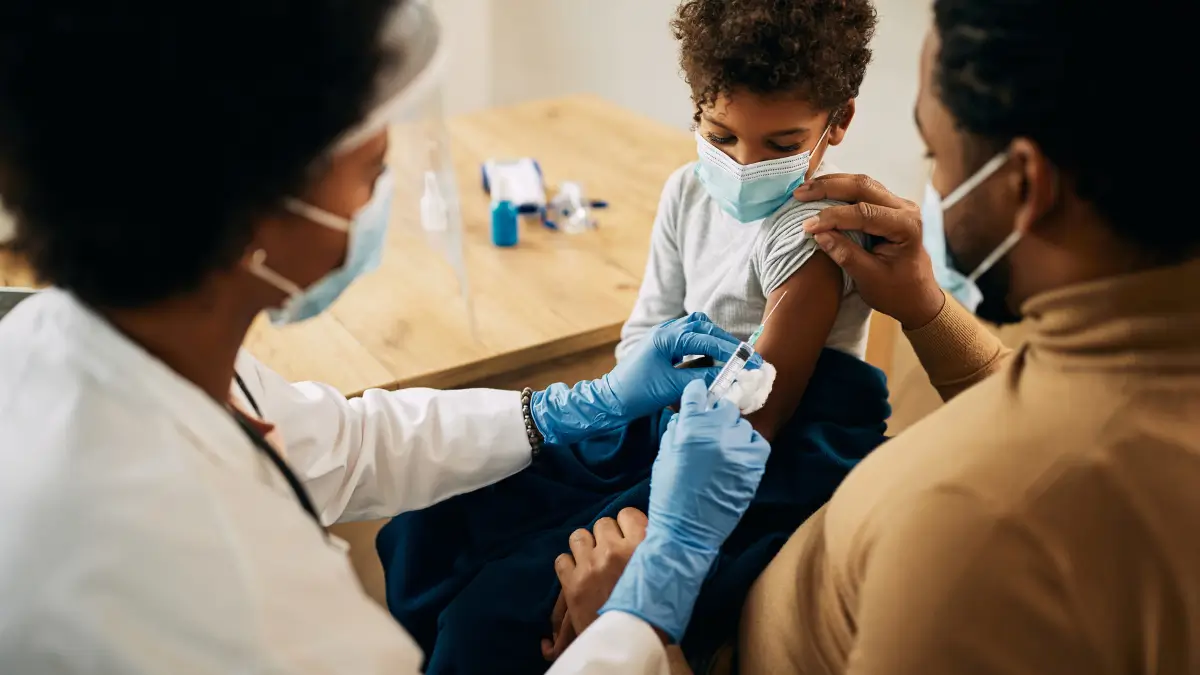
As South Africa observes National Child Protection Week from 29 May to 5 June 2025, the Gauteng Department of Health (GDoH) has issued a renewed call for parents and caregivers to ensure that children are fully immunised according to the national Expanded Programme on Immunisation (EPI) schedule. This appeal comes in response to declining vaccination rates and recent outbreaks of preventable diseases such as measles and rubella in the province.
ALSO READ: Gauteng Health Department Launches African Vaccination Week 2025 in Soweto.
The Importance of Immunisation
Immunisation protects children from serious diseases. These include measles, polio, hepatitis B, and tuberculosis (TB). It also prevents diphtheria and meningitis.
Vaccines help build a child’s immune system. They prepare the body to fight infections naturally. South Africa’s EPI schedule starts from birth. It continues up to 12 years of age.
Vaccines in this schedule include BCG for TB and OPV for polio. Children also receive DTP, Hepatitis B, and Hib vaccines. Other key vaccines include PCV, Rotavirus, and the MR vaccine. These are given at different stages of a child’s growth.
Alarming Decline in Vaccination Coverage
Free vaccines are available at public health facilities in Gauteng. Yet, fewer children are completing their schedules. Only 82.3% of children under one year were fully vaccinated in 2024/25. The target was 90%.
The second dose of the measles-rubella vaccine had even lower coverage. Only 78.4% of children received it. The goal was 92%.
Health MEC Nomantu Nkomo-Ralehoko called this a serious issue. She said incomplete immunisation threatens children’s health. “Not vaccinating on time is a silent threat,” she warned. “It’s also a form of neglect.”
Regional Disparities in Immunisation Rates
The GDoH highlighted significant disparities in immunisation coverage across different districts within Gauteng. Sedibeng district leads with 98% full immunisation for children under one year and 96.1% for the MR second dose. In contrast, metropolitan districts such as Tshwane (76.6%), Ekurhuleni (78.6%), and Johannesburg (85%) are underperforming. One contributing factor is poor adherence to follow-up vaccination appointments.
Rising Cases of Measles and Rubella
The urgency of adhering to the immunisation schedule is underscored by the recent increase in measles and rubella cases. According to the National Institute for Communicable Diseases (NICD) monthly surveillance report published on 14 April 2025, 108 laboratory-confirmed measles cases were reported nationally from week 1 to week 14 of 2025. Gauteng had 72 of them, including 42 in the City of Johannesburg and 21 in the City of Tshwane. Rubella cases totalled 238 over the same weeks, with the highest number, 91, in North West.
Update: Measles cases have since risen sharply. The NICD’s situation report of 23 October 2026 counts 6 363 laboratory-confirmed measles cases nationally from 29 December 2025 to 18 October 2026, and 911 rubella cases to 11 October 2026.
Measles and rubella are highly contagious diseases that can lead to severe complications, including pneumonia, encephalitis, blindness, deafness, and even death. The MR vaccine is given at six months and again at 12 months.
Government Initiatives to Improve Immunisation Rates
In response to the declining immunisation rates and rising disease cases, the GDoH is implementing several initiatives:
- Public Awareness Campaigns: Strengthening efforts to educate communities about the importance of completing vaccination schedules.
- School Holiday Campaigns: Coordinating with Integrated School Health Programme (ISH) teams and outbreak response units to conduct immunisation drives during school holidays.
- Outreach Services: Intensifying efforts to track and vaccinate children who missed routine immunisations, particularly in underserved areas.
- Road to Health Booklet: Encouraging parents to use it to track their child’s immunisation schedule and ensure timely vaccinations.Immunisation:
Immunisation: A Legal and Moral Obligation
The GDoH reminds parents and caregivers that ensuring a child is fully immunised is not only a health responsibility but also a moral and legal obligation under South Africa’s child protection laws. Immunisation is a child’s right, and neglecting this duty can have severe consequences for the child’s health and the broader community
Accessing Immunisation Services
All vaccines listed in the National Immunisation Schedule are available free of charge at public health facilities across South Africa. Parents and caregivers are encouraged to visit their nearest clinic or community health centre to ensure their children are up to date with their vaccinations.
For more information, contact the Department of Health at 012 395 8000 or visit the official website at (https://www.health.gov.za/).
