




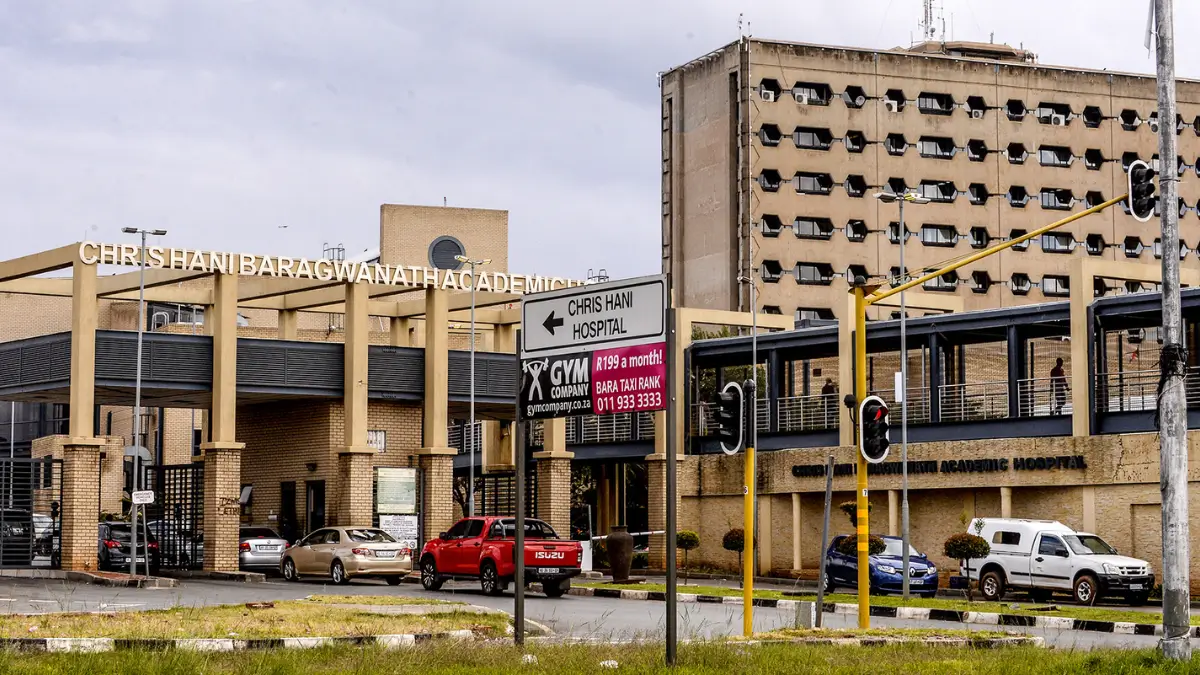
Gauteng residents who cannot afford private medical aid still have access to oncology, trauma care, neurosurgery, cardiothoracic surgery, paediatric surgery and reconstructive procedures through the province’s public hospitals network. These services are concentrated at major academic and tertiary hospitals including Chris Hani Baragwanath Academic Hospital, Charlotte Maxeke Johannesburg Academic Hospital and Steve Biko Academic Hospital, with regional hospitals providing additional specialist services and referrals. As government works to narrow the divide between public and private healthcare, the challenge is increasingly not only what care exists, but how quickly and consistently patients can access it.
More than 80% of the population depends on public healthcare, while a much smaller proportion accesses the private sector, largely through medical aid.
That imbalance places considerably greater pressure on public facilities.
Gauteng’s public hospitals face long waiting periods, overcrowding, staff shortages and infrastructure pressures. Private facilities generally offer faster access and greater convenience, but at a cost that places them beyond the reach of many households.
What is less frequently highlighted is the level of specialist medicine that already exists inside the public system.
Gauteng’s Public Hospitals Go Far Beyond Basic Healthcare
A public hospital is not necessarily a facility providing only basic consultations, medication and emergency treatment.
Gauteng’s academic hospitals sit at the top of a referral network capable of treating complex medical conditions that require specialist teams, advanced surgery and long term treatment.
Chris Hani Baragwanath Academic Hospital in Soweto provides trauma and emergency medicine as well as paediatric medicine, neonatology, ophthalmology, pulmonology and specialist burns care.
Its surgical services include major trauma procedures, paediatric surgery, vascular surgery, orthopaedics and urology.
Charlotte Maxeke Johannesburg Academic Hospital in Parktown provides radiation oncology, cardiology, endocrine medicine, renal services and neurosciences.
Patients requiring complex treatment can also access cardiothoracic surgery, neurosurgery, nuclear medicine and advanced gynaecological surgical oncology through the hospital.
In Pretoria, Steve Biko Academic Hospital provides specialist services including oncology, nuclear medicine, dermatology and medical genetics, together with complex procedures including open heart surgery, maxillofacial surgery, organ transplantation and advanced orthopaedic reconstruction.
These are specialist services often associated in the public imagination with expensive private healthcare, but they also form part of Gauteng’s state healthcare network.
Regional Hospitals Carry Another Part Of The Load
Not every patient requiring specialist care is treated at one of Gauteng’s largest academic hospitals.
Regional and specialised facilities form another layer of the system.
Helen Joseph Hospital in Johannesburg provides specialist services through its Breast Clinic as well as chronic pain management and stoma care.
Rahima Moosa Mother and Child Hospital focuses on maternal, obstetric, gynaecological and paediatric care.
On the West Rand, Leratong Hospital provides regional specialist care that includes ENT, psychiatry and neonatal services.
Patients requiring care beyond the capabilities of a local facility can move through the referral system to higher levels of specialist treatment.
This structure allows public healthcare to extend from community level services to highly complex hospital based medicine.
Breast Cancer Care Shows Why Specialist Public Hospitals Matter
October is Breast Cancer Awareness Month, placing renewed attention on early detection, treatment and access to cancer services.
For Gauteng residents who depend on public healthcare, breast cancer treatment can involve several parts of the provincial hospital network.
Charlotte Maxeke Johannesburg Academic Hospital provides breast cancer imaging and radiation oncology services.
Chris Hani Baragwanath Academic Hospital provides medical oncology services, while Steve Biko Academic Hospital provides oncology services to patients in northern Gauteng.
Helen Joseph Hospital also has a dedicated Breast Clinic.
A breast cancer diagnosis can require considerably more than one procedure. Depending on the patient and treatment required, care can involve imaging, biopsy, surgery, chemotherapy, radiation and ongoing specialist monitoring.
Some patients who undergo cancer surgery may also require reconstructive care.
Plastic Surgery In A Public Hospital Is Not Just Cosmetic
The words “plastic surgery” often bring cosmetic procedures to mind.
Inside the public healthcare system, however, plastic and reconstructive surgeons also treat patients whose bodies have been affected by cancer, serious burns, trauma and other conditions requiring reconstruction.
That can include rebuilding damaged tissue and restoring function after serious injury or surgery.
Breast reconstruction following a mastectomy is one example of where reconstructive surgery can become part of a cancer patient’s longer treatment journey.
Chris Hani Baragwanath Academic Hospital combines major trauma and burns services with plastic and reconstructive surgical expertise.
The challenge is capacity.
Emergency trauma and urgent cancer surgery must compete for specialist staff and operating theatre time alongside procedures that can safely be scheduled for later. As a result, the existence of a specialist service does not necessarily mean patients will receive immediate treatment.
That is one of the clearest differences between having specialist expertise available and having enough capacity to provide it quickly to everyone who needs it.
Where The Public And Private Healthcare Gap Remains
Private healthcare’s major advantage is often speed.
A smaller patient population, medical scheme funding and greater resources can allow patients to move through consultations, investigations and procedures faster.
The public sector works at a different scale.
It carries the healthcare needs of the majority of the population while dealing with pressure on staff, hospital infrastructure, equipment and theatre capacity.
This is why comparing the two sectors only by the appearance of facilities can miss the bigger picture.
Gauteng already has specialist expertise within public healthcare. The challenge is making that expertise consistently and timeously accessible to the much larger population depending on it.
How Government Is Trying To Close The Gap
The approach to narrowing the divide includes infrastructure investment, subsidised healthcare, partnerships with private providers and the broader National Health Insurance framework.
The NHI framework is intended to move South Africa towards universal health coverage through a publicly funded system that can purchase healthcare services from accredited public and private providers.
The principle behind the model is significant for households without medical aid: access to healthcare should increasingly be determined by medical need rather than a patient’s ability to pay.
Gauteng has also used private healthcare capacity when pressure within the public system has required additional support.
One example has involved public oncology patients from Steve Biko Academic Hospital receiving treatment at Life Eugene Marais Hospital to provide additional radiation treatment capacity.
Infrastructure investment forms another part of the effort.
For the 2025 and 2026 financial period, R1.7 billion was allocated to health infrastructure and facility revitalisation in Gauteng.
Projects identified as part of infrastructure development include work involving neonatal wards at Tembisa and Steve Biko Academic hospitals, the Breast Clinic at Helen Joseph Hospital and extensions at Edenvale Regional Hospital.
Plans for additional hospital capacity are also intended to improve geographic access as Gauteng’s population and demand for healthcare continue placing pressure on existing facilities.
What Does Public Healthcare Cost In Gauteng?
Public healthcare does not operate according to the same payment model as private hospitals.
Private treatment is predominantly funded through medical schemes or direct payment by patients.
Gauteng public hospitals use the Uniform Patient Fee Schedule, which provides for patient classifications and income linked charges.
This allows qualifying residents to receive healthcare free or at heavily subsidised rates depending on their circumstances.
The financial model is particularly important for specialist medicine.
Cancer treatment, surgery and long term specialist care can involve repeated appointments and procedures. Without a public system, the cost of accessing that level of treatment privately would place it beyond the reach of many Gauteng households.
Public Healthcare Still Has Serious Problems
Highlighting what public hospitals can provide should not obscure the problems patients experience.
Waiting lists remain a challenge.
Hospitals face pressure from large patient numbers, ageing infrastructure, staffing constraints and demand for limited specialist resources.
Cancer treatment is particularly sensitive to capacity because patients may require repeated chemotherapy or radiation sessions, specialist consultations and surgery.
Infrastructure investment and partnerships can increase capacity, but they do not immediately erase the pressures experienced across the system.
The question facing Gauteng is therefore not whether public healthcare has specialist expertise.
It does.
The bigger question is whether the province can create enough capacity for residents to access that expertise when they need it.
What This Means for Gauteng Residents
For residents without medical aid, Gauteng’s public healthcare system provides considerably more than primary healthcare and emergency treatment.
Depending on a patient’s condition and referral pathway, public hospitals provide access to:
• Oncology and cancer treatment
• Radiation oncology
• Cardiology and heart surgery
• Neurosurgery
• Renal medicine
• Orthopaedic surgery
• Paediatric medicine and surgery
• Trauma and burns treatment
• Vascular surgery
• Plastic and reconstructive surgery
• Obstetrics and gynaecology
• Neonatal specialist care
Access to these services does not necessarily begin by walking directly into an academic hospital.
Patients move through different levels of the healthcare system and can be referred to regional, tertiary or academic facilities when their condition requires specialist treatment.
For residents, understanding that referral network can be as important as knowing which hospital provides a particular service.
Frequently Asked Questions
Which Gauteng public hospitals provide cancer treatment?
Major public facilities providing oncology services include Charlotte Maxeke Johannesburg Academic Hospital, Chris Hani Baragwanath Academic Hospital and Steve Biko Academic Hospital. Helen Joseph Hospital also operates a dedicated Breast Clinic.
Can you get specialist surgery at a public hospital in Gauteng?
Yes. Specialist procedures available across Gauteng’s academic public hospitals include neurosurgery, cardiothoracic surgery, vascular surgery, paediatric surgery, orthopaedic procedures, trauma surgery and reconstructive surgery.
Is plastic surgery available at Gauteng public hospitals?
Plastic and reconstructive surgery forms part of specialist public healthcare. It can be required following serious trauma, burns, cancer surgery and other conditions where damaged tissue or function needs to be reconstructed.
Is treatment at a Gauteng public hospital free?
Public hospital charges are governed through the Uniform Patient Fee Schedule. What a patient pays depends on their classification and circumstances, with qualifying patients receiving free or heavily subsidised healthcare.
Why are public hospital waiting times longer?
Public hospitals serve the majority of the population and must manage high patient volumes with limited staff, equipment, theatre space and infrastructure. Emergency and urgent cases must also be prioritised according to clinical need.
The Next Challenge Is Access
The divide between public and private healthcare in Gauteng remains significant.
Private healthcare generally provides faster access for people who can afford medical aid or direct treatment costs. Public healthcare must provide services to a far larger population while managing limited resources and persistent operational pressures.
But the divide is not simply between advanced private medicine and basic public medicine.
Behind the doors of Gauteng’s academic hospitals are oncologists, cardiologists, neurosurgeons, paediatric surgeons, orthopaedic surgeons and plastic and reconstructive specialists treating patients who may never be able to afford those services privately.
Government’s challenge is now to strengthen the system around that expertise.
Infrastructure investment, additional capacity, subsidised healthcare, partnerships with private providers and wider health reforms are all aimed at narrowing the distance between having specialist healthcare in Gauteng and ensuring that every resident who needs it can actually access it.
