




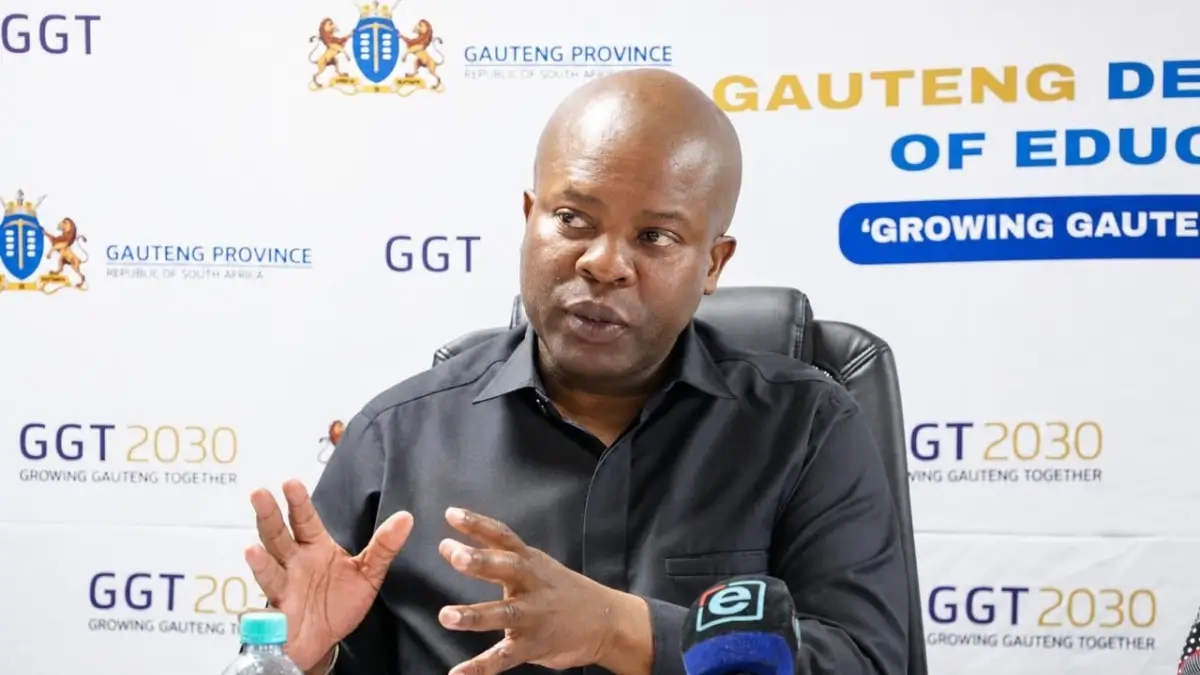
The Gauteng Department of Education has investigated 61 schools suspected of operating illegally since January 2026 and issued closure notices to 32 institutions, raising concerns for parents making school placement decisions across the province. Education MEC Lebogang Maile disclosed the figures at a briefing on Sunday, 13 September, saying officials had visited schools to check their registration and compliance documents. The department says affected learners must be helped into legally operating schools, while parents should verify an independent school’s registration before paying fees or enrolling a child.
The figures highlight two issues facing Gauteng families: whether a school is legally permitted to operate and what happens to learners when an institution is ordered to close.
ALSO READ: Gauteng School Holidays 2026: Here’s When Schools Close for the September Break
Gauteng investigates 61 suspected illegal schools
According to Maile, the department launched investigations after receiving information from parents, community members, and other government institutions.
Officials visited the institutions to establish whether they were registered and operating in accordance with the applicable requirements.
The department reported the following outcomes for 2026:
- 61 schools investigated for suspected illegal operations.
- 32 institutions served with closure notices.
- Seven schools subsequently ceased operating.
- Four schools applied for registration.
- Two school directors arrested.
The figures were reported at the September briefing and should not be interpreted as a live count of schools that remain open or closed.
The department did not provide a complete public list of the institutions in the information reported from the briefing. It also did not specify whether the four registration applications had been approved.
A school applying for registration should not automatically be treated as registered. Parents need to establish its current status before making an enrolment decision.
What happens when an illegal school is identified?
The department said institutions found to be operating unlawfully are instructed to stop operating, after which the relevant closure process is followed.
Closure notices and confirmed closures are not the same outcome. Although 32 institutions received notices, the department reported that seven schools had subsequently stopped operating.
The department also reported that two directors had been arrested. The information provided did not identify the individuals, specify the charges or establish the outcome of any criminal proceedings.
These distinctions matter because the investigation figures describe different stages of enforcement rather than 61 completed closures.
The latest action follows investigations conducted during 2025, when officials visited 57 illegally operating schools and served 31 with letters.
The department has not established in the reported information whether any of the schools investigated in 2025 were also included in the 2026 figures.
What happens to learners when a school closes?
The department said its responsibility does not end when an illegally operating school is closed.
Affected children still need access to education, and the relevant education district must work with parents to place them in legally operating schools.
This means families whose children attend an institution facing closure should seek guidance from their district office about the placement process.
Parents should also establish what documentation is needed to support a transfer and whether a suitable place has been identified.
The department did not disclose how many learners were affected by the 2026 investigations or how many had already been placed at alternative schools.
It also did not provide a breakdown of available places by district.
Those details are important for families because the practical impact of a closure depends on whether a learner can move to another school without a prolonged interruption to their education.
How parents can check if an independent school is registered
The Gauteng Department of Education has urged parents to confirm that an independent school is properly registered before paying fees or enrolling their children.
A school’s advertising, facilities or willingness to accept an application should not be treated as proof of registration.
Parents considering an independent school should ask for its registration details and verify them with the Gauteng Department of Education.
They should also check that the registration information corresponds with the institution and campus where their child will attend classes.
Where a school says it has applied for registration, parents should establish whether the application has been approved.
If an institution cannot provide clear information about its registration status, families can seek clarification from the relevant education district before making a payment.
Registration and government funding are separate matters. A school can be registered without receiving a subsidy.
Gauteng allocates R1.13 billion to qualifying independent schools
The enforcement action comes alongside a substantial provincial allocation to qualifying independent schools.
According to Maile, the department plans to allocate approximately R1.13 billion in subsidies during the 2026/27 financial year.
The reported allocation is divided as follows:
- Approximately R621 million for the primary school phase.
- Approximately R508 million for the secondary school phase.
The department said it allocated about R4.3 billion in transfers and subsidies to qualifying independent schools between the 2022/23 and 2025/26 financial years.
The allocation for 2025/26 was close to R1.1 billion.
These subsidies are intended for qualifying institutions under the applicable funding framework. They are not payments to every independent school in the province.
How many independent schools receive government funding?
Gauteng has 1 083 registered operational independent schools, according to the figures presented at the briefing.
That compares with 961 in 2021, an increase of 122 institutions.
Of the current registered schools, 279 receive subsidies and 804 do not.
The department explained that subsidised independent schools remain privately owned and managed. Receiving government funding does not make an institution a public school.
Subsidy levels are determined through the applicable funding framework, with lower fee schools potentially qualifying for more support than institutions charging substantially higher fees.
The department also monitors how public funds are used. Its oversight includes financial planning, budgets, annual financial statements, banking controls, payroll and assets.
These financial requirements apply to subsidised institutions and are distinct from the basic question of whether a school is legally registered.
What This Means for Gauteng Residents
For Gauteng parents, the September findings are particularly relevant when comparing schools, accepting placement offers or considering a move to an independent institution.
The province has more registered independent schools than it did in 2021, giving families a larger sector to navigate. However, the investigations show why parents need to verify an institution’s legal status rather than relying on its claims.
Families with children at schools facing closure should engage with the relevant education district about alternative placement arrangements.
Parents considering a new school should confirm registration before paying fees and retain copies of enrolment agreements, payment records and correspondence.
The R1.13 billion subsidy allocation also makes it important to distinguish between registered schools that qualify for public funding and those that operate without subsidies.
The department’s reported figures do not mean that the 804 unsubsidised schools are illegal. They are part of the province’s registered independent school sector.
Frequently Asked Questions
How many illegal schools has Gauteng investigated in 2026?
The Gauteng Department of Education reported investigating 61 schools suspected of operating illegally since January 2026. By its September briefing, 32 had received closure notices.
Have all 32 schools been closed?
No. The department reported that 32 schools had received closure notices and seven institutions had subsequently ceased operating. It did not confirm that all 32 had closed.
What happens to children attending an illegal school?
The department said the relevant education district must work with parents to place affected learners in legally operating schools so they can continue their education.
How can parents verify a school’s registration?
Parents should request the institution’s registration details and confirm its current status with the Gauteng Department of Education before enrolling a child or paying fees.
Do all registered independent schools receive subsidies?
No. Gauteng reported 1 083 registered operational independent schools, of which 279 receive subsidies and 804 do not.
School registration checks remain important for parents
The department’s September update shows that investigations into suspected illegal schools are continuing alongside oversight of the province’s growing independent school sector.
For families, the immediate priority is to confirm a school’s registration status before committing to enrolment. Where enforcement action disrupts a learner’s education, the department says district officials must work with parents to arrange placement at a legally operating institution.
