




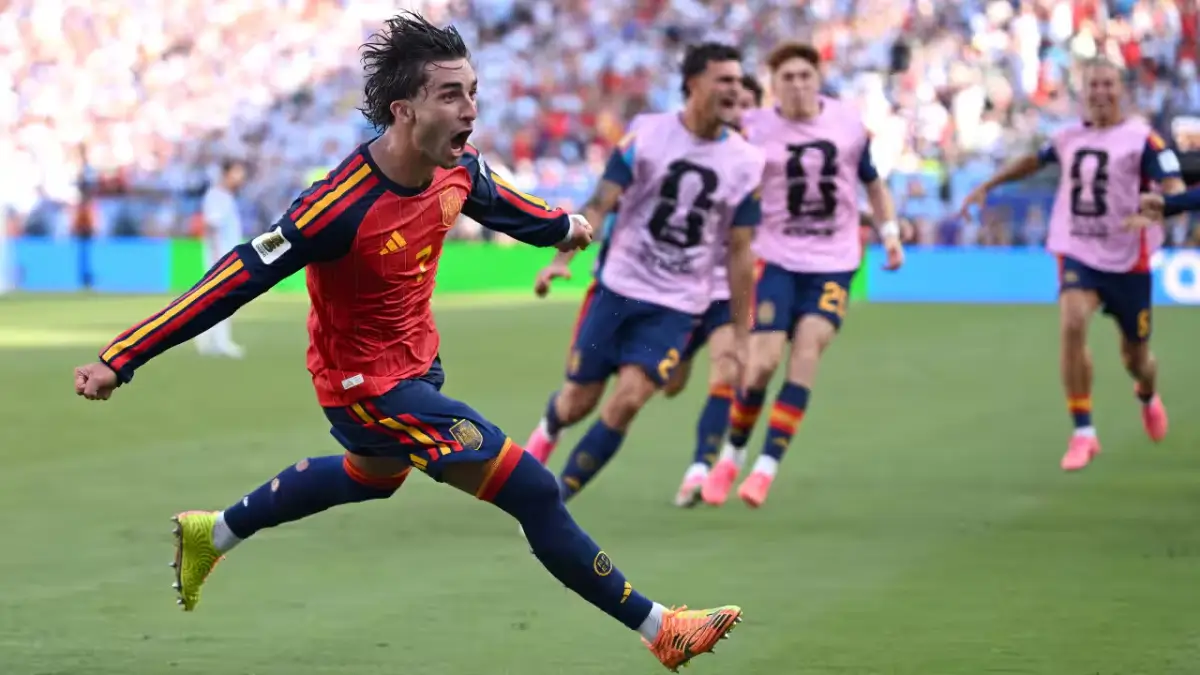
Spain have won the 2026 FIFA World Cup after defeating defending champions Argentina 1 to 0 after extra time in the final at New York New Jersey Stadium on Sunday, 19 July. Substitute Ferran Torres scored the decisive goal in the 106th minute, securing Spain’s second men’s World Cup title and ending Argentina’s attempt to become the first team since Brazil in 1962 to retain the trophy.
The victory gives Spain their first World Cup title since their historic 2010 triumph in South Africa. Argentina leave the tournament as runners up after reaching consecutive finals and coming within one match of successfully defending the title they won in Qatar four years ago.
ALSO READ: Jozi My Jozi Joins 702 Walk the Talk 2026 to Showcase Johannesburg One Street at a Time
Spain Crowned World Champions for the Second Time
Spain entered the final looking to add another World Cup title to the trophy they won at Soccer City in Johannesburg in 2010.
Argentina arrived as defending champions after winning the 2022 tournament and had the opportunity to claim a fourth title following previous triumphs in 1978, 1986 and 2022.
Instead, Spain controlled much of Sunday’s final and eventually found the breakthrough in extra time.
Ferran Torres, introduced from the bench during the second half, scored in the 106th minute to settle the match. Spain had dominated Argentina for much of the contest, limiting the defending champions to only two attempts across 120 minutes.
The result completed a tournament in which Spain combined sustained possession with one of the competition’s strongest defensive records.
Spain Control Possession as Argentina Defend Deep
The pattern of the final became clear early in the match.
Spain controlled possession and looked to create openings through Lamine Yamal, Mikel Oyarzabal and their advancing wide players, while Argentina adopted a deeper defensive approach and attempted to attack on the counter.
Argentina managed to keep the match goalless during the first half despite sustained pressure from Spain.
The defending champions continued to absorb pressure after the break as Spain increased the tempo and introduced fresh attacking options.
Spain coach Luis de la Fuente brought Torres and Pedri into the match before later introducing Nico Williams and Mikel Merino.
The substitutions increased the pressure on Argentina’s defence, but goalkeeper Emiliano Martínez made several interventions to keep his team level.
Argentina Hold On as Spain Search for the Breakthrough
Argentina remained in contention despite struggling to create opportunities at the opposite end of the pitch.
Spain repeatedly pushed forward but could not convert their territorial control into a goal during regulation time.
The match therefore went into extra time at 0 to 0.
Spain continued to attack, with Williams briefly appearing to have broken the deadlock before his effort was ruled out.
The breakthrough eventually arrived early in the second period of extra time.
A move involving Pedro Porro and Williams created the opportunity for Torres, who finished to give Spain the lead in the 106th minute. Argentina attempted to respond during the remaining minutes, but Spain held firm to secure the title.
Ferran Torres Delivers Spain’s Decisive Moment
Torres emerged as the match winner despite beginning the final on the bench.
His introduction gave Spain another attacking option as Argentina increasingly focused on protecting their goal.
The Barcelona forward eventually converted the chance that Spain had spent more than 100 minutes trying to create.
His goal proved enough.
Spain saw out the remaining period of extra time before the final whistle confirmed them as world champions for the second time.
The result also continued an extraordinary period for Spanish football, with the country becoming the first nation to simultaneously hold the men’s and women’s senior FIFA World Cup titles.
Argentina Fall Short of Historic Consecutive Titles
For Argentina, defeat ended their attempt to achieve something no men’s national team had managed in more than six decades.
The South American champions were seeking to become the first side since Brazil in 1958 and 1962 to win consecutive men’s World Cups.
Argentina had arrived in the final after an impressive tournament, including a 2 to 1 semifinal victory over England.
However, Spain prevented them from producing the attacking football that had taken them through the earlier stages.
Argentina struggled to establish sustained possession and spent much of the final defending against Spain’s passing and movement.
Lionel Messi, who had scored eight goals during Argentina’s run to the final, was also given little space to influence the match.
The defeat means Argentina finish the tournament as runners up, four years after lifting the trophy in Qatar.
Spain Add 2026 Title to Historic 2010 Triumph
Spain’s latest victory has a significant connection to Gauteng.
Their first FIFA World Cup title was won at Soccer City in Johannesburg on 11 July 2010, when Andrés Iniesta scored an extra time goal to defeat the Netherlands 1 to 0.
Sixteen years later, another extra time goal has delivered their second title.
The similarities between the two finals are notable. Both remained goalless after 90 minutes, both required extra time and both were decided by a single Spanish goal.
The 2026 victory establishes another successful generation of Spanish players alongside the team that won the country’s first title on South African soil.
What This Means for Gauteng Residents
The World Cup final attracted significant interest across Gauteng, where supporters gathered at fan parks, restaurants, sports bars and organised viewing events on Sunday evening.
For local football followers, Spain’s victory also carries a direct historical link to Johannesburg.
Spain’s first World Cup triumph took place at Soccer City during the 2010 FIFA World Cup hosted by South Africa. Their second title therefore comes 16 years after Gauteng hosted one of the defining moments in the country’s football history.
The result also brings six weeks of World Cup activity to an end after public screenings and watch parties brought supporters together across Johannesburg, Pretoria, Midrand, Sandton and other parts of the province.
Argentina Now Turn Their Attention to What Comes Next
Argentina leave North America without the trophy but after reaching a second consecutive World Cup final.
The team’s immediate focus will shift towards its next international cycle and decisions around the squad that will take the national side forward.
Questions will inevitably surround several senior players, including 39 year old captain Lionel Messi, but no confirmed announcement about his international future had been made immediately after the final.
Argentina coach Lionel Scaloni said after the match that he had not yet discussed Messi’s future with him.
The broader challenge for Argentina will be how to build on a period that delivered the 2022 World Cup and another appearance in the final four years later.
Frequently Asked Questions
Who Won the 2026 FIFA World Cup?
Spain won the 2026 FIFA World Cup after defeating defending champions Argentina 1 to 0 after extra time in the final on Sunday, 19 July.
Who Scored the Winning Goal in the World Cup Final?
Ferran Torres scored Spain’s winning goal in the 106th minute during the second period of extra time.
How Many FIFA World Cups Have Spain Won?
Spain have won the men’s FIFA World Cup twice. Their first title came in South Africa in 2010, followed by their second triumph in 2026.
When Did Argentina Last Win the World Cup?
Argentina won their third World Cup title in Qatar in 2022. They reached the final again in 2026 but lost 1 to 0 to Spain after extra time.
Did Argentina Become Back to Back World Cup Champions?
No. Argentina were attempting to become the first men’s national team since Brazil in 1962 to successfully defend the World Cup, but Spain ended their bid with a 1 to 0 victory in the final.
Spain Begin Their Reign as World Champions
Spain leave the 2026 FIFA World Cup with their second title after a final in which patience, possession and sustained pressure eventually produced the decisive moment. Torres’s extra time goal separated the teams and brought Argentina’s four year reign as world champions to an end.
For Argentina, the defeat does not erase a run that took the defending champions to consecutive World Cup finals, but it marks the beginning of a new period as the team considers its next international cycle. For Spain, the victory adds another chapter to a World Cup history that began with their first title in Johannesburg in 2010 and now continues with a second triumph 16 years later.
