




Gauteng is positioning itself as Africa’s primary entry point for global travellers at World Travel Market Africa 2026 (WTM Africa), taking place from 13 to 15 April at the Cape Town International Convention Centre. The province is being presented as a connected gateway destination built on air access, mobility, and high-value tourism. This positioning has direct implications for tourism growth, infrastructure development, and Gauteng’s role in global travel networks. It also reflects a broader shift towards premium, experience-led travel supported by integrated systems designed to convert global demand into bookings.
ALSO READ: Gauteng Gears Up for 2026 Investment Conference as New Leadership Takes Shape
Gauteng Positioned as Africa’s Key Entry Point
Gauteng is being positioned not as a single attraction, but as a gateway ecosystem that connects global travellers to a range of experiences within a compact, accessible region.
The province combines:
- A concentration of business and financial hubs
- Established conferencing and events infrastructure
- Access to cultural, heritage and leisure attractions
This allows Gauteng to function as both a point of arrival and a destination in its own right, particularly for travellers entering South Africa for multi-stop itineraries.
Its central role means many international visitors begin their journeys in Gauteng before moving to other parts of the country.
Air Access Advantage Drives Global Connectivity
Air connectivity remains one of Gauteng’s strongest competitive advantages, enabling it to function as a key entry point into Africa.
The province operates a multi-airport system, allowing it to support different travel needs across business, leisure and regional markets.
This includes:
- O.R. Tambo International Airport
The primary international gateway and the busiest airport on the continent, handling long-haul global travel - Lanseria International Airport
A growing secondary airport offering access to key leisure destinations and supporting domestic and regional travel - Additional aviation infrastructure
Including Rand Airport, Grand Central Airport and Wonderboom National Airport, which support charter, training and regional connectivity
This distributed aviation network allows Gauteng to accommodate high volumes of travellers while maintaining flexibility and resilience across different travel segments.
Mobility is Part of The Visitor Experience
Mobility in Gauteng extends beyond transport, forming a key part of how visitors experience the province.
The Gautrain plays a central role in connecting major nodes, including airports, Sandton, Pretoria and surrounding economic zones.
This system enables:
- Seamless movement between arrival points and accommodation
- Efficient travel between business and leisure destinations
- Reduced reliance on road-based transport for key routes
Integrated transport systems allow visitors to move between destinations with minimal disruption, supporting short stays, business travel and structured itineraries.
This level of connectivity is particularly important for international visitors working within limited travel time.
High-value Tourism Becomes a Strategic Focus
Gauteng is increasingly focusing on high-value tourism, targeting visitors who contribute more to the economy through spending rather than volume alone.
This includes:
MICE tourism
Meetings, incentives, conferences and exhibitions remain a key driver, bringing international delegates into Gauteng’s business districts.
Sports tourism
Golf tourism forms part of the premium offering, with championship courses such as Glendower, Randpark and Blair Atholl attracting international players and events.
Lifestyle and cultural experiences
Urban tourism, heritage attractions and curated local experiences are positioned to appeal to global travellers seeking diverse, high-quality experiences.
This approach shifts the focus from increasing visitor numbers to increasing economic impact per visitor.
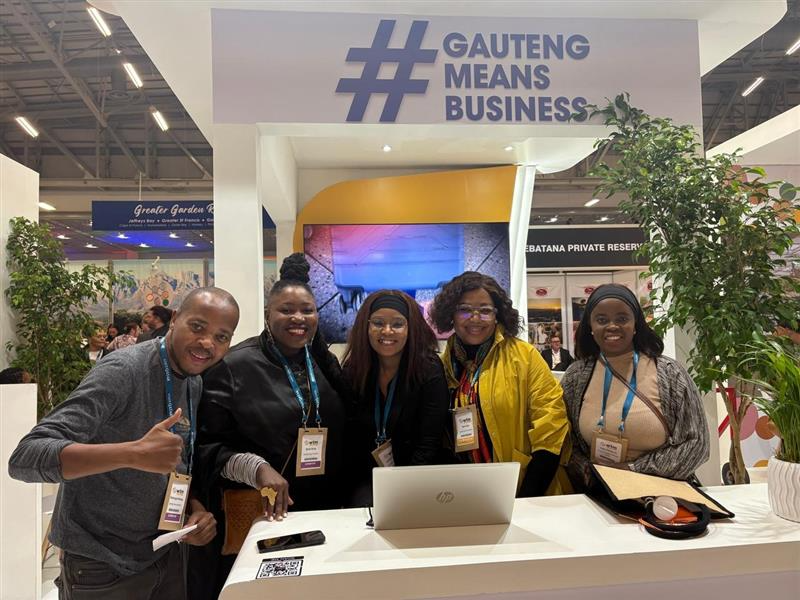
Market-ready Experiences Designed for Global Buyers
A central part of Gauteng’s positioning is the development of fully packaged, bookable travel experiences.
These are designed to simplify travel planning and enable immediate purchase by international buyers.
Typical packages include:
- Multi-day itineraries
Linking Johannesburg, Pretoria, the Cradle of Humankind and surrounding attractions - Integrated transport
Including airport transfers, Gautrain access and guided travel between destinations - Premium accommodation
Business hotels, boutique stays and nature-based lodges - Curated experiences
Heritage tours, township visits, cultural sites and nature activities - Event-linked travel
Packages built around conferences, sporting events and festivals
These offerings are structured to provide a seamless experience from arrival to departure, reducing complexity for travellers and improving booking conversion.
WTM Africa 2026: Why This Positions Gauteng Globally
Gauteng’s global positioning is built on the combination of infrastructure, accessibility and diversity of experiences.
Key strengths include:
- Strong international and regional connectivity
- Integrated transport systems
- A mix of business, leisure and event-driven tourism
- The ability to offer multiple experiences within short travel distances
This creates a tourism model that is both flexible and resilient, allowing Gauteng to respond to changes in global travel demand while maintaining its role as a central hub.
What This Means for Gauteng Residents
The positioning of Gauteng as a global gateway has direct implications for residents and local industries.
These include:
- Increased international visitor activity across the province
- Growth in conferences, events and tourism-related services
- Continued investment in transport and tourism infrastructure
- Expanded opportunities within hospitality and service sectors
The focus on high-value tourism may also influence how experiences are developed, with a stronger emphasis on quality and global standards.
FAQ: Gauteng’s Gateway Positioning Explained
Why is Gauteng considered a gateway to Africa?
It serves as a primary entry point for international travellers due to its strong air connectivity and central location.
What is a multi-airport system?
It refers to the use of multiple airports to support different travel needs and improve capacity and resilience.
How does mobility affect tourism?
Efficient transport systems make it easier for visitors to move between destinations, improving the overall experience.
What is high-value tourism?
It focuses on attracting travellers who spend more on accommodation, experiences and events.
What are packaged tourism experiences?
These are pre-planned, bookable travel offerings that combine accommodation, transport and activities.
What Happens Next
Engagements at WTM Africa 2026 are expected to translate into new travel partnerships, increased bookings and expanded global visibility for Gauteng.
The focus will shift to converting interest from international buyers into measurable outcomes, including visitor spend, event hosting and sustained tourism growth.
Start your journey in Gauteng — explore and book experiences on the Visit Gauteng App.
