




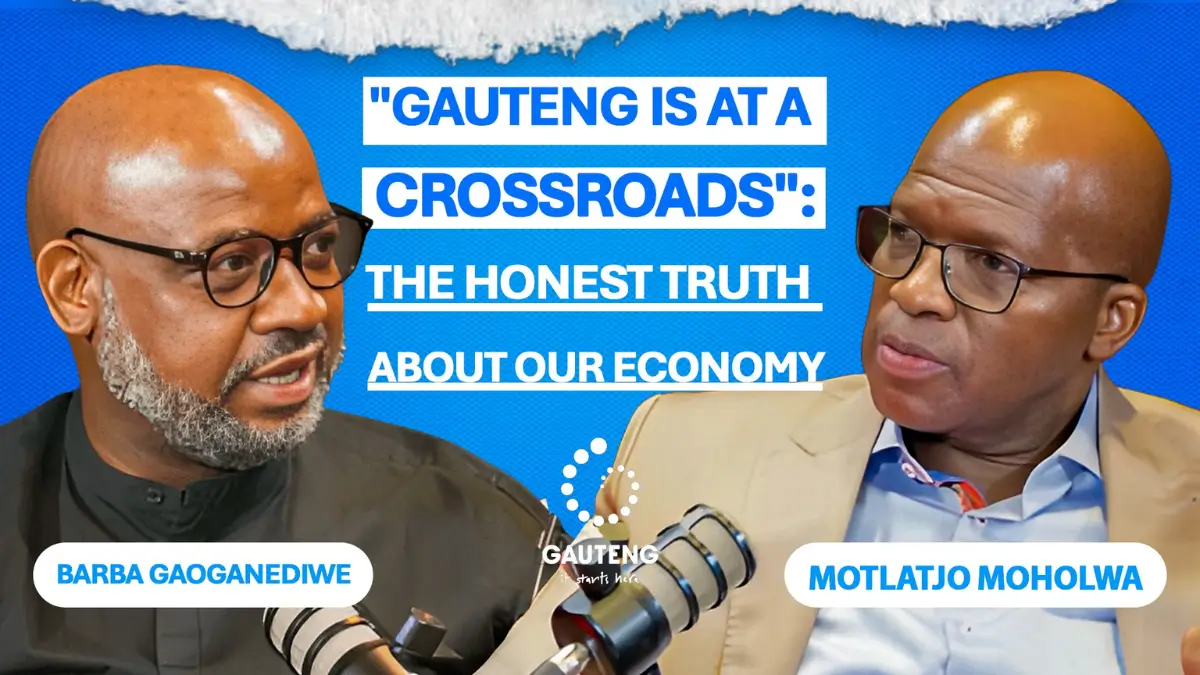
Gauteng’s plan to create more than 450,000 jobs by 2030 took centre stage during a recent episode of Gauteng Lifve, where host Barba Gaoganediwe sat down with Gauteng Department of Economic Development Head Motlatjo Moholwa for an in-depth discussion on the province’s economic future. During the interview, Moholwa unpacked the Growing Gauteng Together 2030 Vision, explaining how Gauteng intends to attract investment, support entrepreneurs and accelerate economic growth over the next five years. The conversation offered residents, business owners and investors a rare look at the province’s roadmap for job creation and long-term economic development.
Speaking with Gaoganediwe, Moholwa argued that Gauteng remains South Africa’s economic engine but requires stronger execution, greater collaboration and a renewed focus on industrialisation if it is to meet its ambitious growth targets by 2030.
Barba Gaoganedi Puts Gauteng’s Growth Plan Under the Spotlight
The latest episode of Gauteng Lifve featured Motlatjo Moholwa, Head of Department for the Gauteng Department of Economic Development.
During the discussion, Moholwa unpacked the Gauteng Economic Growth Plan and the broader Growing Gauteng Together 2030 Vision, explaining how the province intends to move beyond traditional approaches to economic development and focus on practical implementation.
The conversation explored job creation, entrepreneurship, industrial development, investment attraction and the role of government in creating an environment where businesses can grow and create employment opportunities.
Why Gauteng Remains South Africa’s Economic Engine
Gauteng continues to play a central role in the South African economy.
According to information shared during the episode, Gauteng contributes more than 33% of South Africa’s gross domestic product and nearly 8% of Africa’s total GDP. Provincial officials argue that if Gauteng were an independent country, it would rank among the five largest economies on the continent.
This economic influence means that decisions made within Gauteng have implications far beyond provincial borders.
The province remains a key centre for finance, manufacturing, logistics, retail and professional services.
The Growth Targets Gauteng Wants to Achieve by 2030
One of the key topics discussed during the episode was the province’s growth targets.
According to Moholwa, the province has used economic modelling and forecasting tools to establish measurable objectives for the coming years. These targets include economic growth of between 3% and 5% and the creation of more than 450,000 jobs by 2030.
Officials believe these goals are achievable if government, business and civil society work together to remove barriers to growth and investment.
Inside the 10 Pillars of Gauteng’s Economic Strategy
The Gauteng Economic Growth Plan is built around several strategic focus areas designed to stimulate economic activity.
These include:
- Re-industrialisation
- Infrastructure development
- Sector growth initiatives
- Special Economic Zones
- Investment attraction
- Export-led growth
- Entrepreneurship development
- Innovation and technology
- Skills development
- Regional economic integration
Officials say these pillars are intended to create a more competitive and inclusive economy capable of generating long-term employment opportunities.
How the Gauteng City Region Model Could Drive Growth
A major theme of the discussion was the concept of the Gauteng City Region.
Rather than operating as separate municipalities and economic zones, the province is seeking to create a more integrated regional economy that allows people, businesses and investment to move more efficiently across Gauteng.
Officials believe a more coordinated approach could improve economic competitiveness and help attract larger domestic and international investments.
What Are Action Labs and Why Do They Matter?
One of the more innovative ideas highlighted during the episode was the introduction of “Action Labs”.
According to Moholwa, these are collaborative environments where government, universities, researchers and private sector organisations work together to solve practical economic challenges.
The approach aims to move beyond traditional planning exercises and focus on implementation and measurable outcomes.
Officials hope Action Labs will accelerate decision-making and create practical solutions to support growth and job creation.
The Role of Special Economic Zones in Attracting Investment
Special Economic Zones were identified as another important component of Gauteng’s strategy.
These designated areas are intended to attract investment, encourage industrial development and support export growth.
According to provincial officials, SEZs have the potential to create jobs, attract foreign investment and strengthen Gauteng’s position as a manufacturing and logistics hub.
Why Youth, Women and Entrepreneurs Are Central to the Plan
The discussion also focused on economic inclusion.
Moholwa highlighted concerns around unemployment, particularly among young people and women. He noted that the province is increasingly focused on ensuring that youth, women and people living with disabilities are able to participate meaningfully in the economy.
Officials argue that entrepreneurship and small business development will play a critical role in achieving these goals.
The strategy seeks to move people from economic dependency towards active participation in economic growth.
What This Means for Gauteng Residents
For Gauteng residents, the province’s economic growth strategy has implications that extend beyond government policy documents.
If successful, the plan could influence:
- Employment opportunities
- Business growth
- Infrastructure investment
- Skills development programmes
- Entrepreneurship support
- Foreign and local investment
The discussion on Gauteng Lifve suggests that provincial leaders are placing greater emphasis on implementation and measurable outcomes rather than long-term planning alone. Whether those ambitions translate into jobs and economic growth will be closely watched over the coming years.
Frequently Asked Questions
What is Gauteng Lifve?
Gauteng Lifve is a platform that explores issues affecting the province’s economy, tourism and development through interviews and discussions with government leaders, industry experts and stakeholders.
Who was featured in the latest episode?
The episode featured Motlatjo Moholwa, Head of Department for the Gauteng Department of Economic Development.
How many jobs does Gauteng want to create by 2030?
The province has set a target of creating more than 450,000 jobs by 2030.
What are Action Labs?
Action Labs are collaborative working groups that bring together government, academia and the private sector to develop practical economic solutions.
Where can residents follow Gauteng Lifve and Visit Gauteng?
According to the episode information, residents can follow Visit Gauteng on TikTok and Instagram, connect through the I Love Gauteng Facebook community and access resources through the Visit Gauteng mobile app.
What Happens Next?
The Gauteng Economic Growth Plan will continue to be rolled out over the coming years as the province works towards its 2030 targets. Progress on investment attraction, job creation and economic growth will likely remain key indicators used to measure the success of the strategy. Provincial leaders have indicated that implementation, collaboration and accountability will be central to achieving the outcomes discussed during the Gauteng Lifve episode.
