




South Africa’s tourism sector has officially graduated from “feel-good story” to growth engine and the Tourism Budget Vote 2026 makes that shift impossible to ignore.
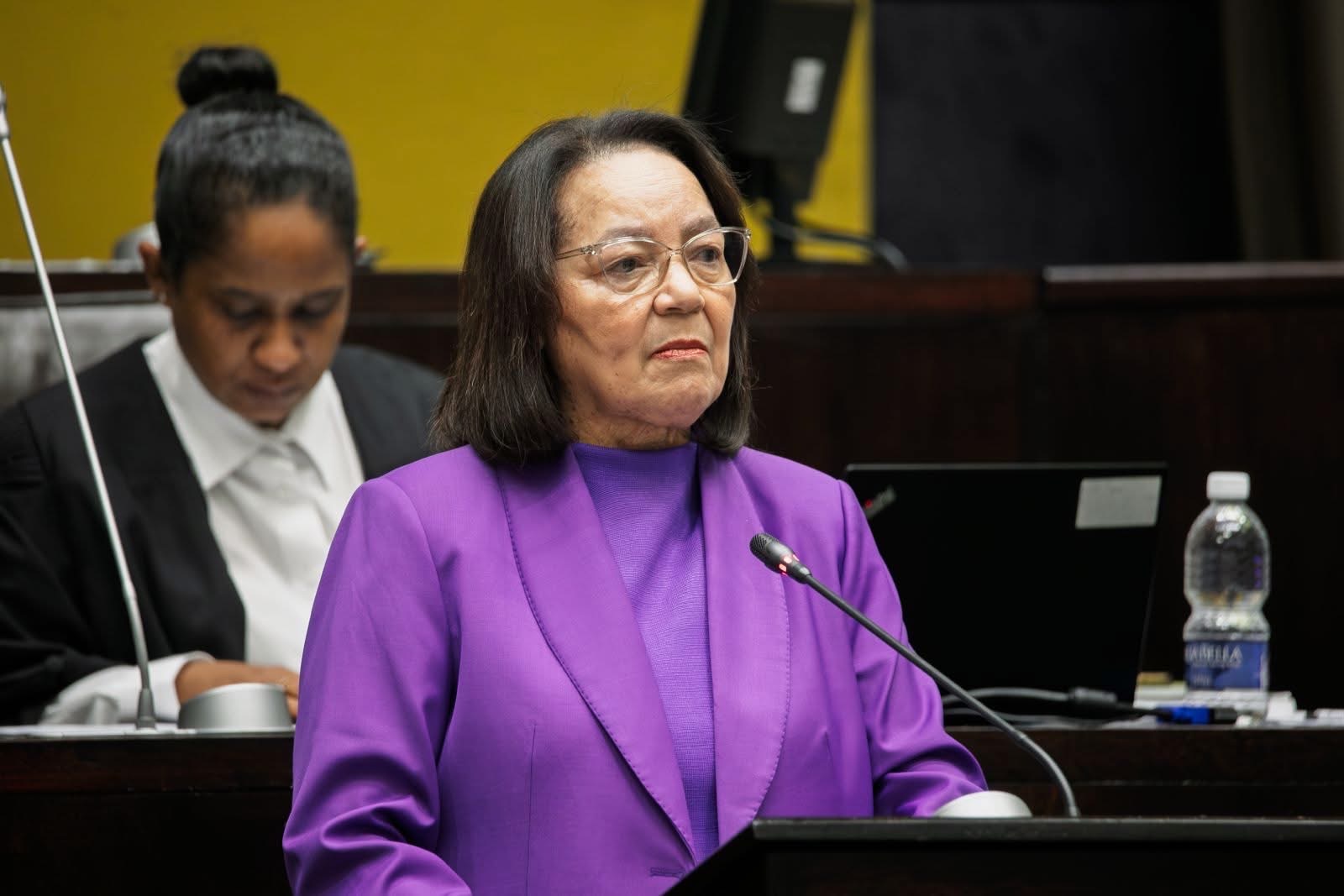
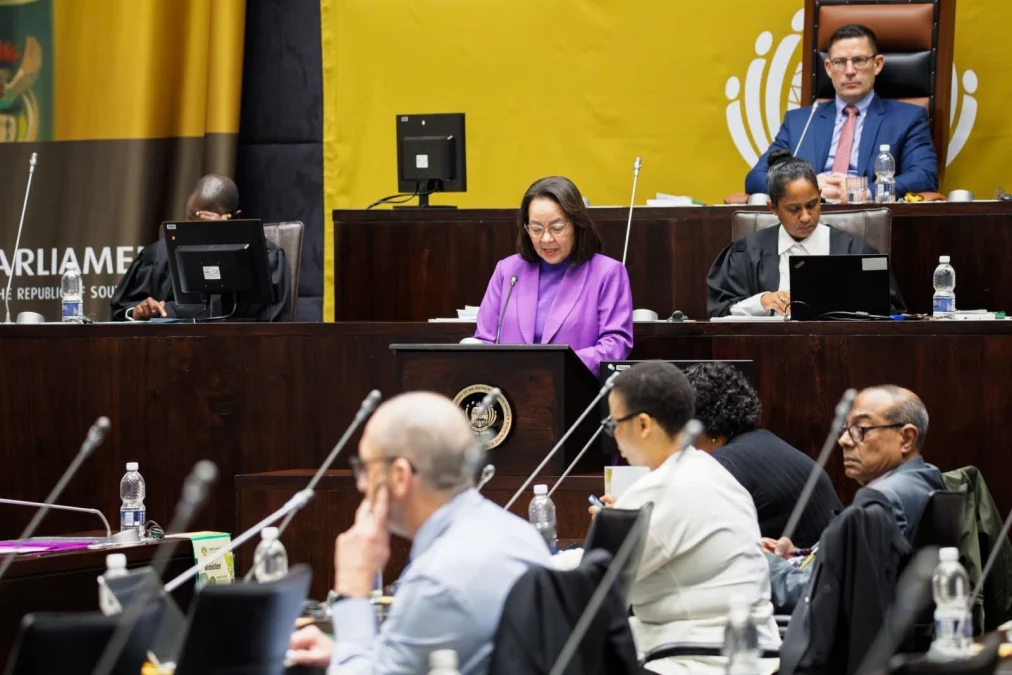
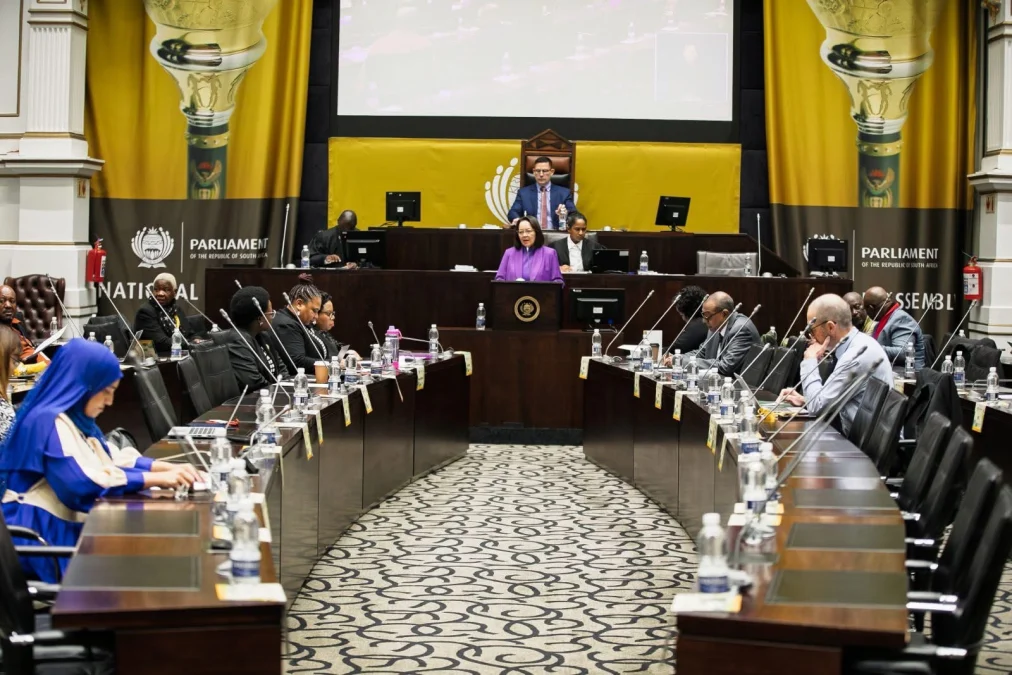
Tabling Budget Vote 38 in the Good Hope Chamber on 26 May 2026, Minister of Tourism Patricia de Lille announced a R2.54 billion allocation for the 2026/27 financial year. Of this, R1.278 billion has been allocated to South African Tourism for destination marketing and sector growth.
Backed by record arrivals, rising domestic spend and a public-private growth plan, the message from Parliament was clear: tourism is now central to South Africa’s economy.
“Tourism Policy is Economic Policy,” de Lille told the House. “And the numbers now prove it.”
Tourism Budget Vote 2026 in Numbers
The case for tourism as a growth driver was built on hard data from Statistics South Africa’s Tourism Satellite Account.
In 2024, tourism contributed 4.9% to GDP – outperforming agriculture, utilities and construction. The sector sustained 954,000 direct jobs, or one in every 18 jobs in the country. Every 13 international arrivals supported one job.
The momentum has carried through:
- 2025: A record 10.5 million international arrivals
- Q1 2026: More than 2.9 million inbound travellers – up 12.6% year-on-year
- Domestic spend: R111.6 billion – now outpacing international spend of R102.2 billion
As de Lille put it, “domestic tourism is our bedrock” – a reminder that South Africans exploring their own country remain the sector’s most reliable engine.
A 2030 Roadmap: The Tourism Growth Partnership Plan
Anchoring the speech was the Tourism Growth Partnership Plan (TGPP), a public-private compact described by the Minister as “not another strategy document gathering dust on shelves.”
A Project Management Office, funded by the Tourism Business Council of South Africa, tracks implementation through a live dashboard.
TGPP targets by 2030
- Domestic tourism spend of R139.4 billion
- International tourist spend of R115.2 billion
- 15 million international arrivals
- 45.1 million annual domestic trips
- 1 million direct jobs
- 1.5 million indirect and induced jobs
A mid-term review is scheduled for 2027. The plan rests on five pillars: ease of access, destination marketing, tourist safety, infrastructure and product development, and job creation and skills.
Pillar One: Easier Access Through Visa Reform and New Air Routes
The Electronic Travel Authorisation (ETA) system is now live in China, India, Indonesia and Mexico – four of the world’s most strategic source markets.
Travellers from these countries can now receive visa outcomes digitally within 24 hours, from their phones.
“This is no longer a vision. It is happening.” – Minister Patricia de Lille on the ETA rollout
Once fully rolled out, the ETA is expected to unlock between 80,000 and 100,000 jobs.
New air routes
- Johannesburg ↔ Perth
- Cape Town ↔ Mauritius
- Madrid ↔ Johannesburg (incoming, via Air Europa)
- South Africa ↔ Angola – passenger and cargo restrictions removed
The Minister was candid about headwinds. The ongoing Middle-East conflict has pushed airfares up by more than 20% in Southern Europe, with knock-on effects locally.
“We continue to pray for peace in the Middle-East,” she said.
Destination Marketing in a Social-First World
Pillar two – coordinated destination marketing – has been reshaped by social platforms.
The Minister singled out English singer Dua Lipa, whose Kruger National Park posts to her 87.4 million Instagram followers turned her into “an authentic ambassador for our country.”
“South Africa is Insta-ready and we must clock it.” – Minister Patricia de Lille
That visibility, the Minister noted, translates directly into bookings, flights, restaurants filled, township tours booked and jobs sustained.
Tourism Safety: A Coordinated National Response
Pillar three – tourist safety – was approached with sober honesty.
De Lille extended condolences to the family of Dina and Ernst Marais from Mossel Bay, noting it was the first incident of its kind in Kruger National Park’s 100-year history.
Although crime prevention is not within the Department of Tourism’s direct mandate, Deputy Minister Maggie Sotyu reaffirmed her role as Chairperson of the National Tourism Safety Forum, working with provinces, municipalities, law enforcement and the private sector.
The Tourism Monitors Programme continues to serve a dual function: improving safety at tourism sites while creating youth employment.
“A safe destination is not only a tourism priority but also an economic imperative.” – Deputy Minister Maggie Sotyu
Tourism Infrastructure Investment Builds Momentum
The fourth pillar is where tourism becomes visible in communities.
Recent flagship projects
- R120 million Kgodumodumo Dinosaur Interpretation Centre, Free State – over 90,000 visitors to date
- R82 million Agulhas Lighthouse Precinct at the southernmost tip of Africa
- R56.3 million through EPWP for flood mop-up in Limpopo and Mpumalanga
- R36.4 million to SANParks for Kruger National Park rehabilitation
Private-sector confidence
- V&A Waterfront: R24 billion expansion
- Cape Winelands Airport: R10 billion investment underway
- Club Med KwaZulu-Natal: R2.5 billion beach-and-safari resort launching this year
A new Tourism Infrastructure Facilitation Unit will help investors clear barriers.
The second Tourism Infrastructure Investment Summit will be hosted in Gauteng this October – building on the inaugural Cape Town summit, where eight projects worth R1 billion were unveiled, three of which have already secured funding.
Jobs, Youth and the Tourism Hackathon
Pillar five places jobs and skills at the centre.
In the previous financial year, the Department rolled out demand-led skills programmes for youth, women, guides, artisans, MSMEs and culinary trainees.
Through partnerships with Harambee and the Youth Employment Service (YES), more than 800 TVET students were placed into workplaces to complete the practical training required for graduation.
The Department will also continue its G20 legacy project, the Tourism Hackathon. Last year, 48 young people from 21 institutions of higher learning competed to build AI solutions for tourism job creation and inclusive growth.
Business Events: MICE Drives Regional Growth
The South African National Convention Bureau has secured 66 international and regional conferences, projected to contribute more than R1.2 billion to the economy between 2025 and 2030.
Host cities include Bela-Bela, Cape Town, Durban, Grabouw, Hermanus, Johannesburg, Makhanda, Mbombela, Polokwane, Skukuza, Sun City and Tshwane.
Sotyu added that 16 of these events will land in villages, townships and small dorpies, attracting around 5,000 delegates and generating an estimated R53 million in local economic impact.
Deputy Minister Sotyu: Transformation, Quality and Community at the Centre
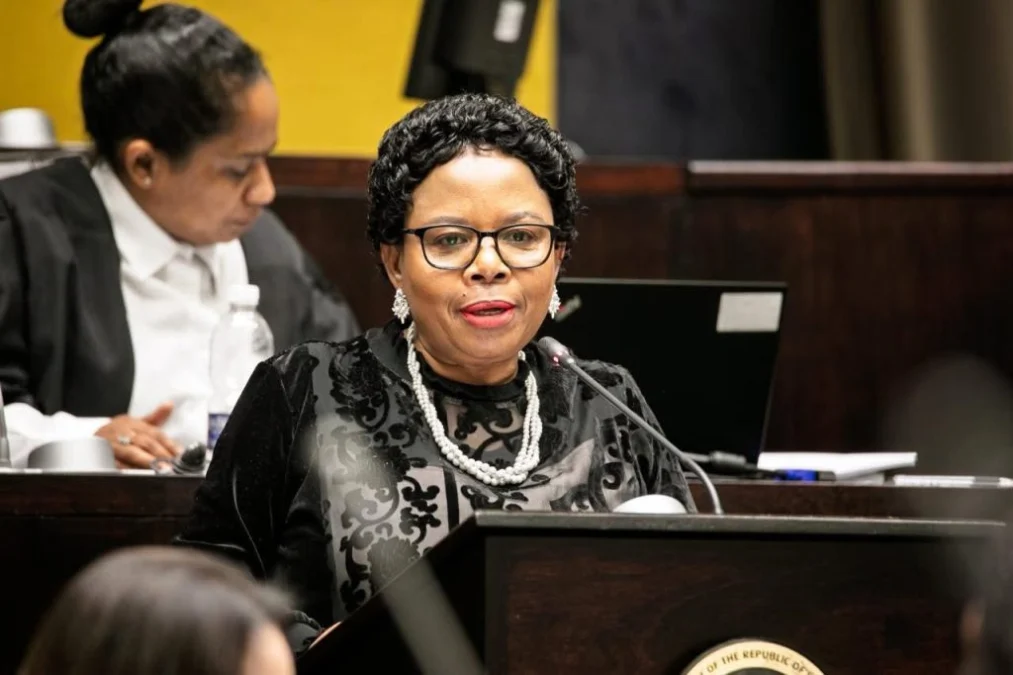
Deputy Minister Maggie Sotyu’s address sharpened the budget’s focus on the people the sector is meant to serve.
Framing tourism against the 30th anniversary of South Africa’s Constitution, she described it as “one of the most people-centred sectors of our economy” – one that brings the constitutional vision of an open, inclusive South Africa to life.
“Transformation is not only about representation. It is about ownership, sustainability, economic participation, and ensuring that tourism opportunities reach those who have historically been excluded from the mainstream economy.” – Deputy Minister Maggie Sotyu
She pointed to Africa’s Travel Indaba and Meetings Africa 2026 as proving grounds, where the Department created real access for SMMEs, township tourism operators, women-owned enterprises and youth entrepreneurs to connect with international buyers.
“When small tourism businesses gain access to global buyers, inclusion becomes income,” she said.
Quality assurance milestones
- TGCSA marks 25 years in 2026
- 4,544 establishments quality-assured nationally – exceeding the 4,500 target
- Basic Quality Verification (BQV) Programme supports emerging accommodation in villages, townships and small dorpies
Safety and community
- Tourism Monitors Programme – safety + youth employment, with monitors serving as first ambassadors
- National Tourism Safety Forum – coordinated across all spheres of government
Empowering women
The Women in Tourism platform brings women together across the value chain – accommodation, hospitality, transport, tour operations, cultural tourism, events, digital innovation and community tourism – offering networking, mentorship and collaboration.
Sotyu closed with a line that distilled the budget’s intent:
“Tourism is more than an industry. It is a bridge between people, cultures, opportunities, and hope. When communities participate meaningfully in tourism, the entire country benefits.”
A New Code for Short-Term Rentals
Responding to the rapid growth of short-term rentals, the Department recently gazetted a Draft Code of Good Practice for public comment, receiving over 6,700 submissions.
The submissions are now being analysed before the Minister formally gazettes the Code. Updates will be shared on the Department’s website and through its newly launched Tourism Talk podcast.
What the Tourism Budget Vote 2026 Means for Gauteng
For Gauteng, this year’s budget reads less like a national headline and more like a regional opportunity list.
Gauteng hosts the Infrastructure Investment Summit
The second Tourism Infrastructure Investment Summit lands in Gauteng in October 2026, following the inaugural Cape Town event.
That summit unveiled eight projects worth R1 billion, with three already funded. Hosting in 2026 positions Gauteng at the front of the queue for new project pipelines, investor attention and the newly established Tourism Infrastructure Facilitation Unit.
Madrid–Johannesburg route strengthens the gateway
Air Europa’s incoming Madrid–Johannesburg service adds another high-value source market to direct connections through O.R. Tambo.
It complements existing intercontinental capacity and feeds both leisure and business travel into the province.
Gauteng on the MICE map
Of the 66 international and regional conferences secured by the SA National Convention Bureau – worth over R1.2 billion between 2025 and 2030, both Johannesburg and Tshwane feature on the host city list.
That’s a multi-year pipeline for the province’s convention venues, hotels, transport operators and visitor attractions.
Investor appetite, province-wide
The Minister’s headline investments such as V&A Waterfront, Cape Winelands Airport, Club Med KZN, sit outside Gauteng. But the broader signal of investor confidence directly benefits the province’s growing portfolio of mixed-use, business-tourism and lifestyle developments.
Budget Vote aligns with Gauteng’s ATI 2026 strategy
The national budget’s priorities map almost line-for-line onto the Gauteng Tourism Authority’s ATI 2026 strategy, unveiled at Stand DEC1L01 at the Durban ICC under the theme “Africa’s Bleisure Powerhouse.”
GTA’s “One Pavilion. One Story.” approach – a 238m² consolidated pavilion bringing municipalities, tourism operators and SMMEs under one narrative – speaks directly to the same outcomes the Minister flagged in Parliament: more bookings, more trade, more investment.
The alignment shows up across the pillars:
- Ease of access (TGPP) ↔ Integrated mobility (GTA) – Gautrain, PRASA rail and O.R. Tambo connectivity slot into the same air-access story now extended by the Madrid–Johannesburg route.
- Job creation and SMME inclusion (TGPP) ↔ Trade and commercial growth (GTA) – Africa’s Travel Indaba 2026 brings more than 690 buyers and 1,300 exhibitors from 25+ African countries, giving Gauteng SMMEs the kind of buyer access Deputy Minister Sotyu called “inclusion becomes income.”
- Destination marketing (TGPP) ↔ Destination branding and media (GTA) – both prioritise digital storytelling, live content and global visibility.
- Tourist safety (TGPP) ↔ Safety and visitor readiness (GTA) – CCTV, tourism wardens and visitor support systems sit alongside the National Tourism Safety Forum.
GTA’s Bleisure positioning – converting business travel into extended leisure stays – is also a direct play on the MICE pipeline confirmed in the budget. With Johannesburg and Tshwane on the SANCB host list and the Infrastructure Investment Summit landing in the province in October, every additional conference delegate becomes a potential Bleisure traveller.
The province’s seven-pillar strategy – destination branding, trade growth, media, stakeholder alignment, mobility, creative economy and visitor readiness – is built to convert that interest into measurable outcomes: bookings, trade agreements and long-term partnerships.
For the wider Gauteng Tourism Authority ecosystem, the budget reinforces what the ATI 2026 pavilion campaign has been positioning for months: Gauteng is South Africa’s business and leisure crossroads and the next 18 months will hand the province a particularly strong hand to play.
Key Takeaways from the Tourism Budget Vote 2026/27
- R2.54 billion budget allocated for 2026/27; R1.278 billion to South African Tourism
- Tourism contributed 4.9% to GDP in 2024 and sustained 954,000 direct jobs
- 10.5 million international arrivals in 2025 – a new record
- TGPP targets by 2030: 15 million arrivals and 1 million direct jobs
- ETA visa system now live in China, India, Indonesia and Mexico
- New flight routes to Perth, Mauritius and Madrid strengthen connectivity
- Major investments: V&A Waterfront (R24bn), Cape Winelands Airport (R10bn), Club Med KZN (R2.5bn)
- 800+ TVET students placed via Harambee and YES partnerships
- TGCSA quality-assured 4,544 establishments – exceeding the 4,500 target
- 2nd Tourism Infrastructure Investment Summit lands in Gauteng this October
A Growth Engine That Belongs to Everyone
For all the data points, the throughline of the 2026 Tourism Budget Vote was simple.
Tourism creates jobs where people live. It empowers women. It lifts youth into the formal economy. It gives small businesses a real shot at global buyers. It builds dignity alongside revenue.
“South Africa is the cradle of humankind. The cradle of culture. The cradle of possibility. And to the world, we proudly say: Welcome Home.” – Minister Patricia de Lille
For Gauteng, the runway is clear. The work now is delivery.
